What Can we do About Climate Change? StFX Students Respond
/
Climate change is a monumental global emergency that affects all of us. Here is what some first year students at StFX are thinking about the subject.
Read MoreStFX's official source for student news since 1895
Climate change is a monumental global emergency that affects all of us. Here is what some first year students at StFX are thinking about the subject.
Read MoreDr. Cunsolo says that we must accept that environmental loss is here, and we must grieve for the planet, allowing us to change and grow, and then move towards the policy changes that are needed.
Read MoreAs StFX hosts its first Climate and Democracy Week (November 14-21) the question “Has Canada Done Enough?” is top of mind.
Read MoreA recap on the Weekend People’s School during Climate and Democracy week.
Read MoreA response from the Executive Director of the Mining Association of Nova Scotia.
Read MoreDutcher felt inspired by listening to music of his ancestors and set about composing music. He created his EP Wolastoqiyik Lintuwakonawa as if in partnership with his ancestors.
Read More“This group does not need convincing. Climate change is real; it has happened, and it is continuing to happen.”
Read MoreMany environmental interest groups have expressed their concern with the selected mine site with respect to its contribution to climate change and its compounding threat to several already at-risk species in the area—most prominently, the Atlantic salmon.
Read More“We've been here, some of us, for four years and we've always watched football on Saturday afternoon. So for us to be granted that honour and privilege of that prime-time Saturday slot, it's honestly just really exciting."
Read More“The poppy is a symbol of remembrance, it means everything, and you wear it with pride, and when you wear it you think about the people you fought with.”
Read MoreA new Indigenous Students’ Lounge is now open in Coady West on the StFX campus.
Read MoreThe 13th annual Antigonish International Film Festival on took place on October 25th and 26th.
Read MoreAmherst, in Spring the wrens
Gather together in this place,
Dear Aunt Jane used to point them out
Simple things made her happy,
Though she had not a tooth in her face!
We’d leave Dundonald Street
And walk down Hickman,
‘til we got to Victoria Street
It was all very peaceful then!
We’d go to buy bread
Can milk and cookies,
At a store called Margolian’s
We’d also buy goodies!
When we got home we’d have some tea
With six spoons of sugar just for me,
My aunt was 80 and I was 10,
I remember it was a wonderful time when
The wrens would gather in this place
And my aunt had a toothless but benevolent face!
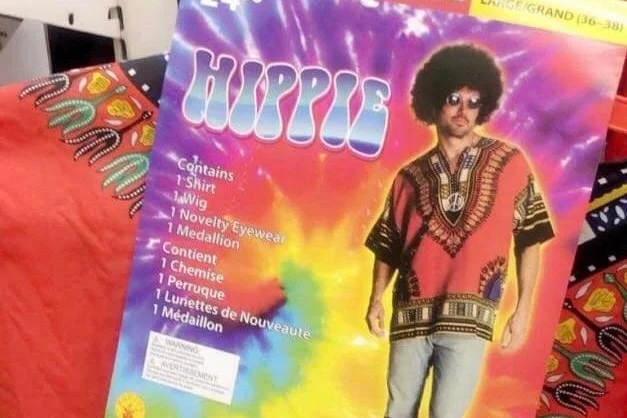
After finding the costume, Allanique sent a photo of to the collective’s group chat. Upon seeing it, the group was rightfully upset — “it’s taking parts of our identity and labelling it as a costume … as a joke,” said Tiana. So, they decided to take action.
Read More“This season was full of ups and downs and was very constructive for this team. We will be taking this year as a learning opportunity and we’ll come back strong next season.”
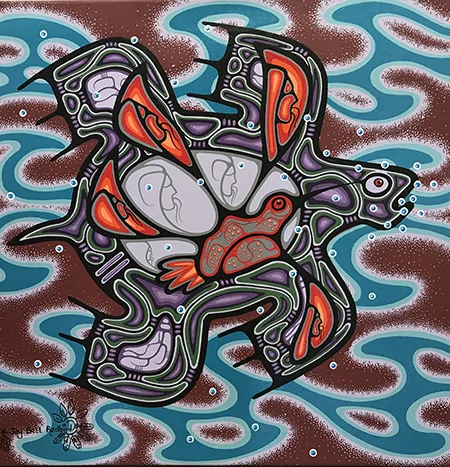
Read MoreOn October 23, 2019, the StFX German society hosted the third annual Exhibition of Indigenous Art
Read MoreAs an American, it was a little weird to be eating stuffing, mashed potatoes, and turkey over a month before Thanksgiving usually goes down back home.
Read MoreSeeing double is never a good thing and a sign to seek medical attention; however, double stars can be a thing of beauty. Some stars that appear as a single point of light to the unaided eye are in fact, double when magnified with binoculars or a telescope. Optical doubles are two stars that appear close together only by line of sight with no physical attraction to each other. Visual binaries are two or multiple stars that physical orbits each other taking a few days to years to complete an orbit.

If the geometry is just right, one of the binary stars passes in front of the other and we can see a lowering of the overall brightness for a short time period. These are eclipsing binaries such as the star Algol, the Demon Star, located in the constellation Perseus located in the North East. With binoculars and a bit of practice, you can witness the subtle change in brightness every 2.8 days as the main star dims for about ten hours.
Stars come in an array of colours and can be quite evident in some doubles. Their colour is an indication of surface temperature as all stars burn differently. On the left side of the spectrum, we have the hot blue and blue-white stars that burn at more than 30,000 degrees Celsius. The scale then moves down to green, yellow, orange to the far right side where we find the cooler red ones burning around 2,500 degrees Celsius. For reference, our sun is a yellow star with a surface temperature of 6,000 degrees Celsius.

One of the best examples of contrasting colours in a double is the star Albireo found at the head of Cygnus the Swan now located in the North West sky. Using a telescope operating at 60 power, you will see a bright golden-yellow star next to a dimmer blue sun. The two are about 430 light-years from Earth and might take as long as 100,000 years to orbit each other.

Since these are points of light and not faint galaxies or gaseous nebula requiring dark observing sites away from light pollution, double stars can be enjoyed from the city or suburb. Sometime the beauty and challenge is to split the close together; high magnification might not even separate them into individual components. And no two doubles appear alike but seeing them with your eyes is a unique experience.
Till next time, clear skies.
Known as “The Backyard Astronomer”, Gary Boyle is an astronomy educator, guest speaker and monthly columnist for the Royal Astronomical Society of Canada. He has been interviewed on more than 50 Canadian radio stations and local Ottawa TV. In recognition of his public outreach in astronomy, the International Astronomical Union has honoured him with the naming of Asteroid (22406) Garyboyle. Follow him on Twitter: @astroeducator or his website: www.wondersofastronomy.com
This year, the Canadian government released a commemorative coin, alongside other celebrations, to mark fifty years since the supposed decriminalization of homosexuality. Whether or not those celebrations were justified, however, is another story. On October 8, 2019, members of the StFX community gathered to discuss the history behind the celebrations and debate their legitimacy at this year’s first talk in the GSDA lecture series: “Contextualizing the Anti-69 Movement.” The discussion was facilitated by Dr. Chris Frazer, a local 2SLGBTQIA+ activist and professor in the StFX Department of History.
The supposed decriminalization of homosexuality was part of the Criminal Law Amendment Act (also known as the Omnibus Bill), passed in 1969. Alongside changes to two anti-gay laws (buggery and gross indecency), the bill also laid changes to abortion access, and included The White Paper – eliminating the Indian Act and all treaties held between Canadians and Indigenous peoples. The bill was part of the Liberal’s call for a “just society” under Pierre Trudeau, and the government talked a big game about what it would accomplish. Frazer, who was ten years old when the bill was passed, shared that in reality, “nothing happened in 1969.”
A 1971 demonstration opposing the limitations of the 1969 Omnibus Bill - Jerald Moldenhauer
Essentially, the government realized that they couldn’t police private spaces, and decided to waive the enforcement of certain laws, rather than change them. Buggery and gross indecency laws were not repealed, but would not be enforced when the concerned acts took place between two adults in private. Many might be familiar with a famous statement of Pierre Trudeau’s, in which he claims that “the state has no place in the bedrooms of the nation.” While this is true in a number of contexts, Frazer suggests that there are certain cases in which the state should intervene – in instances of sexual and gendered violence, for example. It is those situations, regardless, that should cause the government greater worry than men who sleep with men, or women who sleep with women. Trudeau’s statement also only applied to certain kinds of sexual activity; the government would still intervene if more than two people were found to be involved in sexual relations.
In Frazer’s opinion, the alleged decriminalization in 1969 and celebrations in 2019 share one big similarity: they are both political acts, done in the interest of political success rather than social good. The 1969 bill provided a false sense of security to the 2SLGBTQIA+ community – leading many to come out in an environment that was just as hostile as it was before, and where they were unable to access protection. In fact, the number of gay people arrested immediately following the release of the bill increased dramatically.

2019 Commemorative Coin - Royal Canadian Mint
The fact is, in 1969, Canada didn’t have a law prohibiting homosexuality. What they had was a number of laws that disproportionately affected 2SLGBTQIA+ individuals – including the two that were changed by the Omnibus Bill, among others. Laws prohibiting indecent acts, obscenity, gross indecency, indecent assault on a male, anal intercourse, vagrancy, nudity, and immoral theatrical performance were all enforced more frequently upon homosexual individuals. “Immoral theatrical performance” applied mainly to drag and burlesque performances, for instance. Vestuary laws were also biased against drag performers and trans individuals, as they required people to wear at least three articles of clothing that corresponded to their gender assigned at birth, and were enforced up until the early 2000s. Bawdy-house laws were used to carry out raids on bathhouses (“places of indecency”) in Montreal and Toronto for decades. Research on the bawdy house law shows that from 1968 to 2004, more than 1,300 men were charged for being in a gay bathhouse.
Of the laws detailed above, many are still in the books. Indecent acts, obscenity, nudity, immoral theatrical performance. Buggery (renamed “anal intercourse” in 1988) and vagrancy were only just repealed in 2019.
This is what passes for “decriminalization” in Canada.
Celebrating the anniversary of 1969 is not only unjustified, but serves to erase decades of 2SLGBTQIA+ activist work that has done far more for the rights of the community than the government ever has, and fails to acknowledge all those who were harmed in the aftermath of the bill. “Actual history is about the activism of our communities,” says Frazer. In present day, it’s a liability for a politician to say something homophobic during an election campaign – it didn’t used to be. That’s the result of decades of activism. Instead of celebrating the fiftieth anniversary of 1969, then, Frazer suggests celebrating the activists. The fact that Canada is failing to acknowledge their contributions is demonstrative of a deeper, underlying homophobia. “They need to be known.”
Interested in learning more? Much of the information for “Contextualizing The Anti-69 Movement” was sourced from “Anti-69 FAQ” on ActiveHistory.ca
I am hard-pressed to believe that my time as Students’ Union President has come to an end. Even as I write this, I still expect to receive emails sent to an account that is no longer in my name, telling me about the next problem that needs to be resolved. Similar to the ones who came before me, now that I have reached the end, I find myself looking back on everything that was achieved.
The Executive Team and I were determined to accomplish many things on behalf of our students, but most importantly we were determined to do our best for them, every single day. In light of recent events, I can perhaps say that a number of us on the team are leaving with mixed feelings. I do not presume to speak on behalf of my team, but for me, there were moments in this year that felt like something out of a film.
As President of the Students’ Union, I felt strongly that it was my responsibility to uphold the dignity of my office. I was aware of my position as a highly visible member of both the Union and the school; I never wanted to do something that would reflect badly on either of these institutions. However, it was challenging to say nothing as I witnessed behaviour and comments in the second half of my tenure that were exceptionally problematic and also representative of a larger rhetoric that has in recent times, penetrated university campuses.
I will begin by stating that I am very conscious of the power of words. This is not only as an outcome of my background, but also because of the effect of a very different type of letter that I wrote around this time last year. Words have the power to harm, to heal, to blind, and to reveal. These revelations might be about you or about others. Most importantly, in all of these instances, words have the ability to impact. As someone who interacts with different systems of oppression in my every day life, I have witnessed how words can be used to subjugate and stifle, or to liberate and free. For this reason, I am very careful with how, where, and when I use my own words. I will state that awareness of my words further increased in my time as President because it was part of my job to speak on behalf of over four thousand people.
In our childhood, we are taught that honesty and telling the truth are important values. As we get older, we begin to choose what is important to us personally and how we will uphold these values. From my perspective, truth and honesty are imperative for the position of leadership that the President holds. Students pay for the operation of the Union and vote to choose the representatives of the organization. Therefore, students have a right to know what happens in the Union each step of the way. In fact, it is the duty of students as constituents to ensure that their elected leaders are doing what they said they would and are making decisions that uphold the democratic processes of the institution.
If students have deemed that their representatives are not performing the jobs they were elected to do, then students have the inherent ability to remove these individuals from their positions. The Students’ Union, similar to other democratic institutions, has checks and balances that are intended to ensure that no one person has the ability to do what they want without repercussions. All students need to do is ask for the information about these processes and it shall be given to them.
The checks and balances in a democratic institution include a healthy Fourth Estate. It is the job of news and media to investigate different situations and offer analysis to help the reader gain perspective. While holding a position of leadership, it is expected that a person will receive criticism at any time. Open criticism of institutions and leadership are one of the best indicators of a strong democracy. These criticisms hold leaders accountable for their actions and ensure that the operations of a given democratic body shall fulfill their intended purpose. This is why the autonomy of the press must be protected and held at the highest regard. As students participating in a democratic process, you do not have to be afraid of offering criticism or of speaking the truth, regardless of the threats of lawsuits and promises of anger that may follow.
In addition to my reflections about the presidency and the Students’ Union, I would also like to offer my thanks to everyone who contributed to making this year so incredible.
I will begin with my Executive Team; Tiffany, Tega, Kallie, Clancy, and Sean, I never imagined that I could have a team as great as you. Tega, your wisdom and resilience have been nothing short of awe-inspiring to all of us. Kallie, your humour and ability to offer an objective perspective always kept us grounded. Clancy, your determination and compassion reminded us to be kind to one another. Sean, your creativity and ability to bring people together kept us close. Last, but never least, to my wonderful VP Academic, Tiffany. Thank you for being my right-hand, confidant, and close friend. When we were both elected that cold, January night in 2018, I never thought that I would gain such a beautiful friendship and partner-in-crime/all-things-theU. You and I will always be “the throat-puncher and the politician” respectively, as we were once humorously described.
I would also like to give a warm thank you to Tanaka, our fantastic Chair of Council. In our organization, the positions of President and Chair of Council are set up to have a complicated relationship. I think you and I were truly able to turn this belief on its head. I could not have asked for a better Chair, you led with grace, strength, and an uncanny ability to keep calm, even when everything went wrong.
There are so many people who have contributed to the Union beyond just the ones I have named here. Thank you for everything you contributed and for all that you did for our students.
Finally, I would like to thank you, the students of StFX University. You have treated my team and I with kindness, trusted us to do the right thing, and supported us in a way we had never anticipated. In all of our decision-making, at the end of the day, we were always faced with answering just one question. “Is this in the best interest of our students?” If we could see that something was not, we changed the circumstances; we searched for new information, we asked for advice, we looked at best practice, and we discussed and disagreed. All this was with the objective of ensuring that we were making the highest quality of decisions for our students. You were our motivation for pushing StFX to be the best place it could be. By electing us, you trusted us with the great responsibility of representing your voice; this was not a task that any of us took lightly. Thank you, for believing in us and for giving us -for giving me- the opportunity to serve you, the students.
Sincerely,
Rebecca Mesay
President
StFX Students’ Union
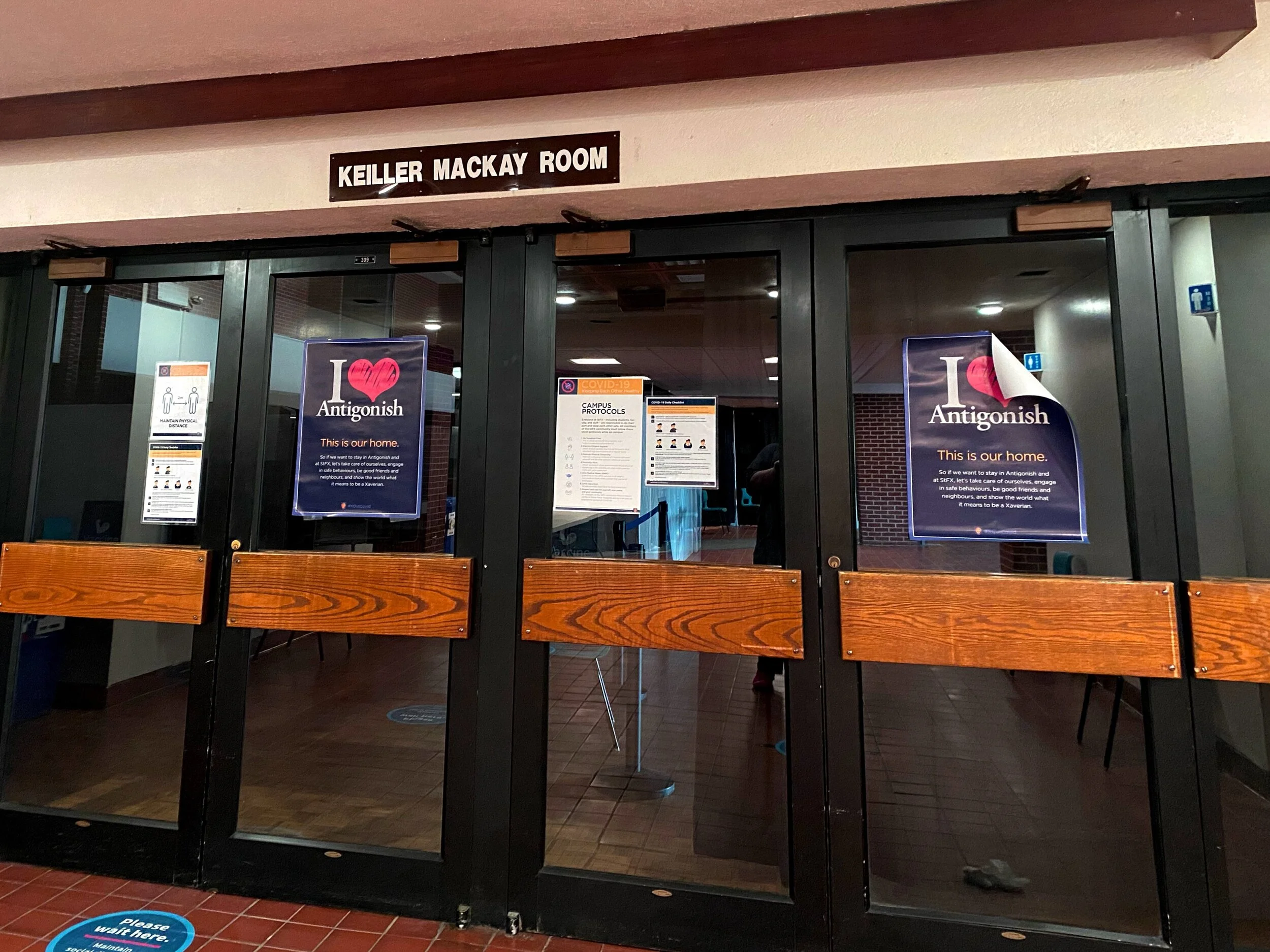
March 9, 2021, Queer students entering Bloomfield Centre were met with a common but unexpected sight. Canadian Blood Services (CBS), who due to the Health Canada restrictions on donations from men who have sex with men (MSM) enforce what many describe as a discriminatory ban on blood donations from Queer men, had set up a donation clinic in the MacKay room.