‘Unapologetically BLACK’: Honouring the Black Identity

‘Unapologetically BLACK’: Honouring the Black Identity

“Unapologetically BLACK”: Honouring the Black Identity will open in the Bloomfield Art Gallery on Thursday, January 30, and run until February 29, with the opening ceremony January 30 from 6 to 8 pm.

Read More

She’s Back! Priscilla, Queen of the Highlands: “Rise of Priscilla”

AS_072.jpg

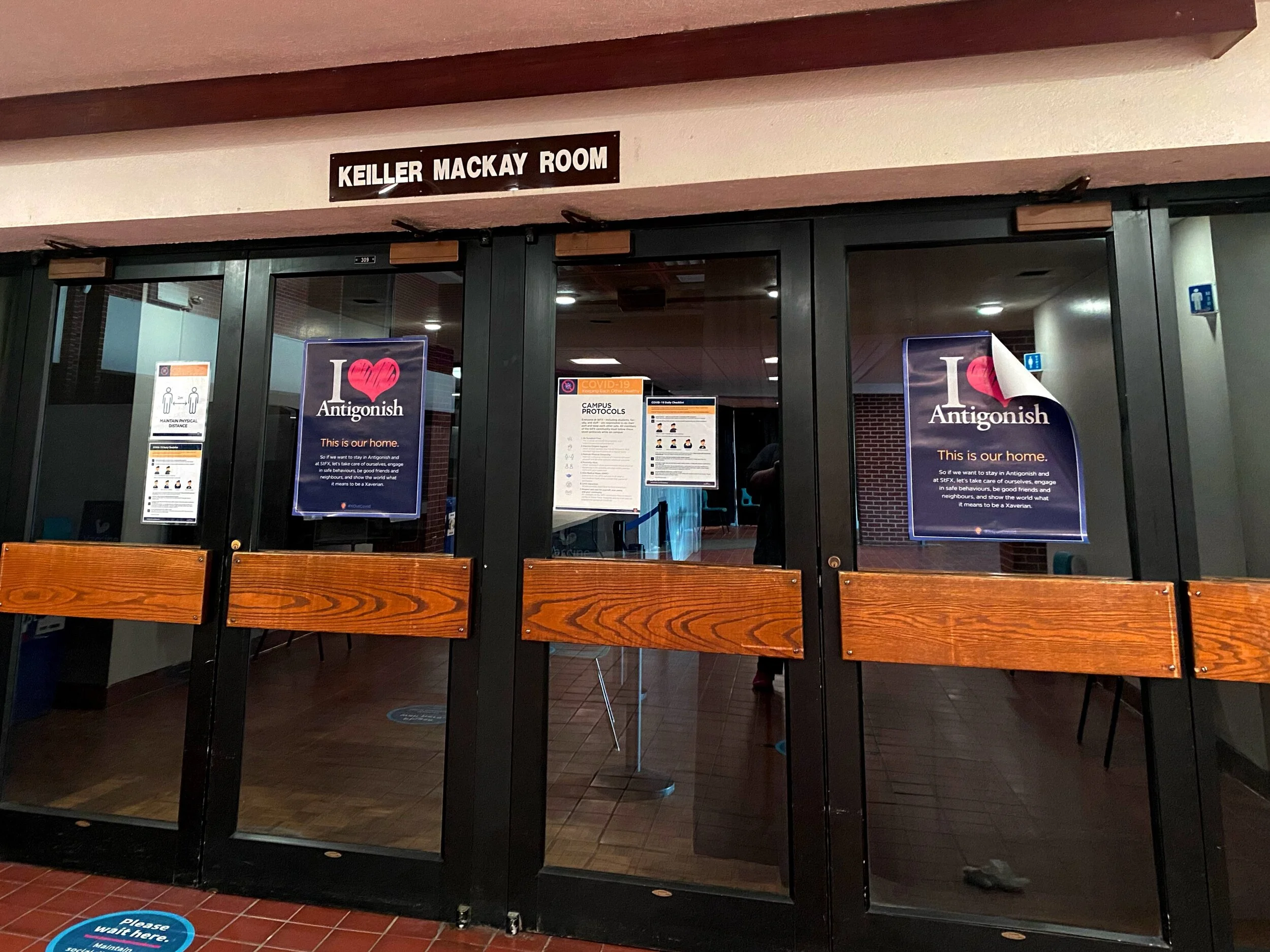
Priscilla: Queen of the Highlands is perhaps the most anticipated event on the StFX campus. The show, organized and produced by Dr. Chris Frazer (who some may also recognized as C. Leah Cruz or Joannie Cash), began in February 2005 when Frazer was appointed as 2SLGBTQ+ faculty advisor at StFX, following a number of incidents of homophobic assault on campus. Frazer, alongside Dr. Nancy Forestell and Dr. Clare Fawcett, was applying for a grant to facilitate a workshop centred around 2SLGBTQ+ experiences in rural areas, and needed to include an event. The group decided on a drag show, contacted the Imperial and Sovereign Court of Nova Scotia (similar to a rotary club for drag queens, Frazer explains), and put on a sold-out show in the KMC conference rooms.

This first show, Frazer claims, was “completely amateur,” relying on a Discman and a single set of speakers for music. However, over the past 15 years, the show has grown tremendously—transforming into a full production with professional light and sound, and moving from one conference room to two, and then to the bigger stage in the Bloomfield Centre MacKay room. Since the first show, Priscilla has raised thousands of dollars for X-Pride and other 2SLGBTQ+ focused organizations. “It’s always been a way of raising money and helping to create community,” shares Frazer. The show has played a big part in creating queer space in Antigonish, which Frazer says there “just isn’t much of.”

The show means a lot to a lot of people, including the performers. Jason Spurell, who performs as Rouge Fatale and has been part of Priscilla since the very beginning, shares that the audience at Priscilla is one of their favourites of all time. “The response, the happiness, the pride they have. Not a lot outweigh it.” In general, they note that rural crowds are most often more excited than urban ones, given that drag shows tend to decrease in frequency the further you get from a city-centre. One of Spurell’s favourite moments from the show was inviting their cousin (who used to attend StFX), up on stage— “I would bring her up on stage with me and get the whole audience to call her by her childhood nickname. She hate/loved it!”

Frazer says that Spurell’s sentiment is echoed by a number of other queens as well: “It’s their favourite show.” In fact, legend has it that Priscilla always coincides with the night that Antigonish gets its biggest storm or blizzard of the year—but the queens, and the audience, never seem bothered by the harsh weather. “There have been times where we were probably the only thing open in Antigonish—which we shouldn’t have been—and the queens had no business driving down from Halifax, but they did anyway. It says a lot about the show.”

Photos by Adelaide Strickland

While the show has only grown more and more successful, they’ve also run into difficulties financially. Tickets always sell out, yet the rising costs of space and security over the years have driven ticket prices up. Last year, for the first time, the show didn’t break even. “We’re not a money making venture, but it feels like we’re being forced to move that way,” says Frazer. “I’m really resisting that, because that’s not the point of the show … It has to be accessible, financially and physically.” Despite struggle, however, support from the community is keeping things going. Frazer recognized Impact Sound as a key supporter; the company has consistently provided a discount for their services, given the charitable nature of the show. The audience, of course, also plays a big role in the show’s continued success.

There are a number of ways that students and community members can get involved with and support the show. Ticket sales, according to Frazer, are always a good time— “it’s really rewarding to see the enthusiasm for that show build up as the tickets start to sell.” Proceeds from ticket sales and donations made at the show this year will be directed to Rainbow Railroad, an organization helping 2SLGBTQ+ refugees escape persecution and violence. Organizers are looking for support selling tickets in advance and at the door, as well as with the set-up and break-down of the production. Frazer also encourages people to think about performing— “it’s always been a part of our tradition that we encourage people to get on the stage” —in drag, or out of drag. The show welcomes Kings, Queens, genderfuck performers, burlesque performers, and pretty much anyone looking for a moment in the spotlight. Of course, for those who may not be all that keen on getting on stage, one of the best ways to support the show is to buy a ticket, and show up. “Just come, be yourself, and be fabulous,” says Frazer.

This year, Priscilla will be held on January 31st in the MacKay room. Tickets will be on sale starting January 22 at the X-Pride table in the Bloomfield lobby, and will cost $12 in advance, $15 at the door. Anyone looking to get involved in the show should contact Chris Frazer either in person or via email at cfrazer@stfx.ca.

Priscilla is part of X-Pride’s Pride Month at StFX. Other events include Amateur Drag Night, a sex-ed workshop by Venus Envy, a queer music night at the Inn, Sex Toy Bingo, and Rainbow Party. Details for these events can be found on Instagram @xpridesociety or on facebook in the X-Pride 2019-20 group.


Amherst Wrens

Amherst, in Spring the wrens

Gather together in this place,

Dear Aunt Jane used to point them out

Simple things made her happy,

Though she had not a tooth in her face!

We’d leave Dundonald Street

And walk down Hickman,

‘til we got to Victoria Street

It was all very peaceful then!

We’d go to buy bread

Can milk and cookies,

At a store called Margolian’s

We’d also buy goodies!

When we got home we’d have some tea

With six spoons of sugar just for me,

My aunt was 80 and I was 10,

I remember it was a wonderful time when

The wrens would gather in this place

And my aunt had a toothless but benevolent face!

Recap of “Contextualizing The Anti-69 Movement”

This year, the Canadian government released a commemorative coin, alongside other celebrations, to mark fifty years since the supposed decriminalization of homosexuality. Whether or not those celebrations were justified, however, is another story. On October 8, 2019, members of the StFX community gathered to discuss the history behind the celebrations and debate their legitimacy at this year’s first talk in the GSDA lecture series: “Contextualizing the Anti-69 Movement.” The discussion was facilitated by Dr. Chris Frazer, a local 2SLGBTQIA+ activist and professor in the StFX Department of History.

The supposed decriminalization of homosexuality was part of the Criminal Law Amendment Act (also known as the Omnibus Bill), passed in 1969. Alongside changes to two anti-gay laws (buggery and gross indecency), the bill also laid changes to abortion access, and included The White Paper – eliminating the Indian Act and all treaties held between Canadians and Indigenous peoples. The bill was part of the Liberal’s call for a “just society” under Pierre Trudeau, and the government talked a big game about what it would accomplish. Frazer, who was ten years old when the bill was passed, shared that in reality, “nothing happened in 1969.”

A 1971 demonstration opposing the limitations of the 1969 Omnibus Bill - Jerald Moldenhauer

Essentially, the government realized that they couldn’t police private spaces, and decided to waive the enforcement of certain laws, rather than change them. Buggery and gross indecency laws were not repealed, but would not be enforced when the concerned acts took place between two adults in private. Many might be familiar with a famous statement of Pierre Trudeau’s, in which he claims that “the state has no place in the bedrooms of the nation.” While this is true in a number of contexts, Frazer suggests that there are certain cases in which the state should intervene – in instances of sexual and gendered violence, for example. It is those situations, regardless, that should cause the government greater worry than men who sleep with men, or women who sleep with women. Trudeau’s statement also only applied to certain kinds of sexual activity; the government would still intervene if more than two people were found to be involved in sexual relations.

In Frazer’s opinion, the alleged decriminalization in 1969 and celebrations in 2019 share one big similarity: they are both political acts, done in the interest of political success rather than social good. The 1969 bill provided a false sense of security to the 2SLGBTQIA+ community – leading many to come out in an environment that was just as hostile as it was before, and where they were unable to access protection. In fact, the number of gay people arrested immediately following the release of the bill increased dramatically.

2019 Commemorative Coin - Royal Canadian Mint

2019 Commemorative Coin - Royal Canadian Mint

The fact is, in 1969, Canada didn’t have a law prohibiting homosexuality. What they had was a number of laws that disproportionately affected 2SLGBTQIA+ individuals – including the two that were changed by the Omnibus Bill, among others. Laws prohibiting indecent acts, obscenity, gross indecency, indecent assault on a male, anal intercourse, vagrancy, nudity, and immoral theatrical performance were all enforced more frequently upon homosexual individuals. “Immoral theatrical performance” applied mainly to drag and burlesque performances, for instance. Vestuary laws were also biased against drag performers and trans individuals, as they required people to wear at least three articles of clothing that corresponded to their gender assigned at birth, and were enforced up until the early 2000s. Bawdy-house laws were used to carry out raids on bathhouses (“places of indecency”) in Montreal and Toronto for decades. Research on the bawdy house law shows that from 1968 to 2004, more than 1,300 men were charged for being in a gay bathhouse.

Of the laws detailed above, many are still in the books. Indecent acts, obscenity, nudity, immoral theatrical performance. Buggery (renamed “anal intercourse” in 1988) and vagrancy were only just repealed in 2019.

This is what passes for “decriminalization” in Canada.

Celebrating the anniversary of 1969 is not only unjustified, but serves to erase decades of 2SLGBTQIA+ activist work that has done far more for the rights of the community than the government ever has, and fails to acknowledge all those who were harmed in the aftermath of the bill. “Actual history is about the activism of our communities,” says Frazer. In present day, it’s a liability for a politician to say something homophobic during an election campaign – it didn’t used to be. That’s the result of decades of activism. Instead of celebrating the fiftieth anniversary of 1969, then, Frazer suggests celebrating the activists. The fact that Canada is failing to acknowledge their contributions is demonstrative of a deeper, underlying homophobia. “They need to be known.”

Interested in learning more? Much of the information for “Contextualizing The Anti-69 Movement” was sourced from “Anti-69 FAQ” on ActiveHistory.ca


“Human”


An interview with Natalie Doumkos

Immediately following the beautiful gallery: “Canadiana” by Nic Latulippe, Natalie Doumkos had the opportunity to showcase her beautiful artwork taken from the big city of Toronto in small town Antigonish, NS. I had the pleasure of interviewing Doumkos during her time hosting the StFX Bloomfield Gallery from March 15th to 24th, and am honoured to share her thoughts with the readers of the Xaverian Weekly. As the second part to a two-part piece showcasing the artists themselves, this piece will highlight Doumkos and her inspiring work which, like the work of Latulippe, paves the way for other student artists to showcase their art on campus. Here is her story.

When Doumkos was young, she recalls receiving toy cameras as gifts for Christmas which began her experimentation with the art of photography. As years went on and more toy cameras were gifted, Doumkos eventually upgraded to a real camera in grade 11, which was a DSLR. With the ability to shoot professional level photos in her hands, Doumkos continued to explore and take pictures to build her portfolio, ultimately leading to her sharing her art in the summer of 2018.

Doumkos’ inspiration for creating art came from her love of exploring cover art itself. Her photos gained more and more meaning as she continued her pursuit of art, but exploring was always the driving factor to her work. In her exhibit, there are several individuals included in the photos. These individuals are friends of Doumkos who share in the same motivations for exploration and photography as an expression of emotions, and they inspire her to pursue the art she creates. Art is often seen as a means to portray emotions that cannot be easily put into words, this is the case for Doumkos as well, and her art carries meaning that just cannot be described. As the saying goes: “a picture is worth a thousand words.”

Appreciating basic principles of design, Doumkos’ main form of art is her photography, but she experiments with videography, sketching, and many types of painting including oil, watercolour, and acrylic. She uses these alternative forms of art to diversify her creative abilities as photography showcases what already exists, sketching and painting on the other hand forces her to create something out of nothing but her imagination.

The journey for Doumkos to host the Bloomfield Gallery was a long one, one that began years ago in her explorations in the city of Toronto, to capture the memories she put on display in her exhibit. With taking photos comes editing the shots to the specifications of the artist, which took countless hours according to Doumkos. The idea to host the gallery began for her in October, 2018 as she began to accumulate the photos and stories she has gained over the years. Over the months leading up to the gallery, she had been going through some personal troubles, and her art stood as a way to get through some tough times. When she found it hard to voice her emotions, her images became a kind of healing mechanism. The beautifully written stories that accompanied the photos on the gallery walls were written the day of the opening of the gallery as Doumkos searched for the right words to say.

Photo: www.doumkos.com

Photo: www.doumkos.com

These written companion pieces helped aid her visual artwork and served to encourage the emotional resonance of the cityscapes Doumkos has had the pleasure of capturing throughout her lens.

Interestingly, Doumkos had told me that while editing her photos, the music she listened to had a significant impact on the tone of the picture, where rhythm and energy led to vibrant colours and saturation and conversely, slow tunes with more atmospheric sound led to a more subdued and cool tone. The gallery had not been the first time Doumkos had showcased some of her work. However, most of what has been shown in public places were posted anonymously.

Over the years she met new people who shared the same interests in exploring as mentioned above, and with these people, she has followed her passion for exploring and documented her memories along the way. As her talent behind the lens continued to improve, Doumkos had been given many opportunities working with various companies big and small. Many of these opportunities come with sample products from the companies as a thanks for her work with them which was certainly a perk. While these opportunities intrigue her, she is hesitant to pursue photography as a full-time career for fear of it losing the artist and emotional value that inspired her to begin in the first place.

Exploring Toronto started on the ground for Doumkos, despite her gallery being of much higher quality, both figuratively and literally. She began by taking photos of things that caught her eye, like exciting outfits, but her sights quickly aimed upwards. The theme of “Human” was cityscapes-- to showcase the beauty that the urban environment hides on its rooftops. Emphasizing the ability for photography to express herself, Doumkos enjoys the exploration element to her work even more than the photos themselves at times, so cityscape is her main style. That being said, she has also experimented with architecture, landscape, lifestyle and products, though cityscape and urban exploration is her passion.

As an artist, Doumkos believes no “perfect” photo indeed exists. She does think that Toronto is the most beautiful city in the world, which inspired her desire to explore the city. From her accounts and the written companion pieces found at her gallery it is clear that at times she would wait hours to capture the sunrise or sunset as it shone in precisely the direction she had envisioned. Many of the photos featured in the gallery took precise timing to catch the breathtaking views.

Doumkos would tell aspiring artists to focus on the voice in your mind and your creativity, don’t compare yourself to other people and don’t share your art until you’re ready but when you are don’t be afraid to share. She believes that what you get out of life is what you put in, and to always create art for yourself first and not others, as well as to not listen to the negative feedback from others in your pursuit of art, it is subjective and so long as it matters to you then it is worth it. Being self-taught, there are plenty of lessons and videos to learn from on YouTube or online classes all over the internet to improve your artistic talents. Lastly, once you start creating art “don’t turn back, and don’t let anyone tell you to turn back,” as Doumkos would say.

“This is it for Toronto,” says Doumkos about her gallery “Human.” The journey had been two of the best years of her life, but she is ready to move on to whatever comes next. And recently, she had fortunately been chosen as the incoming VP of Activities and Events for the 2019-2020 school year, so she is living in Antigonish for the foreseeable future. Being in a new environment, she is searching for new meaning to inspire her artwork to come, as it is not the end of her creating art, merely a new chapter ahead. Doumkos’ work can be found on her website www.doumkos.com


Under 9000


Spotlighting some artists that’re <9000 on Spotify

Pet Library

My album of the year for 2017, Pet Library’s Pity Party might be the most honest thing you’ll ever hear. With lyrics like “sharing a pack of cigarettes and a lighter that didn’t work, all I wanted was to kiss you, I thought about it so much it made my head hurt,” perhaps they sound corny on paper. However the delivery, the urgency, and the tinge of dustiness puts you on the sidewalk and looking for the kiss. This is an album for a moment in time: you’re young, vibrant, and just melancholic enough to ruin everything.

Fox Wound

Keeping on the trend of AOTYs, Fox Wound’s In Passing, You’re Too Faded was nearly my 2016 pick. Although a bit more serious than Pet Library, Fox Wound carry the same sort of urgency. Their sound may be a bit more spaced and mature, but fiery still. We’ll call them emo, we’ll call them post-something, but I’ll call them contemplative for now. Fox Wound just released a new album, so it’s a great time to support! And they’ve got an instrumental called “So Which One Is Jim” – I’ll take anything that references The Office.

Cultdreams

Formerly known as Kamikaze Girls, this duo combines bitter punk philosophies with an unflinching message. Their shouted vocals and fuzzed-out tones are hardly crust-core. The standout track, “Teenage Feelings,” off their debut might be the only song you’ll need to hear. If I’ve got to put a label on their sound: think an angry Alvvays with more distortion. I’ve been to Tall and Small, I’ve seen some playlists, I know you all like Alvvays. I know you’ll love Cultdreams.

Coast to Coast

This one’s a one-song challenge. It hasn’t been in my favour, but opinions for Coast to Coast’s song “Post Graduation” have been polarizing. 95% of the argument comes down to the singer’s voice. I love it. I’ve also heard it sounds like Patrick Star. Most of Coast to Coast’s material deals with the few months after undergrad. For some of you this may seem a bit too real. For some of you this might seem far away. For now, listen to “Post Graduation” and let me know how you dig it. They’re my favourite upcoming band, maybe they’ll be yours too.

Palm Reader

Vocals aren’t the question with Palm Reader, not one bit. And while they may be the heaviest suggestion on this list, they’re perhaps the most likely to explode. There’s a rumbling in the UK underground “metal” scenes. Some band just released a sophomore album that somehow made quite a few end-of-year lists for quite a few publications. Odd, innit? 

Palm Reader

Braille lives up to every word of hype. Heavy as an anvil, feral as my ex’s stupid cat, but melodic and fragile as Billie Holiday on a smoked-up stage, you’ll feel Braille.

Fluxion

Total shift of pace now. Fluxion works with a mixture of UK dub and ambience. In the least clear way possible, his work sounds like dangerous study music. Each album, each track, all carry a sense of urban tension. The hazy fence pictured on his debut album artwork couldn’t be more perfect. Mechanical factory-beats muffle over distant blips and blorps. And there’s a synth somewhere inside – hidden, but still heard. Try Ripple Effect to start, it may be less abrasive. But close your eyes whenever you listen. Who’d think meditation was so industrial?

Modern Rituals

Sure, they’ve released a new album. Sure, they’re about to release yet another one. But I want to drive you towards one of the greatest EPs in the last few years. 2016’s Stranger Culture might be the perfect party. “Pushing Teeth” can’t get any more fun. Every single line was meant to be sung along to. Further, I’m impressed with the way their vocalist’s delivery sounds like a strut. Of course, this doesn’t make much sense until you hear it. In the same manner that Morrissey’s voice matched his rose-held floating-walk, Modern Rituals has   a singer who’s cooler than you no matter how he looks. With a post-punk mentality and a partied post-hardcore sound, Stranger Culture will always        be a great 24 minutes


Canadian Accent Mosaic


There is no one true Canadian English dialect, and that’s a great thing

The popular CraveTV original series Letterkenny is a story about a group of small town Ontarians who spend most of their time watching their roadside veggie stall and chirping one another.

If you don’t know what chirping means, let me break it down for you. “To chirp” is essentially used to describe talking smack about someone. Insulting someone so expertly, that the person being insulted is completely impressed by the effort.

It’s also a phrase pretty common in good old Canada. And one of the backbones of what makes Letterkenny so hilarious.

But the greater reason why Letterkenny gained popularity is due to their expert usage of Ontarian slang and regional dialects. Something that a lot of Canadians assume we don’t even have!

Listen. To you, you might not have an accent. But that’s kind of the point – accents aren’t weird when they’re yours.

I can only talk confidently on English-speaking Canada, but rest assured there isn’t just one French-Canadian accent either.

Recently, I was in a class and overheard a girl discussing how, “funny” those Newfies sound when they talk. It may come as a shock to her that people from Newfoundland...probably think she sounds funny too. Wherever you’re from, you have an accent; a dialect; different words for things.

There is no, “one true Canadian accent.” I know a lot of our own media likes to convince us otherwise – think back to all those times the line, “pass me a two-four, you hoser?” are said in classic Canadian comedy shows like SCTV’s Bog and Doug Mackenzie segments. Those are all well and good, but we’re more than that.

Canada’s the second biggest country in the world – and if there’s anything we don’t really have, it’s one universal identity.

Often, people referred to Canada as a mosaic. Though this typically refers to multiculturalism, I believe this is just as true about provincial cultures. Across our ten provinces and three territories there is so much diversity in speech and provincial identity.

An immediate example is that first and last part of a loaf of bread. For many people in Nova Scotia, it’s called the heel. In Ontario, people tend to call it simply, “the end of the bread.”

Other dialects call it, “the crust” or, “the husk.”

It’s pretty easy to miss these sorts of regional differences – they’re pretty mundane. But there is something interesting in the mundane and the ways people identify everyday things and actions.

Take an essential item for any StFX student – rain boots. A friend from Newfoundland has informed me that they call them, “rubbers.” Equally funny is the Saskatchewanian term for hoodie, which is, “bunny hug,” apparently. Personally, bunny hug sounds way more unique.

But there’s even more layers to this discussion than just regional differences. How about generational differences?

An extremely common, “Canadian word” that gets passed around on your average Buzzfeed article is chesterfield. Chesterfields being, naturally, a word to describe a couch or sofa. In my experience, I only ever hear my grandparents or people my grandparents’ age using the word. The reasoning for the term going out of style is likely due to an increase in outside influence – younger people being exposed to more mainstream (read: American) ways to describe things.

But is that really the reason? Obviously, we still have plenty of our own ways to describe things that are distinct from Americans and other English speaking countries. Perhaps the real reason for chesterfield growing outdated is simply that it’s gotten too old.

Even a simple pronunciation of a common word can set people apart. Growing up, I was often picked at (all in good fun, of course) for pronouncing aunt as “awnt,” which is the common way to pronounce the word in Nova Scotia. Growing up in Ontario, where everyone pronounces aunt like “ant,” I was constantly confused as to why someone would want to call their aunt an insect.

Despite fears of a, “universal Canadian accent” being formed due to the popularity of the internet, it seems the opposite is happening. According to a recent enquiry by The National Post, “As the world becomes more globalized, we react by wanting to preserve our local identities through language.” Not only do I find that fascinating, but completely true.

Maybe that’s why shows like Letterkenny are so popular – it’s validating to see representation for different Canadian regional dialects and terminology in the media. And I’ll be the first to admit that I enjoy our dialect mosaic. 


Teresa Young Interview


Discussing Salt Spring National Art Prize submission, art, cross-country travel and more

Teresa Young was interviewed by Yanik Gallie on March 4, 2019. Young is an Indigenous artist of mixed Cree and Norwegian ancestry who was born on the west coast of Canada and is currently making art in Halifax, Nova Scotia.

Young’s created two album covers for rock groups in Sweden and the U.S. and covers for books and magazines. In 2014, her art was used in a book called the Rigged Universe by Canadian poet Anthony Labriola published with Shanti Arts.

Young’s art has won numerous awards in competitions worldwide. Her work is part of collections throughout the U.S., Canada, and Europe. Her artwork can be purchased directly from the artist’s website teresayoungartist.ca or at Art 1274 Hollis gallery in Halifax.

***

YG: How did you get into art?

TY: I was pretty isolated growing up. When I was thirteen, my mother brought my brother and myself from Saskatchewan to the Lower Mainland in British Columbia. We had relatives there and stayed for a summer. I used to go down to Stanley Park where artists did portraits, and I befriended some of them, basically getting myself some private lessons (chuckles).

I was focused. Art was all that interested me. I’m hyperactive so it was my coping mechanism. I looked at people like they were part of an ongoing visual display of light colour and shading. As I’ve gotten older, I can turn it off. My viewpoint of the world is with an artist’s eye.

YG: What is the artist’s eye?

TY: It’s part creativity and part appreciation of the world. It makes the world a brighter place because it’s almost like a symphony of music in a visual form. The oddest thing can catch your eye and draw you in. A lot of my artwork has evolved from a more abstract style and that flowing-organic style started since I was 14. There’s a feeling of movement to life, and I’m trying to capture that emotion in my art.

Photo: teresayoungartist.ca/digital-paintings

Photo: teresayoungartist.ca/digital-paintings

YG: Can you describe an approach you take when drawing or painting figuratively?

TY: If I’m doing art figuratively, I take different approaches. Sometimes I’ve got a concept, and I want to bring it into the design and composition that flows the way I want it to move. I’m expressing feelings, emotions, perceptions, and inner-perceptions that I’m not even aware of yet. Inner-perceptions always come out in the art as I’m painting.

Now, I’m working on a triptych for the Salt Spring National Art Prize (SSNAP). When I taught Contemporary Indigenous Studies at Dalhousie University, it was quite interesting because it changed my direction.

YG: How so?

TY: I used to be more reliant on a stream of consciousness with my art. I didn’t want to restrict or direct it that much. My art changes constantly. The way I handle colours, movement and stroke in the composition of my works from 20 years ago has evolved.

My art is very different now. I’m more interested in self-direction to explore the idea of a message behind the art. I’m about halfway through completing my triptych  submission for SSNAP. There are three canvases at a 30-degree angle. They are going down to represent the feeling of going downwards. I’ve got a gavel in the upper left. It’s all deep, deep, sunset colours like oranges, magenta-type reds going into purples, tans and browns, and a powdered blue. Streams flow down from the gavel. The justice buildings in Ottawa are in the dark, and they’re flowing down into a cross-legged figure seated in the right bottom corner. I have a stream of blues with feathers around it, and it’s flowing down like a river. It starts with nothing, and then there are lights floating down representing spirit. There’s a pow-wow in the middle painting of the triptych. The artwork is about missing and murdered Indigenous women. What I’m trying to do is present the idea that for reconciliation, we’ll have to factor this reality to get anywhere.

YG: That’s a powerful message.

TY: I’m going to hit them with a sledge hammer, I figured (chuckles). I typically had such a beautiful style that was not shocking. I’m moving away from that because I needed a direction. Finding my heritage was important. I learned about it 20 years ago, but I didn’t focus on it in my art until now. Getting to the point where I want to focus on it has led me in this new direction.

YG: Does your art change depending on the geographic location in which it’s made?

TY: I’m sure it does because I used to have more height and West Coast sail-ish aspects in my underlying style. I’ve noticed that in the last nine years I’ve been in the east, my art is becoming an underlying woodland-coloured style, and that change is unconscious. It’s got to be something to do with the environment and even the light. I’m very aware of light shadow. I love the Nova Scotia light. It feels like it’s almost painted. It’s so different than everywhere else.

YG: You’re well-travelled across Canada.

TY: I’ve driven across Canada eight times, two of them on a motorcycle. It rained two-thirds of the time each way during one cross-country trip on the bike. I have a blog that I haven’t touched in years called Surrealistic Reflections, and I published an article about how the sound of motorcycles makes me nostalgic. I talked about that trip across Canada, going from New-Brunswick to Kamloops when I was in the military as a radio technician. I had lost my plastic windshield on my Kawasaki 440 on the highway when I hit a  bad-rough stretch in the  prairies. I ended up getting rid of the windshield. It’s quite challenging to ride a motorcycle without one, but I did. On the way back, and this is why the windshield is important, they were resurfacing the Trans-Canada with tar, and it sprayed back up on to me from the road. So, I had this layer of oil on me, and I hit a small bird with white and grey feathers. It sprayed out. I was tarred in feathers. I started laughing so hard I had to pull off the highway. People were stopping and taking photographs, and it was hilarious. I enjoy life, and I find it amusing.

YG: Which elements of art by Salvador Dali and Georgia O’Keefe speak to you the most?

TY: O’Keefe, I didn’t know about her until about five years ago. Someone pointed out that the way I use colours and the organic flow of my artwork reminded them of O’Keefe. When I look at her abstracts, it’s almost like they’re distant cousins with mine. They’re close to my style, and I really like her work. Another artist in Nova Scotia that I like now is Monika Wright. She does beautiful flowing abstracts.

I like surrealism, Dali is basically the great forefather and master of surrealism. My favourite painting of Dali’s is “Santiago El Grande,” and it’s at the Beaverbrook Art Gallery in Fredericton. I’ve seen it. It’s like nine feet tall, and it’s beautiful. I’m not even religious, but that artwork is gorgeous.

YG: Are you familiar with petroglyphs?

TY: I’ve seen them in person when I lived in Ontario for a while, and I find them interesting. I know that Alan Syliboy bases his style on petroglyphs. I saved him until the very end when I was teaching a course. Students had to do an art     analysis of many contemporary Indigenous artists, and I never covered Syliboy during the course on purpose because he was on the final (chuckles).

YG: What advice do you have for aspiring artists?

TY: Go into digital art. It’s a growing field, and there’s a lot of room for experimentation and growth. Get some fundamentals so that you’re not left without tools. I think if you stick to traditional these days, you’re severely limiting yourself for no reason. Digital artwork is exploding, and there are a lot of opportunities in that field. Mind you, I minored in Computer Engineering, so maybe I’m biased because I work in the IT industry. I feel that getting all the tools you need, trying everything you can, and adapting are healthy habits. When I was teaching myself as I was growing up, I bought every book I could afford. The only few things that I hadn’t tried was encaustic   because I developed asthma and can’t stand the fumes and painting with egg tempera. I tried everything else I could get my hands on, including silk screens.

Another advice that I would give is to step outside of your comfort zone regularly. I’ve had my phases when my art got dark and subtle because I was not stepping outside my comfort zone. Create your own feeling of stasis and confusion. Never stop and think, I don’t want to wreck this. Take ownership of the art and say, “it’s my art. I’ll do whatever I want.”

 

An Evening of Music with Scott Helman


Toronto-born artist rocks StFX and Atlantic provinces

On March 23, 2019 Scott Helman graced StFX with his presence and his music. I’ll be honest I was not that familiar with Helman’s music prior to learning that he was coming to StFX to perform.

Once I took the time to research who he was, I was able to recognize his songs “Bungalow” and “Hang-Ups,” you can hear these songs frequently being played on CBC radio 2 and might I add they are very catchy tunes that you can easily dance around in your kitchen. Besides having these two highly recognized songs, Helman has a full discography of music that is worth checking out.

Helman was born in Toronto and started playing music by the age of 10 and by 15 he had already signed with Warner Music Canada. Since then, Helman has gone on to release his first studio album, Hôtel de Ville, and other EP’s. Helman was greeted with much success upon the release of his music and has received countless Juno nominations for his music, and rightfully so. He’s also toured and opened for musicians such as, Vance Joy, Matthew Good, and Ria Mae.

Who doesn’t love a Canadian singer- songwriter am I right?

Even though I was not that familiar with Helman’s music I can honestly say I had some of the most fun that I’ve ever had at a concert. He’s such a talented musician and really knows how to put on a performance. Everything from the lights, the way he engaged with audience, his dancing around the stage and his personality really made the show come together.

It wasn’t a massive crowd in attendance, which in my opinion made the night better. You had all the room to dance, and it felt like more an intimate concert with Helman and his band, who are also very talented musicians and made the night one to remember. Everyone who was there was laughing, dancing, cheering and singing along, the whole room was filled with love.

I must give a huge shout out to the student’s union for putting off such a fun night. By bringing Canadian musicians to StFX it gives students a different option of what to do on the weekend instead of just having the pub to get your dancing quota filled for the week. It also gives you the opportunity to be exposed to new musicians! As well, since it was a wet/dry event it allowed for students who are not 19 to enjoy the night and not have to stay cooped up in residence all weekend.

I’m such a sucker for live music and supporting local (whether that being your own community or in a wider Canadian context) musicians. Even if you are not that familiar with an artist’s work whether that being music, visual arts, or theatre, check out their work and support them! It’s your support that allows for artists to keep doing what they love to continue to grow. 

I hardly knew Helman’s music and I had an absolute blast at his show. Step out of your comfort zone and explore the arts!

Cheers Scott Helman, you sure know how to pull off a show.


Singer, Writer, and Actor Buffy Sainte-Marie Honoured


Canadian Songwriter’s Hall of Fame inducts Buffy

On April 1, 2019 Canadian singer, songwriter, social activist, and educator, Buffy Sainte-Marie will be inducted into the Canadian Songwriter’s Hall of Fame, a non-profit organization whose goal is to “honour and celebrate songwriters” born in Canada and has done so since 1998. Notable inductees already include Leonard Cohen, Gordon Lightfoot, Joni Mitchell, Neil Young, and Rush. Technically, this is not Sainte-Marie’s first recognition by the Songwriter’s Hall of Fame, her song, “Universal Soldier,” was inducted in 2005. The song, written in 1963, is notable for having been covered by The Highwaymen, Donovan, the Scruggs, and others. The song, about the individual responsibilities of people and soldiers to engage in war, was written after hearing rumours that American advisors were involved in combat. Although popular and widely covered, it’s certainly not Sainte-Marie’s only claim to musical fame. Other songs have also garnered some significant attention, “Until It’s Time for You to Go,” being covered by Elvis Presley, her “Up Where We Belong,” winning an Academy Award in 1982 for Best Original Song, and her album Illuminations being a pioneering work in electronic and synthesized music. So, if Buffy Sainte-Marie is so accomplished, what’s taken the Hall of Fame so long to recognize her? It’s not like singing and songwriting are her only talents.

Buffy Sainte-Marie’s career isn’t just defined by a 50-year span of making popular music, she’s also been an advocate for indigenous people through her music. Her songs, “Now That The Buffalo’s Gone,” and “My Country ’Tis of Thy People You’re Dying,” are about the mistreatment of indigenous people in North America. The outspokenness of Sainte-Marie led her to be allegedly blacklisted from radio stations in America, purportedly by Presidents Lyndon Johnson and Richard Nixon. Despite the blacklisting, Sainte-Marie continued to experiment with music and technologies, using an early synthesizer to record her 1969 album, Illuminations, and again later using Apple II and Macintosh computers in the 80s to record songs and collaborate with her producer over an early version of the Internet and to experiment with digital visual art. She also performed at the Kennedy Space Centre in honour of John Herrington, the first Native American astronaut, in 2002.

In the 1970s, Sainte-Marie was offered time to appear on Sesame Street. At First she declined, but reconsidered when realizing the lack of Native American representation on television. Initially slotted as a one-time guest to do a segment about the alphabet, Sainte-Marie turned her appearance into a five-year regular occurrence hoping to let children know that Indigenous people still existed and weren’t something from history books or movies. Sainte-Marie’s appearance on Sesame Street is also notable for the first time a breastfeeding was ever aired on television, when she breastfed her son, Cody, during an episode. Initially worried that her recent pregnancy would derail her appearance on the show, instead she devised a way to incorporate the pregnancy and educate children and viewers at the same time, revolutionary not just for women and TV audiences, but also for indigenous women across North America who still lived with the stigma that they were incapable parents (a pretense used against many indigenous women who lost children to residential schools and the Sixties Scoop). After her time on Sesame Street as a regular came to an end in 1981, Sainte-Marie continued to create; writing and producing the music for Where the Spirit Lives, a film about children abducted into residential schools, voicing a character in a made-for-TV movie, and appearing in the film The Broken Chain featuring the story of Iroquois warrior Thayendanegea (Joseph Brant).

Sainte-Marie has continued to record music, with only a sixteen year break from 1976 to 1992, into the present day. Her last album, Medicine Songs, was recorded recently in 2017. She has amassed several very influential and affective albums, despite infrequently breaking through to the top 100. Perhaps, this explains why Sainte-Marie’s song was inducted into the Hall of Fame before she herself was. It wasn’t an oversight, or lack of notability, Sainte-Marie’s contributions to the cultural milieu of this nature has been recognized many times; from a French award for Best International Artist in 1993, to a Gemini Award for her live performance of “Up Where We Belong,” to the appointment of Officer of the Order of Canada, and a 2009 Juno Award for Aboriginal Recording of the Year for Running for the Drum, and a Polaris Prize in 2015 for Power in the Blood, Buffy Sainte-Marie has not lead a quiet life and it almost goes without saying that her award for her talents in songwriting will be long overdue when she is inducted into the Canadian Songwriters Hall of Fame this upcoming Monday. Congratulations, Buffy, you’ve earned it.


To Members of the Xaverian Community


StFX president Kent MacDonald announces that he will leave position after five-year term

StFX is a place I consider home. My parents walked this campus in the 1950s. I met my wife, Mary-Ellen, here in the 1980s, and all four of our children have had the privilege of attending StFX over the past decade. In 2014, then Board Chair, Mr. Mark Wallace and the Board of Governors offered me a five-year contract, and the honour of returning to my alma mater as its 18th president, something I can only define as my dream job.

Over the past five years, I have been fortunate to work alongside many committed colleagues while serving an incredibly dedicated volunteer Board of Governors. Together, we have significantly advanced the academic mission of this wonderful institution in a relatively short period of time. I am very proud to have been president during a time when we launched new and exciting academic programs -- the lifeblood of any educational institution -- and have raised millions of dollars to help underwrite critical university priorities.

There have been many personal highlights during my time as president; too many to mention all of them. I will forever carry with me the experience of witnessing the first cohort of students to receive scholarships and bursaries from the Jeannine Deveau Educational Equity Endowment Fund. I was honoured to have helped our nursing faculty and staff move into the Elizabeth and Tom Rankin School of Nursing, and to work closely with donors and our student union to begin the creation of the Amelia and Lino Saputo Centre for Healthy Living for the benefit of our community. The opportunity to host our President’s Colloquium series in our residences opened our eyes to new opportunities to extend the academic experience into our residences, making them more than just places to sleep. Perhaps most importantly, after years of effort, we were able to secure a multi-million annual increase to our operating budget from the Province of Nova Scotia. This annual increase in funding is equivalent to a $100 million endowment, and has allowed us to balance our budget for the first time in many years. StFX is now on solid footing as it moves closer to its 175th anniversary.

However, my proudest achievement during my time at StFX was the creation of the Xaverian Fund, a $50 million endowment for StFX student scholarships and bursaries. Five years ago, that goal was unimaginable. Yet we dared ourselves to dream big. Today, we have almost achieved our goal. Many have given in support of our students, yet I hope more will continue to do so; access to StFX’s quality education and outstanding learning environment changes lives and communities.

The best news is that these milestones are just the beginning. The $110 million Xaverian Commons project is well underway. This project is the result of many generous donors and to each of them, I say thank you for supporting St. Francis Xavier University. This fall, the Brian Mulroney Institute of Government and Mulroney Hall will officially open on campus, offering new classrooms, labs, offices and gathering places for our community. I would be remiss if I didn’t take this opportunity to publicly thank the Rt. Hon. Brian Mulroney ’59, for all of his contributions to this project – a magnificent addition to the post-secondary landscape in Canada, and a differentiator for StFX. The Xaverian Community will be forever grateful to Prime Minister Mulroney and his family. With all of these successes, over the past several months I have taken the time to reflect upon what it would mean if I were to commit to another multi-year term to serve our university. As many of you know, my area of research interest is presidential leadership. In this regard, I know how critical it is for a university president to be aware of when the time has come to pass the torch to the next leader. To that end, after many conversations with Mary-Ellen over the past several months, and many nights of deep personal reflection, I have concluded that this is exactly the right time for someone else to step forward and lead our university. Earlier this month I informed StFX Board of Governors Chair, Mike Boyd, that now is the right time for a new leader for our beloved university. This was perhaps the most difficult decision I have ever made, yet I believe it is the correct one to help propel St. Francis Xavier University into the next phase of growth. While we have collectively accomplished much over five years, I believe it is now time for a new president to build on our momentum, bringing innovation and fresh perspectives to the discussions. It has been an honour to serve the Board of Governors, the students, staff and faculty of my alma mater. I want to thank all members of the Xaverian community for your kindness and support over the past five years. I am grateful to the members of the university executive, president’s council and leadership council. It was never lost on me that you are the ones who continue to lead the university forward. I could not have worked with a more professional and competent group of colleagues. To the faculty who proudly support StFX and who put the university first in all they do, I offer a most sincere thanks. Throughout my time at StFX I have continuously shared many stories of your deep commitment to our students and to your professional practice. I have always admired how you are able to remain active researchers, ensuring our students learn new knowledge and perspectives, while balancing busy teaching and service schedules. To our incredibly dedicated staff, I am humbled by your commitment to our students. Your dedication to the Xaverian experience is simply unmatched. In the years ahead, I will think back fondly of your continuous efforts to go beyond the call of duty in support of our students. You are the bedrock of the university and I admire you greatly.

To our students, you are an incredible lot. You are academically-focused and sociallyengaged; exactly what I believe society needs in a university graduate. As our current students, you represent the same values of the thousands who have come before you, in that you think beyond yourselves and look outward on our community. Over my time at StFX, I have witnessed your commitment to making a difference in the world. I welcomed the opportunity to shake your hand on your first day on campus. To the graduating class, I look forward to shaking it once more at graduation and welcoming you into the alumni family. Speaking of alumni, I have been blessed to have had the opportunity to meet thousands of you during my time at StFX. As I leave the presidency, I am reminded that StFX relies on all of us to attract the best students and to help provide resources to the university to support our faculty and staff. Please continue to give back to the university whether it be your time, talent or treasure. I am forever grateful for the unwavering support and wise counsel of the Hon. Frank McKenna, ‘70 and also, of our Chancellor, John Peacock ‘63. I will miss working closely with John and his wife Adrienne ‘63, yet I know the university is in wonderful hands under his leadership and generosity. StFX is a historic and humble university. Its foundation was built by the priests and nuns who led us in our early days. Over the years, those dedicated individuals were joined by lay faculty and staff who continued to reflect the 2000-year-old Catholic intellectual tradition in the classroom, across the campus and through the community. Today, StFX is a modern university that continues to instill the same values as those who have come before us; a belief in the value of the liberal arts tradition, a commitment to inclusion, service to others and the development of reflective, discerning students. I want to recognize Bishop Brian Dunn, Vicar of the Founder, and thank him for his commitment to support StFX in a time of tremendous change. Finally, I wish to specifically thank our current Board Chair, my friend and colleague, Mr. Mike Boyd ‘85. Mike is one of the country’s most respected financial leaders. His leadership and guidance have provided a tremendous resource to me during my tenure and his counsel over the past several weeks are deeply appreciated. I have made this decision to leave StFX as president with a sense of pride, knowing I have done my very best to serve my alma mater to the best of my abilities. I look forward to exploring new challenges in the future, but for now there is much work to finish before my departure this summer. Today, my message is a simple one. I want to say thank you to the entire Xaverian community. 

Hail and Health, 

Kent MacDonald ‘86 President and Vice Chancellor


Nic Latulippe Interview


“Canadiana” exposition at the Art Gallery

March 2019 stands as a historic month for the StFX Bloomfield Gallery as it saw its first two student artists host the gallery. From March 4th-14th the gallery featured “Canadiana” by Nic Latulippe, a third year Politics, Ethics and Law student. Immediately following Latulippe’s exhibit, a second student artist showcased her art in “Human” by Natalie Doumkos. I had the opportunity to sit down to interview each of these talented artists to ask them about their journey’s leading up to their gallery features. This is the first of a two part piece delving deeper into the minds of the two trailblazing artists who have opened the doors for other students to host their own gallery in the future. 

Latulippe started experimenting with photography around the age of 11-12 years old when his father bought him a disposable camera when on vacation in Hawaii. At first photography was mostly a hobby Latulippe  had when on vacation, but slowly he began to take more photos and appreciate the art of photography. Prior to his family going on vacation in India, Latulippe had saved up the money to purchase his first digital camera which allowed him to shoot more consistently.

Creating is an essential part of Latulippe’s life and he is an advocate for others to pursue art as well. As far as photography goes, Latulippe  writes that “each image tells a story and in combination creates associations” in his accompanying written component to his gallery. Latulippe also experiments with many other forms of art to inspire his creativity and work with photography, he encourages anyone to experiment with multiple forms of art and to always think creatively.

Along with photography, Latulippe plays a plethora of musical instruments including acoustic guitar, bass guitar, and both soprano and tenor saxophone. Latulippe also has dabbled in painting and interestingly has helped friends back home modify their cars, which is its own form of art. He also frequently watches movies and listens to countless hours of music to inspire his creativity as well as routinely proving his superb sense of fashion in his day to day outfits. Each form of art Latulippe creates and consumes inspires his creative endeavours in his practice of photography.

Latulippe takes great pride in his work, and it shows when he detailed to me all the work that went in to making “Canadiana” a reality. Of course the process began in the years of travelling and taking the photos featured in the gallery. Then it came to narrowing down which photos represented Latulippe’s quintessential vision of Canada, editing them to his precise specifications, and designing the floor plan for the gallery (of which he made 20 versions). From his Instagram account Latulippe posted videos in which he was personally washing the walls and sweeping the floors prior to the gallery’s opening, showing his true dedication to detail. To get the prints of his photos made, Latulippe reached out to a total of 8 different suppliers and ended up going significantly in debt to get the prints. In fact, on the day of the opening celebration for his gallery, Latulippe  met with members of the Students’ Union to pitch for them to cover the costs of the prints. Every detail of the gallery had to be perfect for Latulippe, everything from the height of the prints on the walls, the spaces between them, the paper used to print the accompanying guide, and the 100+ promotional posters placed around campus which were designed for others to take after the exhibit as a piece of memorabilia. On the opening night, Latulippe had created a playlist of songs that inspired him on his journey in creating the art that adorned the walls of the gallery as well as having an in house bar for students to enjoy a drink with friends while enjoying the artwork and atmosphere of the exhibit. Latulippe had two goals with his work done to host the gallery, firstly the opportunity to share his work in a formal setting for all students to enjoy, and secondly to pave the way for other creators to do the same in the future. Setting a precedent for other student artists and creators to showcase their work on campus is arguably Latulippe’s greatest motivator for “Canadiana.” In fact, Latulippe is currently working with the Students’ Union to develop a program so that other students may have a more streamlined process to host their own galleries in the future.

Having worked on his photography talents for many years, the StFX Gallery was not the first time Latulippe has had his work featured publicly outside of his social media accounts and website. At age 16, Latulippe had a selection of three of his shots featured at the Whyte Museum in Banff. The gallery director was so impressed by Latulippe’s work that he had chosen his photo to be the cover shot for the gallery. Being the cover feature for the Whyte Museum stood out as the highlight for Latulippe in his career as a photographer thus far. This moment made him realize that he had the talent to pursue photography further and develop his creative skills. Being the cover feature for the Whyte Museum stood out as the highlight for Latulippe in his career as a photographer thus far. This moment made him realize that he had the talent to pursue photography further and develop his creative skills 

As always, an artist creates for himself first, and for Latulippe this is certainly true. His photographs are his main creative outlet to share the stories he sees and tell their narrative. Latulippe is particularly interested in revealing the unseen, for “Canadiana” this included the path less travelled across the country and all the secrets Latulippe could unearth behind the lens. A potential career as a freelance photo journalist in the Middle East is a possibility for Latulippe in the future as he believes there is so much potential to be shown in that region. A dream job for Latulippe would be to document the life of one of his favourite music artists, some notable artists are Brock Hampton or Frank Ocean.

The theme of “Canadiana” represents the landscapes of Canada. As someone who has driven across the country five times, Latulippe aims to present Canada in its purest form with the experiences he has captured in his photos. Latulippe appreciates all forms of photography and videography as he experiments with many different styles of photography including portraits, landscapes, astro, sports, and his personal favourite being film which is raw, untouched, and authentic.

Latulippe believes that there is no “perfect shot,” he works with his environment and adapts to what is around him to find the subjects for his shots. Having the contrast of west coast and east coast, Latulippe has the opportunity to constantly changes with his environment in search for his next picture perfect moment.

“Learn to be comfortable in the uncomfortable” says Latulippe, pushing the boundaries of creativity is often where the best shots are born. He also recommends using other forms of art to inspire your main practice. Latulippe warns aspiring creators, “don’t let social media dictate your arts worth,” likes and shares are not a true measure of an artist’s ability and talent. Lastly, Latulippe urges artists that “it’s important to create opportunities for yourself.”

“Canadiana was season one, get ready for season two,”    Latulippe affirmed.