A Couple Spontaneous Days in Scotland

When you can barely keep your eyes open on the plane ride home, you know that it was a good trip. Recently, I traveled to Edinburgh, Scotland; a place that has been on my bucket list for years. During my study abroad, I made it my goal to travel as much as I could while still being able to study and go to (most) classes. My trip to Scotland was somewhat booked on a whim, but I’ve now realized spontaneous decisions are, oftentimes, the best decisions. A week prior, my friend and I decided that we wanted to take a trip to Edinburgh, so that’s exactly what we did. For a £50 return flight, we couldn’t turn the offer down.

When we landed in Edinburgh, we got in late and ventured to our hostel in the heart of the city. This was my first time in a hostel, and, honestly, not my last. I was hesitant to stay in a room full of fifteen strangers (sorry Mom), but truly, it was worth the price. The next morning, we got up early and took a trip to the Edinburgh Castle. If you ever find yourself in Edinburgh, you should definitely take a trip to the castle as it has spectacular views of the city and provides a detailed insight into the history of Scotland. After we spent the morning at the castle, we walked around the city and went to a pub for lunch. If you ever find yourself in the UK, the pubs here are a staple. The pub can be a great place for a quick bite to eat, a drink with friends and family or a place to go for a fun night out. In other words, no matter the occasion, the pub is the place to be.

Later that afternoon we walked around the city, visited the Scott Monument, and took a tour of the Edinburgh Dungeons. If I thought we couldn’t fit more into our day, I was wrong, because we had a busy night ahead of us. We went out for dinner at an upscale pizza joint and headed out to–you guessed it–a Pub. Our goal was to do a pub crawl; however, we only made it to one. Even though we only ventured to one place, it was a good choice. The pub was filled with live music, and we danced the night away until 2:30 am.

I woke up the next morning tired, but ready to conquer the day. We walked around the city, did some shopping, and headed to Upland’s Roast, a small coffee shop on campus at the University of Edinburgh. I think I had the best hot chocolate of my life. 10/10. Later, we headed to Glasgow to visit some friends. Unfortunately, we didn’t make it back on the 11:45 pm train from Glasgow back to Edinburgh. Am I surprised? Not at all.

We woke up bright and early the next day to catch the 7:30 am train back to Edinburgh to head home. From planes, trains, and automobiles it may have been the longest day of my life. However, our short, eventful, and jam-packed trip to Edinburgh was definitely worth the £50 return flight. If you ever get the chance to go to Edinburgh, or, go on any spontaneous trip, do it. You won’t regret it. Even though everything may not go as planned, you’ll have some good laughs and make some pretty good stories along the way.

Gaza: A Personal Account

I'm not here to draw a simple line between good and bad, for the narrative is infinitely complex. What compels me is an impassioned refusal to stand idly by while innocent civilians are thrust into the crucible of danger and despair. This isn't a headline lost in the noise; it's the haunting reality etched into the daily lives of Palestinians dwelling in places marked by decades of occupation, relentless oppression, and the enduring pain of apartheid, an affliction that has festered for over half a century.

I stand as one among two million souls, each bearing witness to the cruel annals of time etched upon this land, etching a story of resilience in the face of unrelenting adversity from the Israeli occupation. What unfolded in Gaza didn't originate on October 7th; rather, it is the culmination of seventy-five years of anguish under occupation. It's a response to the accumulated suffering of seventeen long years of blockade that Israel imposed, where two million people have been stripped of their most basic needs – electricity, clean drinking water, medicine, and freedom of movement.

In my personal history, I recount a tale of heartache and loss, a narrative interwoven with the bitter sting of Israeli airstrikes claiming my father in 2006. And our home lay shattered four times over because of Israeli bombing over the years. Today, I bear witness to war crimes waged not just against the infrastructure of a people, but against the very essence of two million lives – a war whose dimensions transcend war, unmasking itself as a campaign of genocide and ethnic cleansing.

My family, like countless others, has been displaced thrice, embarking on a harrowing journey from the north to the south, every step taken beneath the specter of constant shelling. Their journey was not one of choice but of desperation, as ten children, six of them aged five or under, sought shelter amidst the chaos. Yet, in Gaza, refuge remains an elusive dream, an impossibility, as it is a place bereft of electricity, devoid of clean water, and starved of vital medications. Everyone lies on the bare ground, bereft of mattresses and blankets, where the shelling shows no mercy, distinguishing neither stone from human. The victims are overwhelmingly children and women, their homes razed with them trapped within. Even the wounded and afflicted find no sanctuary, for hospitals and ambulances fall prey to Israeli bombing.

I have been in Canada for over four years. I have not been able to see my family since coming to Canada in August, 2019. In this war, till now, my family’s house and my entire town, Beit Hanoun, was demolished by the Israeli airstrikes. I have lost 30 of my relatives, including a cousin and her five children, my mother’s cousin and 20 members of his family, and my father’s cousin with three of her four children. Every time I am successful in talking to my family, I feel it is that last time. I am forcing myself to accept that I might lose some family members in this war, if not all of them.

What transpires in this crucible of suffering isn't merely a humanitarian catastrophe; it is war crimes and ethnic cleansing. The world cannot turn a blind eye, for it must bear witness to the heart-wrenching story of Gaza's people, a tale of resilience amidst despair, where hope lingers in the shadows, and the cry for justice reverberates.

Raising a Glass to Candid: The Success of Student Night

In Antigonish, a handful of go-to spots always manage to draw students looking for a fun night out. Pipers’ Pub reigns supreme on most Friday and Saturday evenings, boasting themed nights and the musical talents of DJ Shadow to keep the crowd entertained. On Wednesdays, despite its current renovations, the Inn remains a top choice for students, especially during its famous wing night. With an eclectic mix of music, delectable food options, and a variety of cocktails, it's widely regarded as one of the liveliest campus hangouts. For those seeking a more relaxed atmosphere, Burnside (formerly known as Spindrift) is a favorite haunt any day it's open. Its warm oak seating invites patrons to unwind with a casual beer and conversation. Even Dooly’s has its charms on a weeknight, offering a perfect setting for a friendly game of pool. However, when Thursday night rolls around, no other bar in town can compete with the popularity of Candid. This charming brewery has seen an exponential rise in its following over the past year, often sporting a line down College Street, with students eager to enjoy its live music and craft beer. But what has made Candid the place to be on a Thursday night?

Upon entering the brewery patrons are greeted by a warm atmosphere with comfy seating, large tables for conversation, board games, a vintage super-Nintendo system, and a pool table.  The interior of the brewery is quite unlike other bars in Antigonish which contributes to its appeal. It is quiet during the day and offers a space for quiet study and conversation, while at night the bar is often at capacity (especially on Thursdays) and offers a lively dance floor. Their rotating menu has something for everyone including seasonal beers, and several core beers that can be purchased year-round. For those who might not be huge craft beer fans, the brewery also offers cider, seltzers, and wine. And don't forget their Thursday student deals on pints – a temptation that's hard to resist given the quality of their beer.

Beyond the allure of discounted pints, Thursday nights are all about live music at the brewery. Despite rarely charging an entrance fee (another benefit for university students), the brewery hosts a different artist or band nearly every week, with a few regulars like Parker MacIsaac who always manage to draw a crowd. What initially started as a platform for students to showcase their musical talents has blossomed into something much more significant. The musical diversity on display is impressive, ranging from folk to country to hip-hop, ensuring that there's something for everyone. The audience leaves the brewery on Thursday nights not just satisfied but often buzzing with excitement and a sense of community.

Owner Bryan Druhan spoke about the many positive aspects of Candid as both a work environment and hang-out spot. As a small family-owned business the brewery started from humble beginnings. The popularity of student nights he stated was “very organic” and began just after Christmas in January of 2023. This growth underscores Candid's remarkable journey and its special place within the hearts of locals and students alike. “We get a really good crowd,” says Bryan, “the people that come here are really cool and respectful.” Despite the great atmosphere, beer, and live music, the people are one of the best things about Candid on a Thursday. Candid Brewery's appeal extends beyond just Thursday nights. They offer a daily happy hour from 4 to 7, making it an ideal spot for relaxation and camaraderie after a long day. It's an inviting space for people of all backgrounds, programs, and interests to gather, relax, and enjoy live music.

The family-owned nature of Candid Brewery adds a personal touch to the establishment. Bryan Druhan and his team are deeply connected to the community, as many staff are St. FX students, and this connection is evident in their dedication to creating a welcoming and enjoyable space for everyone. Candid Brewery stands out as a local gem that brings people together, fosters a sense of belonging, and makes lasting memories. As Emmy Stewart, a third-year student, said, “some of [her] favorite memories at university have been 'singing along to live music and playing board games for hours” at the Brewery.

So, what is next for Candid? The brewery has recently expanded its menu outside of beer, which includes candy, chips, and grill cheeses (which this author is looking forward to trying). The brewery is also a relaxed and quiet spot during the weekdays, which makes it the perfect spot for collaboration between students. Bryan is keen on spreading the word that it's a great place to study or have a quiet chat with friends. A noteworthy event of late at Candid was the Taylor Swift-themed sing-along night on September 29. It was a hit with regular patrons, and they're enthusiastic about the prospect of more themed nights in the future. The community can also expect to see Candid Brewery host more open mic nights soon, providing a platform for local talent to shine.

Candid has truly become a staple establishment in Antigonish, offering a welcoming haven for both locals and StFX students. With its warm atmosphere, diverse entertainment, and community-centered approach, Candid is more than just a place to grab a pint; it's a home away from home for many. And as it looks ahead to a future filled with exciting new experiences, Candid Brewery's journey continues to capture the hearts of all who enter its doors.

Exploring the Potential of ChatGPT and Chatbots for University Learning

To learn how ChatGPT can transform university learning, we interview a professor who has integrated it in their assignments.

On November 30th, a company by the name of OpenAI launched an AI conversational chatbot called ChatGPT. This chatbot, built on a Large Language Machine Learning model, quickly gained traction, with the New York Times hailing it as the finest artificial intelligence chatbot ever made available to the public.

The early days of ChatGPT were met with a mixture of excitement and skepticism. Various news outlets covered the launch of ChatGPT, with some calling it a revolutionary breakthrough in AI technology, while others expressed concerns over the potential risks and ethical implications of such advanced language processing tools.

While some were quick to embrace ChatGPT, the education world exhibited a more cautious response. Some educators and institutions were worried about the potential for students to misuse the AI, enabling academic dishonesty or undermining the learning process. There were concerns that relying on AI-driven content generation could lead to a decline in critical thinking and writing skills, as students might opt for “the easy way out” over genuine engagement with the material.

As a student or faculty member at a university, you may have heard of ChatGPT or even used it in some capacity. Since then, GPT (The Model working in the background) and ChatGPT have evolved significantly, making the tool even more powerful than it was just five months ago.

Newer versions of the GPT model have been launched with GPT-4, in the words of its creators “exhibits human-level performance on various professional and academic benchmarks”. In fact, it was claimed the GPT-4 is capable of scoring in the top 10 percent of the Uniform Bar exam and getting a 700 score in an SAT. 

 Additionally, several new competitors have made their way into the market from Bing’s AI Chat (which offers references in its response and is in fact based on GPT-4) to Google’s Bard (available only in the US as of April).

No matter which side of the debate you are on, there is no doubt that ChatGPT is a game-changing innovation, surpassing tools you may have used in the past.

I talked to Margaret Vail, the StFX Systems and Data Services Librarian and Kaitlin Fuller, the StFX  Scholarly Communications & Health Sciences Librarian. They have been interested in how ChatGPT can be applied in helping students do research in the library.

Kaitlin became more interested in ChatGPT when she saw discovery layers like Elicit or Consensus using language models. These are AI assistants that use technology similar to ChatGPT but specifically geared towards research. They discussed how ChatGPT can be used to enhance workflows, support student research, and help with internal processes. Margaret noted that ChatGPT can be most useful for scaffolding and getting started as students find it difficult to start from a blank slate. She cautioned however that it is important to remember Chatbots like ChatGPT are “essentially predictive text and we do not know how it is predicting the text”. Other potential uses in research are finding synonyms (useful when looking up search terms), summarizing and analyzing articles, and outlining methodologies.

Both Kaitlin and Margaret explained the importance of critical thinking and information literacy when using language models like ChatGPT, as they can be helpful tools but should not replace the intellectual activity and decision making involved in research and learning.

Next month the library will be organizing a webinar titled “ChatGPT in Academic Libraries” to explore the use of this new tool and applications in academic libraries.

To gain a better understanding of how ChatGPT is being integrated (or can be) into university education and in the class, I sat down with Dr. Donna Trembinski, an Associate Professor from the History Department.

Dr Trembinski is a medieval historian. She was, in her words, “traditionally trained to look at books” but also has a huge interest in technology and enjoys using new technology in her class which was what made her interested in ChatGPT.

What was your first reaction to ChatGPT?

Dr Trembinski: When ChatGPT came out, I'm in lots of discussion groups and I saw there were two responses. One was, this is the end of humanities as we know it. And the other was, what can we do with it? And so, that's why I kind of got interested in doing something. And when I ran it for this class as an assignment, it really was just to see how it would work.

Can you tell me a little bit more about what you did, how you used ChatGPT in the class?

Dr Trembinski: So, there's one assignment. And it was partially just to let students know that I knew that ChatGPT existed. I said go and use ChatGPT, although I know there's a lot of choice now, and to ask it a question about a pre-modern subject and have it write, like a 700-word essay. And then they were to do any editing that was required, like copy editing. And then also to comment on where sources were required, and to comment on the quality of the essay. So, it was an optional assignment. And they didn't have to do it. But I had about probably 80% of the class turn it in.

You asked them to generate the essay. And then also like a look at the sources. This is one of the things that most of these large language models cannot do at the moment. Because they're just predicting the next word. How did you get them to look up the references?

Dr Trembinski: I didn't, I didn't necessarily have them look up the references, although some students did. I only said when you think there should be a footnote that's not there, make sure you mark it and say why you think there should be a footnote. However, I did have assignments where students went and found sources. And they found language that was very similar to some websites, especially encyclopedias such as National Geographic. So, I think that I presume that they were just searching the terms, like, sort of like, you know, putting in Google.

You obviously gave the same assignment to all the students. Did you notice a lot of similarities or were they very different?

Dr Trembinski: So, they were able to come up with a question. The responses were quite different. What was similar was that it was grammatically pretty decent. But in terms of digging in historically with a question, it was very superficial.

Some people are saying that this is the end of the essay, literature review, and summarizing because ChatGPT does a lot of that work for you. What are your thoughts on this?

Dr Trembinski: Let me think about that a little bit. First of all, we're not there yet. The technology is not there yet. So, if you're asking me to think 10 years into the future, what does that look like? I think what's going to happen is our students are going to be getting jobs where the chatbot will produce the text, and we will be editing, and fact-checking the text. And so, I think I'm probably going to be assigning more assignments like this one, which was experimental. So, if that's what you're asking me, yeah, I think probably, we're going to have to turn to looking at chatbot-produced text and look at editing and refining it rather than producing from nothing. Is that the end of research? Depends how good these machines get at reading. But what's so much of what we still produce in the humanities is behind paywalls now. So, it'll be interesting to see, and I know ChatGPT is not mining. Many of them aren't mining behind paywalls.

I mean, we don't know if they do it or not.

Dr Trembinski:  No, I know they don't. I can tell by what it's producing, it's not. So, at least I haven't yet seen evidence of work that's behind paywalls. In fact, I don't see it. What it seems to be reading as far as I can tell is more general information. That's sites like Wikipedia. So, once it starts reading the things that's behind paywalls and becomes a bit more sophisticated, then I think... Then I don't know how can I manage that?

Let's say they were able to access the content behind the paywall, from a student's perspective, how would it change? Like you said that you might make it more difficult, for instance, assignments.

Dr Trembinski: Well, I don't know how it's going to be difficult, but I think I'm going to do more of it because I think that's what students are going to end up doing. When they go into the work world, right? They're going to be accessing these and they're going to have to fact-check and make sure the research is correct. There was a huge debate. Where people were like, we have to shut it. We have to say you can't use it. I'm like, I don't think that's the answer because cat’s out of the bag. To be honest, I'm not a futurist. Whatever that means. But I see no point in ignoring a technology that's going to be revolutionary.

Since you're in history, there are a lot of visual elements to it as well… And the newer models that have come up, such as GPT-4 incorporate the image aspect in addition to text. So, from your perspective, not just in class, but also in research, how do you see that changing research and academia in general? Since it can take images as input and give out images as well.

Dr Trembinski: I see it being much more useful for teaching at this point. I think it will eventually be good for research. One of the things that I struggle with in some of my classes is producing decent textbooks because I don't teach in a traditional way that follows a history textbook. So, one of the things that I think is going to happen very quickly is we'll be able to use something like a chatbot to produce a reasonable text. We're going to have to edit it, but it will write it much more quickly, and the images will help as well. So, I can see that being something that happens in the next three, four years.

What are your opinions on banning it versus increasing the amount of work that you have. For instance, if you're doing a literature review of five papers. But you're like, okay, now you have these tools. So instead of preventing students from using it, I'm going to make you review 15 papers. Is that how you would approach it?

Dr Trembinski: I think probably the latter. But I also think if I ask a group of students to produce an essay and research it themselves. And not to use ChatGPT. They will do it ... Like students generally want to do well and don't want to cheat. So, I don't think it needs to be banned for a couple of reasons. I really think students will do the assignment as required mostly. Maybe that's naïve of me but I don't think so. And I don't want to start from a place of distrust of my students, right? And the other thing is, I think as we see what these tools can do. And I'm still very much learning what these tools can do. I'm going to make my assignment maybe not harder, but I'm going to use this tool in a way that I think is appropriate for training my students to use this tool.

So that brings me to my next question. A lot of the time these large language models like GPT-4 hallucinate a lot. It'll either make stuff up, or it'll give you actual links. But if you go on that link, it does not exist. it's making stuff up as it goes.

Dr Trembinski: So fascinating, right?

What do you think about all of this? Like, how do you see that from an academic perspective?

Dr Trembinski: This is why I thought fact-checking was a good idea. And this is why that assignment was done. And I did see it happen with my own assignments. But my favorite so far is someone who wrote an essay about pre-modern religion. It's large. And it kind of thought pre-modern religions, for all, meant one thing that was kind of mulled on kind of smoosh together. And it was Egypt and Greece. And it absolutely made up, I think, total theology for them. And we didn't ask for sources for it. So ChatGPT didn’t provide sources. But it was so clear that it was grounded in some idea of reality. But it had made up a whole theology. So, if you're asking me, yeah, it's clearly a problem. I've seen it myself. It will probably get better.

And one of the demos that I've seen about GPT-4, the newer one, which is not out yet, but one of the demos is its use from a teacher's perspective. It was actually focused more on school learning, lesson planning, and stuff like that and obviously for students as well. Do you see it being used in some way from a teacher’s or professor’s perspective?

Dr Trembinski: I think that for me, personally, the best use is going to be producing text or images around stuff that I can't find textbooks for. But right now, what I've seen is, it is not particularly great for even producing like first-year essays. But I think in a year, that'll be totally different. And I'm going to have to figure out what to do then. The first thing that has to happen for me for it to be really useful for students, it has to start looking at academic literature, which is what I was going to do with this. But what it'll be interesting to see is whether it actually forces those paywalls to come down. This will not happen because I'm not an optimist about this stuff. Or rather, the technology will just be adopted and bought by some of those larger consortiums. And then you'll have to pay to access it that way. It would be nice to see it break the paywalls and actually make some of the academic literature much more widely available. Open sourcing and open digitally, you know, open journals and things like that have tried to do that. But we haven't been able to successfully do it. I'm not sure that this will either, but it'd be great if it did.

What are your thoughts on the detection aspect of it? People have attempted or are trying to detect if a work was written by a Chatbot.

Dr Trembinski: I had a very interesting experience with this. I actually was marking an essay that I thought was probably produced by ChatGPT. And I ran it through one of the checkers. I ran it through a couple of detectors. I can't remember which ones, but I ran it through a couple. It came back like 67 percent maybe; then I took my daughter's novel, which is writing. She's 12 and I ran it through and hers came out about the same. So, what I actually think is detecting is like patterns and writing. And when you haven't had enough practice as a writer, it comes out as though it's computer generated.

And it's not a huge problem because of the way I design my essays. My research essays as I expect them to be really focused and I have not been able to have ChatGPT produce anything that is as focused as I would like it to be. It wants to talk about the big grand questions and I'm like, I want to talk about this tiny little thing. So, it hasn't been an issue for me yet just because of what I expect in terms of historical research essays, but I do think eventually it will be. But then we’ll cross the bridge when it comes.

So basically, you don't see it as being enough at least for now. It's not good enough to generate the essay, but it does help you in certain passages in certain areas or maybe brainstorm ideas.

Dr Trembinski: It's great for finding that relatively well, wouldn't say it's specific information but finding information on a particular topic that you'd like to see; I had it write an essay when I was playing around with it, based on a very short primary source that the students wrote a discussion on, and it was able to do that and it was not a terrible essay based on this thousand word primary source that it could find on the internet. So, I'm going to have to be careful because I thought I probably would have given that essay probably B minus. I was like it can be done but I don't think it's quite there yet, so I'm not worried about it because I'm searching every other paper I encounter.

What are your thoughts on its use as a summarizing tool? Given a lot of text, the newer GPT-4 can actually take in a lot more words as input.  It's a common thing in a lot of classes to go and read papers and summarize them. Maybe give a presentation on them. Do you see that changing?

Dr Trembinski: Yeah, well, I mean I actually think it's going to be an important tool. I try not to get my students to summarize. I try to get them to analyze based on the summary. So, as a tool to help them further understand what they've been reading, they'll be able to process, eventually be able to process a lot more information… So, it will be interesting to see how that changes. That's how I really expect things to go. As a historian, I do worry about what's going to get lost in the gaps we're not reading through everything. And sometimes what's interesting is what's in the gaps. But I do take it realistically these tools are there and they're going to be enormously helpful.

Do you have any closing thoughts on these tools and when and how to use them?

Dr Trembinski: Like I said, assignments, and, first of all, I think I'm going to do it again because the students were really engaged in thinking about it. Sometimes I don't think they know we know the stuff. I'm eager to see where it goes. I think we ignore technology at our own peril.

But it's pretty interesting to have some of the more creative stuff that is coming up and it'd be interesting to have students produce something and then critique it, like a sonnet or something like that. I can see lots of ways, so I don't want my students to be afraid of that. And I don't want to be afraid of it myself. I want them to see what they can do with it and have fun.
Interview With Derin Derici

This week, I sat down with student Derin Derici to discuss some fundraising efforts she organized for Turkey. As most know, Turkey and Syria were hit with 7.8 and 7.7 earthquakes on February 6, 2023. The damage has been severe, and the people of Turkey and Syria need our help.


When beginning the interview, I asked Ms. Derici to introduce herself. Derin Derici is currently in her fifth year at StFX. She has already completed a degree in Marketing last year and will graduate with a degree in Economics this year. Originally from Bolu, Turkey, Ms. Derici has been very involved in the campus community. She works for Convenience U and X-Patrol. She has given campus tours and been the International Representative for the Students’ Union. Furthermore, Ms. Derici has acted as an off-campus leader as well. Currently, Ms. Derici is also the Marketing Director for the Schwartz Business Society.


When asked about her fundraising efforts, Ms. Derici said that “When the earthquake first started, we did fundraising tables.” These were up from reading week until mid-March. Before the fundraising began, Derin Derici had also set up posters around campus with QR codes so students could send direct donations. She said that Elizabeth Yeo and Susan Grant helped in the process of the posters as well. As we discussed the posters, Ms. Derici explained that 50 million people have had to migrate because of the earthquakes in Turkey. Of other activities Ms. Derici said that “the Inn on the Wednesday Wing Night, both [Sean Ryan and Shawn Kieley], they gave permission to give half of the cover fees to the earthquake fund.”


Ms. Derici has also been involved in off-campus fundraising. She is a member of the Turkish Society of Nova Scotia’s marketing board. The Turkish Society of Nova Scotia has also been raising funds for relief efforts. They are to host a ceremony for Turkey in Halifax, including the raising of the Turkish flag. Ms. Derici is currently working with the society virtually, though she is excited to go to Halifax to be able to continue her efforts physically within the society. Elizabeth Yeo and Susan Grant also “made a huge website” for the fundraising efforts. As per Ms. Derici, they have been very diligent about updating the website for each new fundraising event. The Turkish flag was also raised on the university campus and Morrison Hall has been illuminated with red lights to represent the Turkish flag as well.


It is not to say that fundraising has been a walk in the park. Certain events that were to take place could not as there were not enough students available to organize tables around campus simultaneously.


When asked about the amounts raised, Ms. Derici said “so far, the fundraising table, we raised $758, I’m assuming.” The Inn also raised an additional $400 for the fundraiser by splitting the Wing Night cover fees. As for other planned events, Ms. Derici mentioned that all donations made at the Schwartz Business Society’s end of year banquet will be given for Turkey. As per donations at the event, Ms. Derici explained that “With the Schwartz Business Society, we are expecting $1000 approximately in the end of March.” Jars had also been set in each residence on campus and the donations from said jars will be collected soon as well. As for the Turkish Society of Nova Scotia, Ms. Derici stated that “they raised $20,000 so far and then that’s only the first round of fundraising.” When MPs Sean Fraser and Seamus O’Regan came to give a talk earlier in the semester, they offered their support and any help they may be able to give.


Ms. Derici has a link in her Instagram bio where students can directly donate to non-governmental organizations. Ms. Derici also suggested students visit AHBAP.com, as it “is an earthquake fund for Turkish organizations.” She also mentioned that Red Cross Canada has an earthquake fund, too. Ms. Derici also informed us that the Turkish Society of Nova Scotia shares all fundraising events on their social media platforms and has links on their platforms where anyone can donate.


I then asked Ms. Derici if there was anything else she would like students to know. She stated that “An earthquake like this, it’s gonna take 5 years to repair the whole cities.” She said that multiple rounds of fundraising over the next few years will be necessary to help repair the cities. If students can donate more than once over the span of this time, it would be extremely helpful to the people of Turkey. There are also ongoing efforts to bring Turkish families to Canada and Turkish students in Canada trying to reunite with their families as well. She urged students to continue their support and to keep donating, when possible.

Forensic Psychology Program at StFX and the Annual Forensic Psychology Day

 The applied forensic psychology program at STFX is 1 of 4 undergraduate programs in forensic psychology across Canada. The program recently (in 2020) was adapted to the 4-year undergraduate program that it is today, before the only option was a 2-year concentration of forensic psychology which began in 2013. The program has grown exponentially in the last few years and is providing lots of opportunities for students in regard to practicum placements and future opportunities.

Forensic psychology is the interface between psy- chology and law. The applied part is referring to the practical skills that are also emphasized in the program. Such skills include active listening, critical thinking skills, clinical/investigative interviewing and psychological profiling.

So, what do most students of Forensic Psychology do after they leave StFX? A few students currently in the program took the initiative of tracking down previous students of either the 4-year undergraduate program or the previous 2-year concentration to find out what careers they are in now. The results they gathered indicated that the majority of students go into fields such as clinical psychology, counseling, social work, policing, and law.

The program headed by Dr. Watt is set to host the annual Forensic Psychology day at X coming up on March 10th. There will be several guest speakers coming in to give talks on a variety of different forensic psychology areas. Just a few of the speakers include Dr. Mary Ann Campbell from the University of New Brunswick, who will be giving a talk on trauma informed police interviewing. Dr. Ternes from Saint Mary’s University will be speaking on deception and lie detection. This day is something many students in the program can look forward to, the talks will surely be informative and may even give students an indication of where the Forensic Psychology degree at StFX could lead them in the future.

I personally am excited for the annual Forensic Psychology Day at StFX, I have really enjoyed being a part of the program and can’t wait to see where the program goes moving forward!

Interview with Christian Lejeune, First Year Representative

What made you pick X?

“I wanted to get away from home, just get a different scenery than Calgary and get out of Alberta- learn to be completely reliant on myself and not need my parents anymore in my life. As much as I love to have them in it, I like to be independent. I had a few family friends recommend STFX.”


What made you pick Mac?

“My gym teacher in Calgary told me that Mac’s the party residence so that’s why I had it as my top choice and I was happy when I heard I got in.”


Fastest shotgun record?

“I’m not an impressive shotgunner. You’d think with the amount that I do it I would’ve improved but no. I honestly don’t even time it, I couldn't even tell you that. But not the best.”


What made you decide to run for house council, and later first-year rep?

‘I really like getting involved in positions where you have a say in what goes.  I learned about house council before I learned about the First Year Rep Position, I just saw that I could get involved with planning stuff in Mac, and thought ‘yah, I want to do that’. Then later I found out about the first Year Rep Position, so I applied for that and somehow won the vote. And I’ve been loving it so far.”


Why do you think you got picked over Kevin Bronson and Phoebe Cesario?

“That’s tough, they were good candidates, they were good candidates, they probably would’ve done a great job in the role. I think I got it because I had most of Mac backing me up and I also branched out early in the year and met people in the other residences.


How’s working at the U?

It’s a super friendly group of people and it's a fun time whenever we have our council meetings. I’ve tried to talk with as many first years as possible and see what problems they may have or things they want changed; many issues people seemed to have been with residence life so I brought that up and will see if there’s any flexibility. Another thing people mentioned was more X-fest events throughout the year and lots of people were asking questions about house hockey.”


I haven’t heard much about MacBurke. What's happening with that?

“Yeah, so they’re not doing that.  Our first council meeting I asked about that.’ And we found out, that every residence gets just one game against a different residence so for Mac it’ll be against Riley. We’re not allowed to play any of the other residences and not Bishop’s. It's not tournament style either which is also unfortunate. I think that they're doing this as a stepping stone to get back into the tournament style, they hadn’t done it in the past few years because of both Covid and damages in past tournaments. They wanted to put that to an end, and this is their way of seeing how it works. If every residence has one game and it all goes well then maybe, they’ll reintroduce the tournament. I’ll be coaching the Mac team against Riley.’


Any comments on the U General Elections?

“Congrats to both for doing so well, they had a super close election. I would’ve been glad to see it go either way, I think they're both great, capable people.”


Can we expect to see more of Christian Lejeune running in later years?

“It’s safe to say yes.”


So Finally, Kenny’s or the Wheel?

“Kenny’s, I got to say Kenny’s.”

The Best Christmas Starbucks Drinks

It’s no secret that StFX students love Starbucks. And there’s no better time to go to Starbucks than Christmas (I mean who doesn’t love their Christmas cups!). So, why don’t you try out something new?

Below are some of the best Christmas drinks to get at Starbucks this Christmas!

1. Caramel Brulé Latte

2. Toasted White Chocolate Mocha

3. Peppermint Mocha

4. Irish Cream Cold Brew

5. Iced Sugar Cookie Oat Milk Latte (this is also non-dairy!)

6. Chestnut Praline Latte

7. Salted Caramel Mocha Latte

The Ultimate Christmas Movie Bucket List

It’s that time of year. The time where you can cuddle up by the fire with a big blanket, some hot cocoa and binge watch your favorite Christmas movies. We compiled a list of some of the best Christmas movies to get you in the holiday spirit!

1. For a classic, watch: The Scrooge.

2. A newer movie: Bad Moms Christmas.

3. For some romance, try: Love, Actually.

4. For some more laughs, watch: The Family Man.

5. My personal favorite: Christmas with the Kranks.

6. For some 90s action, try out: Miracle on 34th Street.

7. Is it really Christmas if you don’t watch The Grinch?

8. It also can’t be Christmas without watching Home Alone.

9. Or Elf.

10. Don’t forget everyone’s dad’s favorite movie: National Lampoon’s Christmas Vacation.

11. And everyone’s mom’s favorite: It’s a Wonderful Life.

12. The Holiday is sure to hit you in your feelings.

13. Every teacher’s favorite Christmas movie: Polar Express.

14. A family classic: A Charlie Brown Christmas.

15. To remember your childhood: Good Luck Charlie: It’s Christmas!

16. Something you don’t want to watch around Grandma: Bad Santa.

17. We can’t forget this classic: A Christmas Story.

18. And lastly, for something a little scary: Krampus.

So, how many do you think you can watch before Christmas?

‘Tis the season!

How to Destress During Finals: X Tips

1. Watch a Christmas Movie

‘Tis the season. Hanukkah films are also a vibe.

2. Read a Book

Actually, that’s probably the last thing you want to do during finals.

3. Procrastinate For Hours on Instagram

Because after that you’re definitely going to get started on your essay.

4. Grab a Carton of Eggnog

Add a teaspoon of vanilla extract, a splash of maple syrup and a couple of cups of Bacardi.

5. Call Your Family

Honestly, if you want to destress you’re better off reading a book.

6. Smoke Weed

Don’t waste your money at the NLSC, the rez has pretty good $40 ounces.

7. Go For a Drive

If you don’t know anyone with a car and are stressed out by the thought of hitchhiking, going for a walk is almost as good.

8. Go Shopping

Good luck with that. You’re in Antigonish.

9. Go Online Shopping

Get started on gift shopping for the holidays. But stick to a budget and remember you’re paying ten thousand dollars a year to be here. Speaking of which:

10. Don’t Check Your Bank Account

One problem at a time.

11. Go to The Library

A good place to study and the staff are going to be a bigger help with your bibliography than SparkNotes.

12. Listen to Christmas Songs

I don’t have any Hanukkah tracks on my Christmas playlist but I’m sure they go hard.

13. Go to Meal Hall

And remember you don’t have to eat there till 2023. Mom’s asparagus eggplant fettuccine never looked so good.

14. Build a Snowman

When you give up halfway through you’ll be bored enough to start studying.

15. Delete Tinder

Because finals are depressing enough.

16. Reinstall Tinder

But if you’re gonna spend the night at their place bring your laptop and class notes.

17. Avoid The News

Unless you want to see World War 3.

Exchange at StFX: What You Need to Know

International exchange applications are now open for the 2023-2024 school year! To be eligible for exchange, you must be a student going into their second or third year of study, have a GPA above 70%, have at least 30 credit hours, and not be on academic probation. If you are interested in participating in the exchange program, it is important to meet with an Education Abroad Advisor to ensure you are eligible and to help you begin the application process! If you are interested in meeting with an Education Abroad Advisor, email exchange@stfx.ca.

The application process entails the preparation of application documents, filling out a preliminary study plan, and an interview before being granted final approval. If you want to participate in the exchange program for the 2023-2024 school year, the final deadline to submit applications is January 15, 2023. Check mystfx.ca for eligibility requirements and the list of countries with partner schools below to see which university you are eligible to attend: Barbados, Czech Republic, Denmark, Finland, France, Germany, Ireland, Israel, Japan, Mexico, Netherlands, Norway, Peru, Poland, Spain, Turkey, United Kingdom.

The DIRT on StFX Donors

StFX released its Donor Impact Report (DIRT) for 2020-2021, a document lavishly praising the individuals and groups who gave money to the institution. Many donors gave less than $500, most less than $1000. The highest spot on the list is claimed by the Lifetime Xaverian Patrons whose cumulative donations often exceed millions of dollars. If it seems unlikely that one could afford to be that philanthropic with a clean conscience, it’s because it is. DIRT explains that while the university receives funds from other sources, it’s simply not enough; “Although operational costs continue to increase, government funding to universities has diminished over the years — and, we cannot raise tuition beyond competitive rates without risking enrolment.”  In 2011-2012 local tuition was $5,108—for 2022-2023, it was $9,650 (adjusting for inflation $5,108 in 2011 is $6,479 in 2022). Evidently, the administration feels that it has squeezed the student body for every penny it can, and now must find another benefactor with a chequebook and a pen.

The ethical standards that StFX holds for its students and faculty are a reflection of the institution. StFX’s official motto, Quaecumque Sunt Vera, means “to preserve and convey ‘whatsoever things are true.’” StFX extends this motto beyond academia to the individual person. Integrity, dignity, and respect for the worth of each individual are important values to the university; however, this standard is not held to donors.

With their names on every plaque, hall, building and bench on campus—not to mention DIRT—the names of those who gave money are easy to find. How they got the money is unmentioned.

This article was not written to persuade StFX to refuse donations as someone must pay the obscene cost of post-secondary studies and why not it be the bourgeoisie who can afford it rather than raising tuition on an already indebted student population? Nor is it to criticize the administration, which has the unenviable task of running a university for thousands of students and staff. But an understanding of what is funding our education is important, ignorance on the matter would be an academic disservice. StFX should encourage a healthy discussion on the subject; hypocrisy is not too strong a word for an institution that will prostitute the prestige of a name on its donor list and reap the benefits of sins committed for profit without acknowledging them.

Barrick Gold, a Canadian Mining Company, has given more than $500,000 to StFX. While generous, it’s much less than the $5 million Barrick has paid in fines over the last 20 years for the workplace and environmental violations in the US. Those infractions pale compared to a $16 million fine in Chile after the native population near the Pascua-Lama mine developed cancerous growths. They have dozens of mines across the globe and countless crimes.

Sean Boyd, who was CEO of Agnico Eagle Mines for over 20 years and is its current Chairman is listed as giving the same amount. AEN got fined in 2013 for chemically contaminating fisheries in Nunavut, then again in 2017. Not only does AEN disrespect Nunavut’s environment and wildlife, but also its culture; last year, they faced backlash after an internal campaign to discourage Inuit workers from speaking Inuktitut at work was made public.

StFX is committed to sustainability. This includes a push to make the campus more pedestrian friendly. It also includes accepting cash from Big Oil. Allan P Markin, former Chairman of Canadian Natural Resources Limited gave between $1 and $5 million. It’s unclear if Markin should be criticized more for CNRL’s long history of oil spills or for a 2-million-dollar lawsuit where he sued his stepson for custody of the kid’s dog; a birthday present Markin ‘gifted’ him.

Over a million dollars from Imperial Oil Foundation- a Canadian subsidiary of ExxonMobil, the planet’s biggest and most infamous carbon company.  And of course, there are millions from various members of the Irving clan, Atlantic Canada’s (R)oil family.   

Magna International, a car chair manufacturer, gave more than $250 000 to X. Magna, notoriously anti-union here at home, faced widespread condemnation in 2020 for retaliatory firings and union-busting attempts against organizers in the Balkans. Magna’s CEO was the second highest paid in Canada in 2017 netting $20.4 million, not including $24.5 million in unexercised stock options. In 2018, surprise pay cuts shut down plants in Serbia; management stiffed some workers for between $30-$200.

One of the more recognizable names on the list is Chairman and CEO of Blackstone, Stephen A. Schwarzman, who headed Donald Trump’s Strategic and Policy Forum. He made headlines during the Obama administration for comments on the President’s plan to raise the taxes on carried interest, saying “It’s a war. It’s like when Hitler invaded Poland in 1939.” Under Schwarzman Blackstone began buying up single-family homes after the 2008 financial crisis and leasing them out exorbitantly. To cover their investment, Blackstone paid over $8 million to fight a California bill that would allow municipalities to legislate rent control. Blackstone settled in 2018, then again in 2019 for over $20 million because a motel chain it owned gave guest lists to ICE without a warrant in a cowardly attempt to deport migrants. Schwarzman donated over a million dollars to the university.

Wafic Said, a good friend of Brian Mulroney, has donated over four million dollars to StFX in exchange for his name in gold at Mulroney Hall and an honorary doctorate. A billionaire international arms dealer who bought an $800,000 shortcut to obtain Canadian Citizenship in the 80s (over $1.5 million today), Said was involved in a British criminal probe into bribes paid to Saudi Princes for the sale of warplanes to the authoritarian regime. The investigation was closed as a result from pressure from the Saudi government.

Victor Dadelah has his name just below Said’s on DIRT, as well as in the Victor Dadelah Chair in Democracy and Governance at the Mulroney Institute. Not long ago, Dadelah also had his name all over the Panama Papers, the notorious list of aristocrats who cheated taxes for years. Dadelah has distanced himself from La Compagnie des Bauxites de Guinee, a mining company he partially owns through a long string of subsidiaries. CBG has been denounced by Human Rights Watch for polluting the water and air in the Boko region of Guinee.

Not to forget a few more of the charitable people who contributed to StFX: billionaire Urs Schwarzenbach has admitted to trafficking and tax evasion in European art dealing, ‘Honourable’ Hal NR Jackman was charged with six counts of political financing breaches and Fred George was President and Chairman of Gammon Gold when Gammon lied about the amount of gold it would produce. George, who is an ‘Honorary’ Naval Captain, responded to the resulting $13 million dollar lawsuit by saying “Everything I promise, I deliver”. Except for gold. Quaecumque Sunt Vera. (All three men donated over a million dollars).

H.B Morley was an executive of Stauffer Chemicals when the company polluted the environment near a factory in Pinellas County Florida. He was chairman when it was accused of lying about its earnings by the SEC. Morley and Larry Tannebaum, owner of the Toronto Maple Leafs, both gave over half a million dollars.

When discussing StFX’s benefactors it’s impossible to forget Gerald Schwartz, the patron and namesake of the Gerald Schwartz School of Business. In 2021 his company, Onex Corp. was ordered to pay $40 million dollars for its role in a door manufacturing price-fixing conspiracy. One would hope this is not the sort of business practice being taught in the classrooms at Schwartz.

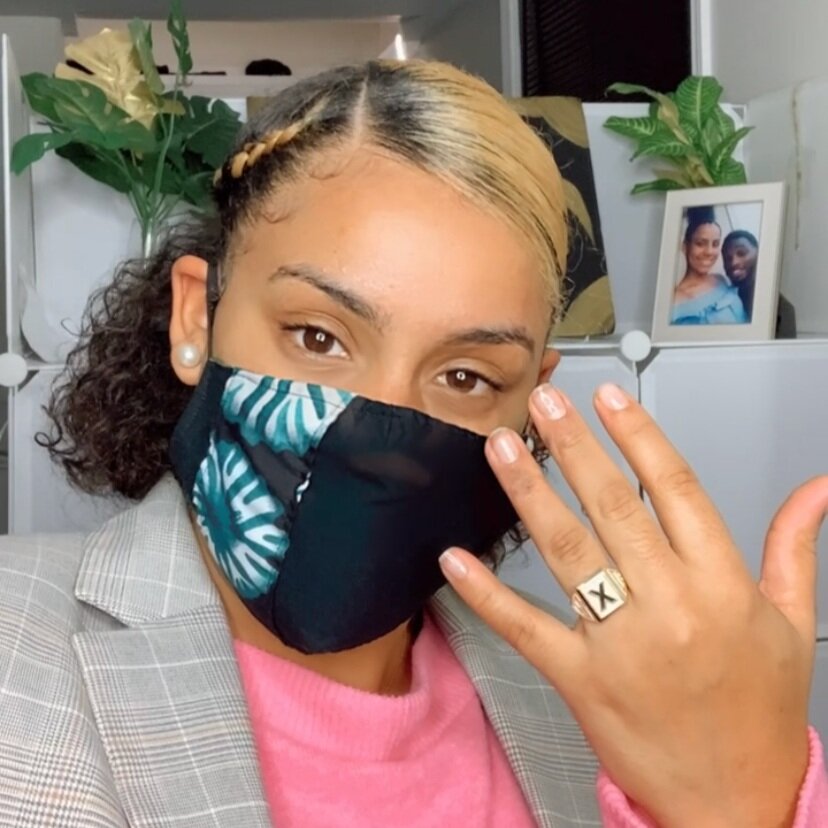
A New Class of Xaverians, and What Their X-Rings Say

On December 3, 2020, as per Xaverian tradition, the class of 2021 received their coveted X-Rings. Deciding what to engrave on the inside of one’s ring can be a big decision, and we were curious about what this year’s class had in mind — so we asked them to tell us about what they chose! To learn more about each ring, click on a photo and mouse over it to read the wearer’s explanation.

An Interview with Terena Francis

As we mark the 27th year Anniversary of Mi’kmaq History Month. Preet Banga, news section editor with the X-Weekly interviewed Terena Francis, the coordinator for Indigenous Student Affairs at StFX about her role and how she is trying to promote an understanding of the Mi'kmaq culture and traditions on the campus.

PB: Please tell us about your role as the Coordinator for Indigenous Student Affairs and some of the challenges you face?

TF: A big part of my job is to support Indigenous students to be successful with their academics, to do this we must ensure that we offer supports that have a holistic approach. I help the students navigate the campus community. I work under the Student Life Department and we are trying to work more as a team and work together to support the students, a case management style. So, this year I am referring more students to different resources within campus and help them navigate that. I also help students with filling out scholarship forms and bursaries. I offer academic supports such as tutoring and note takers. I also link the students with external supports, that would be relevant to their needs.

I want to ensure that the staff that I am referring students to, are also culturally aware and understand Indigenous issues. These are some of the challenges that I face. However, it is getting much better. We are providing cultural awareness training, equity and diversity training and those challenges are slowly going away. People are becoming more aware and understanding in how to better support the students. We need to have a holistic approach when working with Indigenous students. So, I guess my main worry is that I don't want the Indigenous students to feel that they are sacrificing any part of their identity, or their dignity, to receive an education. I try to host events -- traditional and cultural events. I try to ensure that they are continuing with their practices here on campus that they would have done at home.

In the past, I did lot of recruitment with the Mi’kmaq schools locally and within Nova Scotia. I am also a part of the Indigenous Advisors Networking group. The Indigenous advisors get together twice a year. We support each other, because we understand and can relate to the challenges we face at our universities. I also work as a liaison between community sponsors and the students. A lot of times, I help the students navigate the resources that are provided through their community sponsors as well as on campus.

Another part of my position is to educate the campus community through cultural awareness training. I collaborate with different faculty members, with efforts to host events that would support decolonization and educate the campus community on Indigenous issues. I sit on a lot of committees to try to give an Indigenous perspective. However, right now, my focus is on student success. And that's where I would like to focus this year, especially with the pandemic.

PB: What sort of counselling or support are your able to provide to the indigenous students?

TF: The most important thing is that I can relate to the students. I know where they are coming from and they can relate to me. I feel that they are very comfortable to come to me. I provide a safe space for them where they can discuss any issue, maybe in regards to racism or a

professor might have made a comment that they felt was not right. So, we have discussions here in my office where students can release fully.

The lack of knowledge and understanding about our Indigenous history creates ignorance in regard to our past and our present. As a result, there are lot of opinions out there that necessarily are not educated opinions. We are an institution of higher learning and so my hope is that the students will take it upon themselves to seek out opportunities to learn more about the Indigenous people of Canada. It is very important to learn about the Mi’kmaq people in this area.

PB: What are your suggestions to build awareness about the Mi’kmaq people and their history?

TF: One of the main reasons for lack of cultural awareness is the absence of Indigenous employees and Indigenous perspectives. I believe we need to hire more Indigenous staff. We need Indigenous people sitting at those tables to ensure our perspectives are being included. Also, the curriculum should be made inclusive of Indigenous knowledge. Thankfully, StFX is listening to our recommendations, slowly, as you know, all this is a process. I was pleased this year they hired Michelle Sylliboy, who is Mi’kmaq, her classes include conversational Mi’kmaw, along with a few other courses. This is a step forward!

We have a faculty member in the anthropology department, Jane McMillan that works closely with our Elder-in-Residence Kerry Prosper. They work well together ensuring that we are educating the campus community on issues. However, that’s not enough. Mi’kmaq History month is when we highlight some issues, but it shouldn’t only be limited to one month a year. We need more faculty to incorporate Indigenous Knowledge in their curriculum, of course being fully informed of the topics and genuine is a must. Not just faculty though, all of the campus community should know that it was Treaty Day, that the Mi’kmaw are not the only ones to celebrate Treaty Day, we are all Treaty People.

An Interview with Hunter Park, Candidate for First Year Representative

Editor-in-Chief Will Fraser sat down with each of the candidates for 2020-2021 First Year Representative.

Candidate: Hunter Park
Slogan: Let’s make this year like no other, vote for Hunter!

WF: Tell us a bit about yourself and why you decided to run. 

My name is Hunter Park. And I'm from a small island in southern New Brunswick with a population of 2500 people. And I came to StFX because I had visited here a couple times, and I love the community feel. In high school, I was co-President of Student Council. I was vice-president of my class and editor of the yearbook. So, I love being involved and I love student government. I'm a first-year business student at X and I'm staying in MacIsaac Hall, and I'm loving it here. 

WF: Can you tell us what the job of first year rep involves? 

So, the first-year rep to me is to represent the views of everyone in first year, and what they would like done. So basically, advocating for what they want as a group and being there to listen to their opinions and what they'd like to do. 

WF: What is your platform? 

My platform is based on three main points. The first one is equity and diversity. The second one is student involvement and activities. And the third one is safety.  

So, in equity and diversity, I'm openly gay. So I understand how it feels to be left out, and I understand the importance of inclusion on campus and Equity and Diversity being something that StFX strives for, I would love to stand for that as well and it would be my goal to make campus feel like a safe place for everyone. 

So, student activities. I understand there's a house point system here, but not a lot of people know how many points their house has, or what the rankings are and I would like to implement a system whether that be an app or a website, where students can see where their house is standing, and what activities there are to participate in. and saying that I would also like to have more fun activities, while maintaining safe COVID regulations.  

Moving into safety. The main thing that I've heard the students of the class of 2024 want is to reduce restrictions. So, my goal is to maintain a balance between staying safe during COVID, and loosening restrictions as much as safely possible. 

WF: If you can only accomplish one thing on your platform, which would it be? 

If I could only accomplish one thing on my platform, it would be the Student Involvement part. It would be to make it a more fun year for everyone and to listen to what activities and things students would like to do this year. 

WF: The Students’ Union has historically been criticized for being elitist. How will you make The U more open and approachable to students? 

I never had that impression personally of the U, but now that I know that that's a reputation that they have had, I would strive to approach everyone in first year and try to make them comfortable giving input and communicating with the union input in what happens with the union and communicating with me for the union. 

WF: What do you think of StFX’s handling of COVID-19? What would you change? 

I'm very happy that we get to be here in person, and I think that StFX has done a great job with creating a place where we can feel safe. However, there are a few things that I would change, such as I would remove masks in residence buildings and in meal hall, I would create eating areas per each residence house so that you're not sitting with people from different houses, that way you can feel safe in your residence and maintain distance from people within other residences.

WF: Looking at the other candidates, why should first years vote for you over them? 

I personally love all the other candidates and spent time with a lot of them and I think that we'd all be really good choices for the part. However, I as well as other candidates have had experience with student government and representing people. And I would love to represent students of '24. 

WF: If you were to lose the election, which candidate do you hope would win? 

All three candidates have advantages, specific advantages, so I can't pick one to win. 

WF: Anything else you’d like to say to first-years? 

I'd love to have this chance to represent you guys and I hope in the case that I do get elected, that you feel comfortable talking to me about anything, and I'm doing this for the class of '24. 

An Interview with Brendan Roberts, Candidate for First Year Representative

Editor-in-Chief Will Fraser sat down with each of the candidates for 2020-2021 First Year Representative.

Candidate: Brendan Roberts
Slogan: satisfying your hunger for change

WF: Tell us a bit about yourself and why you decided to run. 

My name is Brendan Roberts. I'm from Calgary, Alberta. I, you know, grew up in Calgary, but I lived in Halifax for a few years. My family still has a cottage in Nova Scotia, that we usually come back to. You know, so I do, I do have a bit of a connection to Nova Scotia and that's sort of why I came to StFX originally. I'm running because I've always really been interested in student government. So I was my high school student council president and I've always been trying to get really involved. So you know, here at StFX, I'm actually the director of academics for the Schwartz Business Society. And yeah, I'm just running because, you know, I've heard from a lot of different students just, you know, there's some clarification, I think that could be made, just regarding different policies, especially in terms of the COVID-19 policies, that maybe students aren't fully understanding and I'm not saying that, you know, we're gonna get everything changed, and it's not going to be a normal year, because it isn't a normal year, but, but perhaps maybe just asking for a bit more clarification from the university. 

WF: Can you tell us what the job of first year rep involves? 

It's obviously to represent the voices and the opinions of all first years on campus to the best of your ability. So, for me that looks like, you know, trying to try to take polls and surveys from first years. So I would definitely try and incorporate as much input from the broader first year community as I could, you know, I can, I can always just ask my friends, my personal group of friends, but that doesn't necessarily represent everyone else on campus and I know, you know, opinions vary between residences and friend groups and programs and stuff. So it's kind of just taking all the opinions of all first years on campus, and trying to decide, you know, what's in the best interest for everyone and I can obviously relate to that, because I'm a first year myself. 

WF: What is your platform? 

So, I have three main points for my platform. The first is diversity, equality, and, just inclusivity on campus. So, trying to promote kind of those three things and diversity amongst different people and also trying to promote and support the different groups and kind of programs on campus. So ones like the, different societies that support different minority groups, as well as like the sexual violence support program, I can't quite remember the name, but there is one on campus that I would like to support a little bit more and kind of promote it and make people aware that those programs are on campus, for the students to access if they need them. My second biggest point, or platform policy idea would be trying to work with the university and with the Students' Union, just to, if we are still required to self-isolate, after the semester one break during the holidays. It's trying to make a better self-isolation plan. So just, you know, taking what we learned in semester one and applying it to semester two, and just trying to, you know, maybe that's something that looks like pushing the start date of classes back another two weeks, as we did in semester one, or maybe it looks like starting classes on a normal time, but doing the first two weeks online so that students have something to do while they're self-isolating. I mean, there's a million other possibilities. So, it's kind of just taking everyone's sort of opinions and ideas and trying to collaborate with everyone. And then my third and final biggest point is just as I said before, working with the university and working with first years to help sort of provide a bit of clarification and communication between first years and the university administration just to you know, if there's policies or rules that students don't quite understand, sort of trying to voice on behalf of the administration, why things are that way, and then also voicing the concerns of first years for policies that maybe, you know, we don't quite understand and we don't feel that should be in place, voicing those concerns to university administration. So, to kind of create a bit of a two-way street there. 

WF: If you can only accomplish one thing on your platform, which would it be? 

If I had to pick one, honestly, it would be trying to promote the diversity and the inclusivity on campus just because, you know, people can live with some odd rules and restrictions in place in terms of the COVID-19 crisis but for people who are maybe facing discrimination or things like that, that's something that they're going through every day and I think that for trying to make a difference in their lives for people who have maybe been going through this their entire lives, this is probably what I would want to try and accomplish the most. But, obviously, that's not to say that I'm going to work any less hard at trying to create communication between university administration students, first year students, in terms of the COVID-19 crisis. 

WF: The Students’ Union has historically been criticized for being elitist. How will you make The U more open and approachable to students? 

You know I think that by being a first year student, myself, and not having any previous connection, or any connection at all, to the U, I think that sort of the first step here, you know, I've heard, you know, people, you know, when whenever there's sort of a bigger, sort of godlike figure, in this case, I guess you could call that the U, people will always be critical of organizations like that. But, you know, for me, I want to try and be sort of communication between the students and the U. So, by being a first-year student, by not having any connections to the U, I think that I can be a bit more approachable than, say, one of the VPs on the U. 

WF: What do you think of StFX’s handling of COVID-19? What would you change? 

Yeah, so I mean, this is obviously part of my platform, so I've spoken a bit on this already. But I think that StFX has done an amazing job. You know, in hindsight, we can talk about all the little things but, but in hindsight side effects has done an amazing job at handling this crisis, just because, you know, they, they took a world pandemic, and, worked with the community with intergovernmental organizations, provincial government with the health care system, and put in place a plan so that students could come from across Canada, and there's even a few, you know, students from outside Canada that are able to come in and study here and we're one of the only universities really, that I've heard of that is doing in person classes at all. So, I think that's a really amazing thing and it's, it's such a privilege, and I think that all the students here should be so appreciative and very lucky, 

that we're in a position where we can, you know, be a part of this. Now, having said that, you know, I do think that there's some restrictions, you know, that are maybe a little over the top. For example, you know, the other day, my dad picked me up, he was taking me out to lunch and it was, I believe is on Sunday, but I was walking out to the car, he parked a couple streets over just on campus but I had to walk in, you know, I walked with my face mask on, but I was walking alone, there's no one out. So, you know, it seems a little odd that we have to wear face masks outside, you know, especially when we're not near anyone. You know, another big thing I think, for me that I would like a bit more clarification on is, you know why we have to wear face masks when we're in our residence with, you know, a couple people of we're in our rooms and we have friends over whatever, why we have to wear masks then but you know, we can go to meal hall and, and you can have 15 people or whatever sitting at a table from all different residences, eating without your masks. So, you know, just things like that, I think, could use a bit more clarification and maybe some review from the university but in, you know, in the grand scheme of things, I think universities done an amazing job. 

WF: Looking at the other candidates, why should first-years vote for you over them? 

I think first year students should vote for me because, well, I was, at first the only candidate and I'm one of the only candidates still to have actually released a platform. You know, I have my website linked to my bio that goes into fairly good detail just about my platform, my points and my points of recommendation, but, you know, I'm still one of the only candidates to actually have released a platform at all and I'm the only one to have gone into detail about how I'm going to get things done and exactly what it is I want to try and do. I think that the other thing is, I'm, you know, I've taken a lot of time, especially just this past weekend, where I was walking around with my campaign manager, Marcel, and I was just walking around, you know, just around campus, and we went to the wheel, and just talking to people and just sitting in and seeing what their concerns were, and trying to understand, you know, because my opinion of what's important as a first year might be very different than someone else's. So just trying to understand different people's opinions, and different people's experiences. As a first-year student, I think it's sort of what sets me apart from my opponents. 

WF: If you were to lose the election, which candidate do you hope would win? 

I can honestly say, you know, all the candidates are, really good people, I don't think I could pick just one candidate. You know, I can say great things about all of them. Katia, she's a really, really kind person, she has, you know, a great deal of respect for me, she's, sort of one of those people who is, you know, she tries to see the bright in things, and she tries to work hard for what she believes in. Hunter actually released a platform a few days ago on his Instagram and, you know, he's been pretty vocal about, you know, what his, what his platform is, and what he wants to try and accomplish in the university. And Anna you know, she's also just an excellent, she's a very kind person as well, like, she, you know, she's working hard and you know, she's just overall a very decent person, a very kind person to speak to, and I think that, you know, whoever gets elected on Thursday you know, they'll have my support and I think any one of us would do a great job. 

WF: Anything else you’d like to say to first-years? 

I think the biggest thing for me is as much as I would love to have your vote, and I, you know, I will obviously continue to campaign 'till the end of the campaign period. And as much as I want to say, you know, vote Brendan and support me in my platform and, and work with me, you know, the biggest thing is just get out and vote. So, on Wednesday, students, you'll get an email to your X account, with a link from the Students' Union, just where you can log in, and you can vote on Wednesday. But yeah, the biggest thing is just vote and don't forget that on Wednesday, there's a meet and greet at the Inn and if you can show proof that you voted, you get 50% off appetizers. 

An Interview with Katia Beales-Salovitch , Candidate for First Year Representative

Editor-in-Chief Will Fraser sat down with each of the candidates for 2020-2021 First Year Representative.

Candidate: Katia Beales-Salovitch
Slogan: A voice for you. 

WF: Tell us a bit about yourself and why you decided to run. 

So, I'm Katia, I'm originally from New Jersey, but I live in South Carolina now. My mom went to X so that's what drew me to the school to begin with. I'm a business student, and I'm minoring in political science. I plan when I graduate to go into politics. So, when I saw this opportunity, I jumped at it.  

WF: Can you tell us what the job of first year rep involves? 

The job of the first-year rep is really about advocating for the first-year reps, you know, every year, there'll be different issues and different things that come up in discussions. So, it's just making sure that you are making decisions and speaking on behalf of the class and not just you know, your personal opinions. 

WF: What is your platform? 

My platform this year is "a voice for you." and what this means to me is making sure like I said in the previous question, really making decisions and speaking on behalf of the class, far too many times this role is used as a way for, you know, someone to make their own personal decisions on what they think is best and I'm really about my platform is really about making sure everyone in our class as many as possible, you know, can really get their opinions and their ideas out during our first years, students here at X. 

WF: If you can only accomplish one thing on your platform, which would it be? 

If I can accomplish one thing, it would really be about the main point of my agenda, which is a voice for you. My goal is, if I'm elected to, to hear out as many first years as possible, whether that be in person, you know, COVID-19, it's a little hard so that'd be in person or on social media or, you know, through email or whatever. To really just get to know first-years and see what they want to accomplish this year. You know, of course, every person has a different idea. So, you know, to get a cohesive conclusion of what everyone wants to accomplish is my goal. 

WF: The Students’ Union has historically been criticized for being elitist. How will you make The U more open and approachable to students? 

Especially nowadays inclusivity is a huge deal, especially to me personally, I think that constantly working on making not only the Student Union, but you know, our class, our school and, you know, everything on campus as inclusive as possible is always a constant goal that we should be working on, and with my platform a voice for you, I think that part of that is, you know, being inclusive, not just listening to people that I personally hang out with, or see on a daily basis or have in my classes, but, you know, see the person that I normally would never come across on campus and listening to what they have, I don't want to just listen to people that have the same opinions as me. If not, you know, that would just be my agenda I want, I genuinely want to hear everyone out because I think that's the best way we can come up with ideas and goals that we want to accomplish, just, you know, sometimes other people that you wouldn't even think to talk to, you have some of the greatest ideas. And that's something that I just really want to focus on this year, and make sure that everyone's included, and not just me, or, you know, whoever wins for sure, not just us, you know, kind of thing. 

WF: What do you think of StFX’s handling of COVID-19? What would you change? 

It's a great question. So, I'm from the States. So definitely, COVID-19 is way worse there and it's not being handled the best, most of my friends are having to be sent home from college, which is not the best scenario, especially because most of my friends are first years, I think StfX is handling it honestly, so good. You know, we're one of the only schools that is in person at all, let alone we have no cases so far, which is, you know, amazing. We've all been able to, you know, still socialize, and, you know, following the COVID guidelines and all that and we've also still got to, you know, participate in all these great things, there's been so many volunteering, there's been hikes and stuff, you know, I think, I really do think X has done a great job and the only thing that I would push to find out soon is what, you know, Christmas break and second semester is going to be this year, you know, I know, that's a lot of stress on people's minds, and, you know, with plans and just, you know, the second semester in general. So, I definitely would want to find out as soon as possible, what that entails and, you know, what are what are the options for that? 

WF: Looking at the other candidates, why should first-years vote for you over them? 

I really do think all of our candidates this year would do an amazing job. They're all so nice, and, you know, awesome people that I've really been grateful to get to know, these people, like I said, I would never have talked to outside of this. So, it's really awesome that I've gotten to do that and that's exactly what I hope for of I become first-year to just meet more people just like this. I think that my experience in high school will really help me with this role. I've had a lot of leadership experience, you know, being president and being on other members of executive teams for my high school and leadership activities. I have a huge passion for this, it's not just something that is a fun thing for me, I really do love it. And it's something that I want to do, you know, this is what I want to do as my career. So, I put a lot of focus into this and a lot of time and effort into this. So, I think that although my other candidates are great, because my passion is so huge for this, I will be spending so much time and you know, my mind will really be focused on this throughout the year. 

WF: If you were to lose the election, which candidate do you hope would win? 

If I lose the election, I hope that whichever candidate people, you know, connect with the most, of course, I want to win, you know, anyone that's running wants to win, but I really do want all the first years that decide to vote to vote for who they think is best. You know, of course, everyone has friends and, you know, you know, people from this that are the other thing, but I think everyone should vote for who they think is going to do the best job and who lines up with what they want to do the best. I think everyone has their personal opinion, and I hope whoever, I really do hope whoever gets the most votes, and whoever people align with the most wins, and that will do the best job for our first year because it's my first year as well. So, I really do want any of the four of us to succeed. 

WF: Anything else you’d like to say to first-years? 

I want to say that I know this year is not the most conventional year with COVID-19. But, you know, we just got to take it day by day and you know, the stresses will go away, hopefully soon. 

And, you know, to keep their heads up and within this election, like I said, you know, vote for who you personally think will do the best for you. If that's me, great and if not, that's totally okay. My campaign is about a voice for you because I want to listen to everyone's opinions and have conversations and, you know, really make this year about all of us as it should be, you know, we're all first year it's not just me, so I hope that if I'm elected, I get to meet as many of you guys and, 

you know, have conversations with you, whether that be about student union business or not. 

But you know, please feel free even after the election to direct message me on my Instagram or Snapchat me or email me or whatever, ask me or talk to me about anything. 


An Interview with Anna Hancin, Candidate for First Year Representative

Editor-in-Chief Will Fraser sat down with each of the candidates for 2020-2021 First Year Representative.

Candidate: Anna Hancin
Slogan: Let's make this year unforgettable 

WF: Tell us a bit about yourself and why you decided to run. 

So, my name is Anna Hancin. I am originally from Lindsay, Ontario. I have had lots of experience throughout my high school career, I progressively got more and more involved in my high school years, I realized that I love to make a difference in the school community. I was a founder of our high school's mental health team. So, our goals were to advocate for mental health resources within the school and within that group, I was able to organize mental health conferences, advocate for students get some resources available. So, I feel like I am qualified for this position because of that experience. As well, as part of the mental team, I was also a school announcer, so I am very articulate, and I'm confident in my speaking. I like to advocate for others and organize events for the better of the community. I love to talk to others and listen to others, get their inputs. I enjoy advocating for others listening, and I'm passionate about what I do. When I set my mind to something, I do the very best that I can to make that happen. I'm very determined and passionate. 

WF: Can you tell us what the job of first year rep involves? 

My job is to represent first years in the Student Union. So, I am here to be your voice in the Student Union, advocate for what the first-years want, the changes that they want to see. I want to make sure that the class of 2024 is happy and is represented I am your voice. Especially during COVID, as a part of my campaign, I've made myself available using email and Instagram, and I really just want to connect everyone amongst this pandemic. We're all going through this together. So, I want to bring all of these first-years together to share their experiences. 

WF: What is your platform? 

So, my slogan or motto this year is to "make this year unforgettable." It is an unprecedented year for sure. So that's why I want to bring all of these people together, we're all going through this crazy time together and I want to make sure students are getting the resources that they need. I want to make those resources available for the students and want them to know what's available. Yeah, and I'll advocate for first year students within the mandate of my position. So my goal is to advocate for communication between the administration and the students for mutually acceptable agreements. 

WF: If you can only accomplish one thing on your platform, which would it be? 

I think that the mental health of the students is one of the most important things. Making sure they are getting the resources that are available to them to help them through this odd COVID pandemic. Because it's such an odd time so many things have been changed in our first-year university experience that I want to have some achievable goals to make sure everyone is staying well and staying healthy. 

WF: The Students’ Union has historically been criticized for being elitist. How will you make The U more open and approachable to students? 

In my position I'm here to represent all of the first-years so I my platform is open. I am willing to listen I love hearing other opinions. So, I will bring what people are asking requesting to the table, make sure that these first years get their voices heard. And yeah, we're all we're all going through this together. So, I want to make sure that we're all treated fairly and equally. 

WF: What do you think of StFX’s handling of COVID-19? What would you change? 

I am quite impressed with how the school has set into place all these regulations and rules. Yes, it is hard for first-years to have that true university experience. But I am also really impressed and proud of how us first-years have handled it so far. I want to try and get those classic events like homecoming, house hockey things that are up in the air, we're not sure what's going to happen, I want to make sure that if those don't happen, we adapt to something within the COVID regulations. I think I want to work with the Student Union to make those events available to all first years and work within the health regulations, and the school regulations. 

WF: Looking at the other candidates, why should first-years vote for you over them? 

I am very approachable. I always take a positive outlook on life. So, I feel like listening to their problems, other thoughts, we can turn that into a positive experience, make a positive change for the better. I'm very open. I'm very passionate about what I do. So, I am going to make sure that not only that they're heard, but there will be action, there will be change. I also know that I want to make achievable goals for the first-years, and I feel like I can make those goals realistic. So that way, I'm not making any empty promises. We are working with what we have and from there, we are going to achieve our goals and make a difference. 

WF: If you were to lose the election, which candidate do you hope would win? 

I think everyone who I'm running against Hunter, Brendan, and Katia are all amazing people, they're also hard working. I would love to see any of them win and represent the first-years all fairly, equally, and take that positive outlook that I really want. 

WF: Anything else you’d like to say to first-years? 

I'll try and make the best of this COVID situation. Stay positive, stay healthy, and let's make this year unforgettable. Let's make the best of it. 

An Unsung Hero - Interview with Gail Bowles-Fraser

It is rightly said that true heroism is remarkably sober, very undramatic… It is the urge to serve others at whatever cost.

In the past few months, we heard many new words in the context of Covid-19, that have become a part of the daily vocabulary. Some words such as "corona warriors" or frontline workers, stand out immediately and bring a sense of gratitude for them. However, some undervalued heroes of the Covid-19 pandemic, who really need to be recognized, are the cleaning staff, very critical to preventing the spread of the virus. One such hero at StFX is Gail Bowles-Fraser from the cleaning staff, who is a very familiar face for all of us.

Gail is always there to help the new students at the residences, sometime even teaching them how to do laundry. The past few months have been challenging for Gail, who took some time off in summer, and is now back, ready to help us.

Gail grew up in Toronto but has been working at the University for the past 16 years. She lives with her husband in Antigonish. The people are very loving and supportive, she says. Talking about mental strength, Gail said, "the students provide me strength. And my source of motivation is seeing higher year students who are close to me. That is what gives me strength."

Gail said, "students become my family.” Her husband, Paul Fraser, is also very supportive of her work. Asked if she feels safe being back at campus, Gail says "knowing that there are testing rules on campus and everyone will be tested for Covid-19 before they arrive on campus made me feel safer too." "I can't wait to see all the students back on campus!"

Gail, who grew up in a rough neighbourhood in Toronto, but her husband is from Antigonish. She found the people here very nice, and this has been her since she moved here with her husband. Gail is very well connected with other community members and during her time off from the campus in summer, she would sometimes have tea with others at the porch. She really wants to do more for the Friendship Corner and the Library in Antigonish. However, the community that she loves the most and knows very well is the campus community. "I love that summer is over and the students are coming back… I am no longer just the cleaner to them; I feel more connected to the students here at StFX… almost as if I am their honorary aunt."

Gail loves to learn about other cultures and accept them in her life. Perhaps that’s the reason she is so close to students at StFX, who come from different backgrounds. Recalling her childhood, Gail says, "it was hard for us to be a blended family because we have many different blood streams and therefore different personalities but I believe that kindness helps to win people over, and I actually learned this from my mother."

She usually visits her family twice in a year but was not able to go this year because of Covid-19. She was also scheduled to visit Australia this year to visit her stepchildren and grandchildren, but it had to be cancelled. "My dream is to see the whole world," says Gail.

Difficult Choices for Canada in a Chaotic World, Perspective from a Former Ambassador to the United States

Difficult Choices for Canada in a Chaotic World, Perspective from a Former Ambassador to the United States

On February 27, 2020, StFX hosted the annual Allan J. MacEachen Lecture in politics, a series that has hosted prominent Canadian political figures such as the Right Honorable Jean Chrétien and Senator J. S. Grafstein over the last 23 years.

Read More