St Ninian Cathedral: Beneath the Brick
/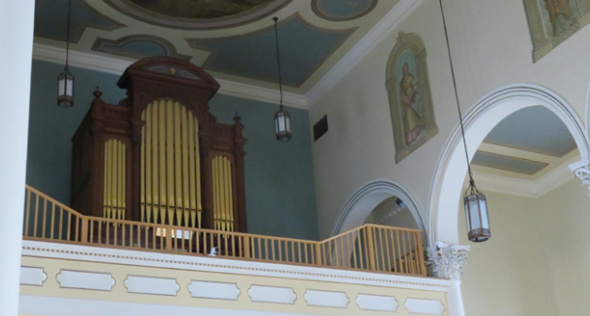
Photo provided by amy lam
The tolling bells echo across campus every weekend, and in that metal thrums the history and artistry of over a century. Rooted in decades of community, St Ninian Cathedral is as much an inextricable fixture of Antigonish as St Francis Xavier University itself, but for many students its importance is overlooked. What is its significance? Why do parishioners, who last year donated thousands of dollars for ceiling renovations, care so much about an old building? A couple weekends ago a few of my peers and I had the pleasure of chatting with Father Danny MacLennan, pastor at St Ninian Cathedral, to find out.
Our story begins in the mid-nineteenth century in the Diocese of Arichat, which was then an up-and-coming fishing community in Cape Breton. Bishop Colin MacKinnon established St Francis Xavier College, a seminary, and moved it to Antigonish in 1866, where it became St Francis Xavier University. Antigonish was only a small village at the time, but it was MacKinnon’s vision to establish a cathedral alongside the university and he quickly gained the community’s support. A visiting bishop from Quebec recommended the cathedral be given the name of St Ninian, after the first Scottish saint. “That’s why we have this connection with the university,” Fr. Danny told us, “...because Bishop MacKinnon was the founder of the university as well.”
The cathedral interior was undecorated at the time of its completion in September of 1874. (Go to https://saintninian.ca/gallery for some cool pictures and drawings of the cathedral dating back to when people still rode horses around Antigonish!) But roughly thirty years later, the parish commissioned Canadian painter Ozias Leduc. Sometimes referred to as “Quebec’s Michelangelo,” Leduc was a well-known painter whose work now features in the National Gallery of Art. “It would have been very extravagant at the time to bring in a painter to paint your cathedral,” said Fr. Danny, “...and he painted the cathedral from top to bottom.” Using fresco-secco, a technique in which oil paint is mixed with plaster, Leduc took roughly two years to cover the walls and vaulted ceiling with exquisite, intricate murals.
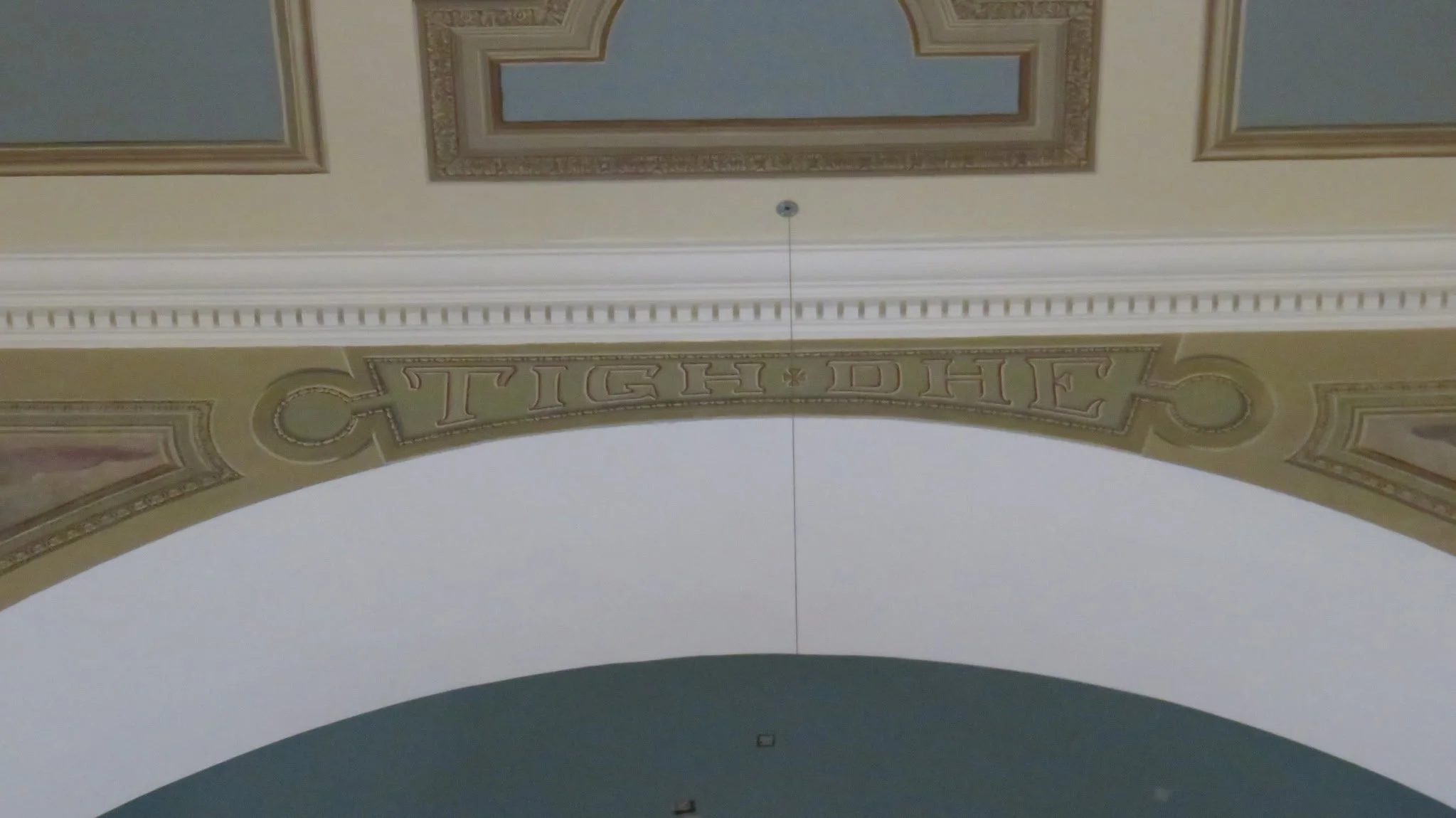
Photo provided by amy lam
We walked with Fr. Danny around the Cathedral as he pointed out the various paintings, including rows of saints, stations of the cross, and the Holy Spirit. A painting of St. Ninian, the oldest in the cathedral, was completed by another artist and brought to the cathedral in 1874. Leduc also painted Tigh Dhe, meaning “House of God” in Gaelic, above the altar. The same words are echoed on the building’s brick exterior, a sign of Celtic identity that broke the Latin traditions of the Roman Catholic Church that were accepted at the time of the cathedral’s construction.
However, the artwork has endured a perilous past. In the thirties, the cathedral’s stained-glass windows were relocated from their original location near the front of the church, and another artist was commissioned to paint over and around the original murals in an attempt to brighten them. Over subsequent years, more layers of paint were added so that some of the original murals were eventually covered in over seven layers of paint and plaster. And several years ago, a steam leak in the building started causing the paint to peel off the walls.
Today, through dedicated fundraising efforts, St Ninian parish has restored many of the cathedral’s damaged paintings, hiring restorers to painstakingly remove the layers obscuring Leduc’s original artwork while structural repairs were made to fix the peeling paint. It’s been an expensive, time-consuming process, but the brilliance of each newly restored piece speaks for itself. You can check out https://saintninian.ca/successful-projects to see the projects that have been completed to this date.
Ultimately, the success of these fundraising efforts is a testament not only to the historical and artistic significance of the building, but of the deep ties St Ninian Cathedral has to the Antigonish and StFX community. “We didn’t go to the big corporations or anything,” said Fr. Danny, “...and that goes back to the university. The university allowed a lot of people to come to Antigonish and do very well… and we’re reaping that benefit through their generosity.”
History is lurking in every corner of the cathedral, though, not just the ceilings. The building itself is now 152 years old. “It became a heritage site… when the cathedral was one hundred years old,” said Fr. Danny. Bishop KacKinnon, who died in 1879, was buried in a crypt located directly below the altar of the Cathedral, alongside Archbishop Fraser. And while our tour didn’t end up including the crypt, Fr. Danny did give us the rare chance to peek into the bell tower and see the old bells that echo over town to this day.
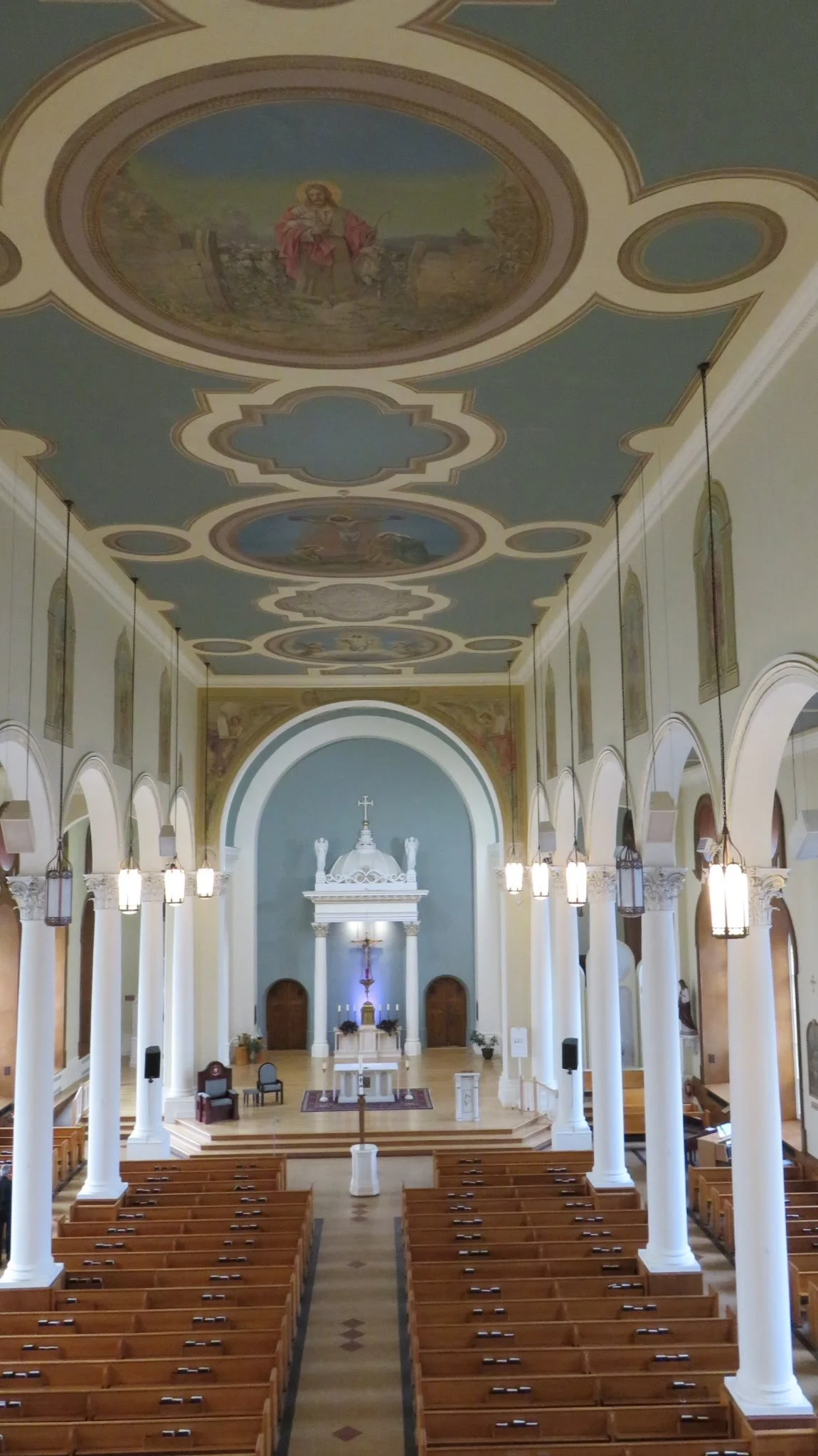
photo provided by amy lam