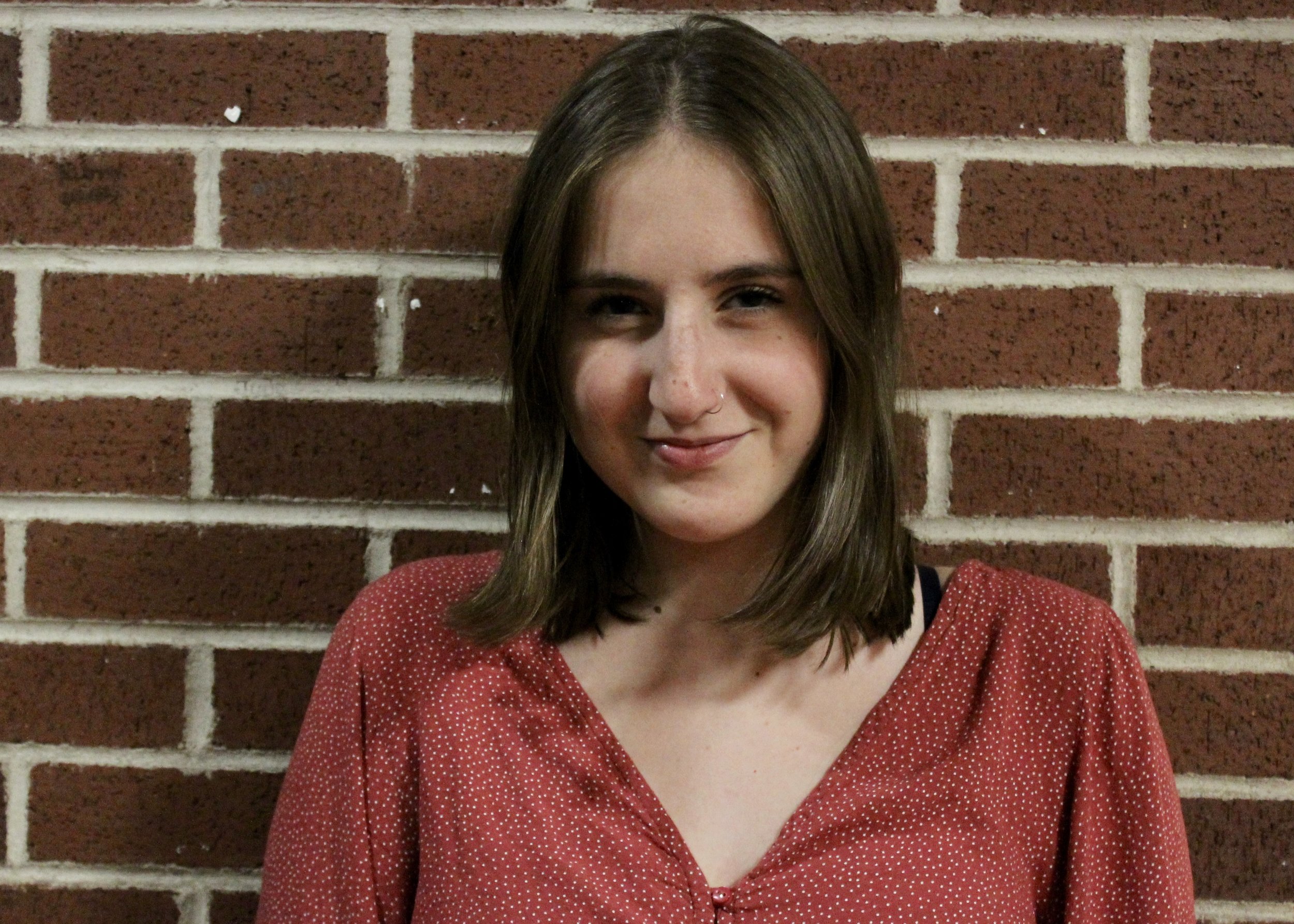
Meet Kelly Ann Farrell


Farrell’s artwork for sale at the Tall and Small

If you find yourself rushing into 342 Main Street before morning class or if you have time to sip on a coffee while you study, be sure to take a moment to look at the walls. The ordinary warm cherry interior of the coffee shop is beautifully decorated with a smattering of colourful paintings. From beach scenes to portraits to depictions of houses around town, artist Kelly Farrell has taken over the Tall and Small with her dozens of canvases. 

Born and raised in Antigonish, Farrell has, for a while now, become a well-known artist and icon in her community. She is an active member of the L’Arche community in town and is currently featured on the artists’ page of the L’Arche International website. Farrell has undoubtedly made an impression with her work in her home community – and she certainly has our attention. 

2.jpg

A member of Hearts & Hands in Antigonish, Farrell is a workhorse in the art studio on the corner of West Street and Highland Drive. Mentors Tina Angustia and Glen Mattie at the Studio can attest to Farrell’s work ethic and ability to motivate herself when it comes to her work. Angustia commented, “Kelly is always looking for what to paint next”. Smeared across the upstairs walls where Farrell creates her work are blown-up photographs of her subjects. These photos are strewn on her workspace, hanging on the door frame by her desk and serve as her primary perspective when she begins her projects. Along with painting, Farrell also enjoys photography and drawing.

When asked about her favourite part of working at the Studio, Farrell answered, “The people.” Farrell shares space upstairs with several of her friends and fellow artists. She signed, “The people are silly… there was a Halloween party where people made funny faces in a Photo Booth and people danced. Glam (her nickname for Glen) had a lemonhead.” It goes without saying, the everyday events in Farrell’s involved life are worth documenting. And that is what she does - so brilliantly well. 

Farrell’s art isn’t solely a vehicle for her talent in visual arts. It is also a means of communication. Her paintings are all snapshots of the beautiful memories she has, the people who mean the most to her, and the unforgettable places she’s been. While at the Tall and Small on October 25th for her artist’s Meet and Greet, Kelly signed about her variety of canvases on display. She picked up a couple paintings leaning on the west-most wall and signed, “When I was with my sister in Orlando, Florida, with palm trees… and kayaking.” Several of her paintings reflect her other interests and hobbies outside of making master pieces. “I like summer. I enjoy taking pictures, boats, biking, kayaking, the cottage, and spending time with my sister.” Farrell also enjoys some of the finer things like the rest of us. “I like pizza, playing pool, drinking wine and having tea (Twinning’s especially!) … [with friends and family].”

22.jpg

Candidly, coming into the Studio to check out Farrell’s work felt like an interruption. Immersed in her work in progress, a painting of her brother’s new car, it almost didn’t feel right to take her out of her zone. However, as soon as she was asked to explain her love for creating, the list of reasons went on. As Farrell explained why painting makes her happy, she wrote out and drew her reasons. She paints a clear picture. Farrell’s constant running dialogue, in the form of fine art, will not be stopped. It is her way of consolidating communication, fond memories and emotion for others. Her art is a universal language we can all understand and enjoy on different levels. It is clear to everyone around her that more than anything, Farrell loves what she does, and this message is conveyed in each of her canvases.


X-Pride and Coffeehouses


Robert Chatterton on the LGBTQIA2S+ community in Antigonish

X-Pride’s very own Robert Chatterton generously took the time to be interviewed by Bailey DeEll. During this interview, we discuss his recent work with X-Pride and how he hopes it will affect the community of Antigonish. 

***

BD: How long have you been involved with the X-Pride society? 

RC: Since 2016, I began as a general member helping out with the events which lead me to have a leadership role. Later I became the president of the society in the 2017-18 year and have held the position since. 

BD: What lead you to join the society?

RC: Early on in my time at StFX I was physically assaulted because of me being gay. From this I realised the lack of supports available to those a part of the LGBTQIA2S+ community, as well as a lack of community identity in general. My goal was to create a visible community for all students and to educate all students, especially those in first year, about the LGBTQIA2S+ and how to be an ally. 

BD: What kinds of events do you currently hold to promote education and community at StFX?

RC: Sex Toy Bingo is hosted at the Inn once per semester, it is designed to be a sex positive and queer inclusive space to educate people on sex, especially sex outside the heterosexual couple. Spill the Tea is a workshop based educational discussion around different topics that effect the queer community specifically, this year we have covered sexualized violence and coming out narratives. In future Spill the Tea’s we plan to cover gender and Queer Intersectionality’s: How you can be privileged and oppressed at the same time, among others. We also held National Coming out Day organized by Bre O’Handley, the Gender and Sexuality Diversity Adviser. We gave students the opportunity to fill out a message on various posters, each with their own writing prompt to support and identify with the queer community. We have also had two Awareness weeks, one for bisexuality and the other for asexuality. These two identities are not necessarily recognized and validated so we wanted to highlight them and publicly show our support for these communities. Also we hold community building events, such as Homoween Bowling, movie nights, board gaymes’ nights. We also host coffeehouses at the Tall and Small each month where it is open to everyone in the community, including those in high school and older generations, to have an intergenerational mingling of queer folk.  

BD: With the coffeehouses being held so regularly, how do you feel they are beneficial for the community?

RC: I think they are beneficial because they provide an assessable queer positive representation that I think this town needs. Being someone from a rural Nova Scotian town, I had no queer positive representation in my life, until I came to StFX. Because of this, I had internalized homophobia and didn’t come out until I was 20. With the coffeehouses, my goal was to create a visible queer positive space that anyone can attend, from high school students to senior citizens, that will build intergenerational community and shift the town to be more queer inclusive as a whole. Hosting these coffeehouses at one of our local coffee shops bridges the gap between the university and the town. 

BD: What are some of your future plans for X Pride this year that students and community members can look forward to? 

RC: On November 20 we are holding a vigil for our Trans Day of remembrance, in which we remember and honour all those who have died because of transphobia. January contains the events I am most excited to tell you about, it is our Pride Month at StFX and we will have different events to celebrate the multifaceted interests of the community. Some of these events include a queer X Talks, drag queen hosted Sex Toy Bingo, and the Nova Scotia renowned drag show “Priscilla, Queen of the Highlands.” While these three are the highlights of the month, we still host our regular events like the coffeehouse and Spill the Tea, but also events exclusive to this month like rainbow party, art night, among others. Lastly we organize a trip to the Halifax pride parade in July to have local Gender and Sexuality Alliance (GSA) students experience a celebration of queer identity. 

For more on X-Pride check them out on Facebook, Instagram, and Twitter, and for other resources pertaining to the LGBTQIA2S+ community look for Bre O’Handley in the new offices on the fourth floor of the Bloomfield Centre, or contact her at bohandle@stfx.ca


Visible @ X Halloween Posters


Successful campaign or scary slip-up?

Students passing through the Bloomfield Centre in the past few months will have paid witness to the new Visible @ X advertising strategy: eight foot tall pieces of cardboard plastered with posters about consent. The first round of posters, put out for homecoming weekend, took to re-imagining popular StFX cheers to champion consent, boasting slogans such as “sex is dynamite, but only if there is consent” and “Go X Go, Go Sex Go.” 

From the Visible @ X webpage, “Visible @ X means zero tolerance for sexual violence of any kind” and that “consent is not optional.” The goal behind the posters follows that philosophy - to impress the importance of consent on StFX students, and to get students talking about consent by connecting it to relevant events and popular slogans on campus. To achieve this, Visible @ X has designed a series of different posters for different holidays and events on campus. The most recent round of posters features zombies, bats, and a haunted house for Halloween; but are zombies the only scary thing about these posters?

Despite the good intentions behind the campaign, feminist students and faculty are shocked and disappointed at the choice of slogan: “too drunk to consent, or zombie?” Comparing someone who can’t consent to a fictional monster makes light of an extremely important issue, and is particularly ignorant in wake of recent events on campus. 

First year student and activist Jenny Li is one of the many students to voice concern, and states that “in their attempts to lighten the subject matter, the posters trivialized sexual violence and did little to advance the education and awareness so vital to its prevention.” Jasmine Cormier, who has spoken up about the campaign on Twitter, agrees, “trying to make light of such a serious issue that students face every day isn’t what’s needed right now... comparing someone who’s heavily intoxicated/possibly drugged to a zombie just sends a message that this problem isn’t real or meaningful.” 

Other students, Grace Tompkins among them, don’t feel comfortable being in a space where posters such as this are being displayed. “The language used in them was extremely insensitive, and seeing 20+ of them plastered on a board in the SUB made me feel uneasy,” shares Tompkins.

Perhaps a bright side to this slip-up is that it has succeeded in sparking conversation about the importance of language in talking about sexualized violence and assault, as is evident, for example, on Twitter. Li adds, as well, that “it is heartening to see any effort made, by student or staff, toward the prevention of sexualized violence.” Progress isn’t a flawless process, but what is important is that we learn from our mistakes moving forward, and ensure that they aren’t repeated. 


Musicians in the Spotlight


Female musicians who hone their craft

St. Vincent - Actor

ilovestvincent.com

ilovestvincent.com

Annie Clark’s Annie Clark, but St.Vincent changes. St. Vincent is her vehicle. Her 2007 debut Marry Me and 2017 release Masseduction polarize from one another in every way: tone, musicality, lyrical content, promotional material, general aesthetic, whatever you’d like. Marry Me’s off-beat brand of quiet, self-aware, and soft-spoken feminine energy acts as a warm hug from someone who smells interesting - I can’t quite pin down the spice or if I like it, but it’s warm and it has my attention. Masseduction drops the “good girl,” amps up the aggression and angularity. It smells like sex (check out the title track). 

So, I’d like to bring something in the middle, 2009’s Actor. Annie Clark spent much of the writing process listening to Disney scores. “The Strangers” opens Actor, beginning with the soft, whispered deliver that featured so heavily on Marry Me. I can see the dark Paris nights from The Aristocats, but it’s subtle. Two-thirds into Track One the pulse turns to a stomp, elephants begin to play trumpets announcing Prince John’s parade through Sherwood Forest. And then we’re done. 

Actor is a hallucinogenic trip wrapped in anything you’ve ever loved about Disney. While St.Vincent’s art changes drastically from album to album, this album may be the easiest to hold and the easiest to digest. The cozy nostalgia will catch you, but her sense of edge and danger may be more memorable in the end. After all, villains usually get the best songs.

Oathbreaker - Rheia

deathwishinc.com

deathwishinc.com

This will be the most difficult listening experience you’ve ever had, no question. Oathbreaker’s 2016 LP, Rheia is an album of contradictions - one of my favourite recordings ever and I can barely survive the whole record. Caro Tanghe’s vocal performance is one of the best I’ve ever heard, and I hated every second of it. This record’s a behemoth, I’ll try to make sense of it.

Genre’s the hardest question. Oathbreaker combines delicate but haunting folk-inspired breaks that act as a short breather between white-hot blasts of black metal. Halfway through the first bits of black metal, the first of Caro’s shrieks, any self-respecting person would pause the album, turn it off, and never listen to it again. After all, black metal has traditionally been understood as male-dominated, brutally heavy, unrelenting and impenetrable. With Rheia, we’re left with some of the second, a bit of the third, a whole lot of the fourth, and absolutely none of the first. Her anger and aggression are uncompromisingly feminine. Her calm moments, while quieter, sound cold. She delivers her lyrics as a figure who after screaming in frustration begins to quietly mumble: “I’m just disappointed.” 

With Rheia, Oathbreaker gives a listening experience you’ll never forget. You, like me, will have difficulty sitting through it. And you, like me, will be left exhausted and smiling because it happened - smiling too because it’s over.

Pronoun - itty bitty discography (the whole discography’s gold)

Ever catch yourself thinking “Bleed American was music’s peak?” No? Just me? Alright. Alyse Vellturo of pronoun loves emo as much as she hates capitalization, and it shows. 

I’m a walking cliché for this one - I found pronoun through Audiotree sessions. Once they stop introducing me to half-decent music, I’ll stop paying attention. First things first, Alyse’s voice takes most of my attention. There’s a quiver in her live vocal that comes off less nervous and more intentional. It’s as though she’s giving the impression of a shaky singer just happening on every note perfectly, an accidental artist. 

But maybe I’m using flowery gobbley-guk and missing the point. After all, her story implies introversion and stage fright. Alyse wrote most of pronoun’s lo-fi sound in her bedroom, whisper-singing her vulnerable lyrics. Rather than slotting into “Audiotree band with a mumbling front person, awful moustaches that smell of cheap IPAs, clothing caught somewhere between ’97 and ’02, the bassist just outside camera view, the drummer who keeps losing time, and the keyboardist who keeps mean-mugging”, pronoun sneaks a smile on your face. Go to your Spotify right now, listen to Pronoun’s most recent single “Run”. There it is, there’s that goofy-ass smile. Pronoun doesn’t bring nostalgia in some heavy-handed sledgehammer like vapourware. You’re taken to better times, wherever or whenever they were - though, the clothes just might be baggier.

While the pronoun discography lasts for now as long as a sneeze, Alyse Vellturo hasn’t made a single duff note.


Frank Landry Preserves Acadian Phonetics in Writing


An unpublished interview with legendary Acadian author

Yanik Gallie interviews Frank Landry at the Starbucks coffee house in Chapters at the location in Dieppe, New-Brunswick during the summer of 2015. 

***

YG : Comment sta commencer par écrire dans les journaux?

FL : J’ai écrit pour 3 journaux. J’ai mis 25 ans pour le Moniteur, ptête moins. En total, 33 ans ‘going on’ 34, ce qui inclue la vie de Delphine. Avant ça, j’écrivais un autre caractère qui s’appelait Old Josh. J’ai une fascination pour la phonetic, pi j’aime d’être un raconteux d’histoire. J’ai un background en sociologie. Sociologie veut dire tu fais beaucoup d’recherche. J’ai aussi pris des cours d’anthropologie. Ça ne me met pas plus intéressant, j’dis ink que y’avait des affaires importantes que j’avais été appris quansse tu fais d’la recherche, comme y faut que tu préserves des tels moments dans une histoire. 

Quand j’ai arrivé à Halifax, j’avais écrit Old Josh, les phonetics d’un Cap Bretonner. J’tais un gars de Shédiac pi phonétique cer toute que j’faisais. J’ai pensé pourquoi n’pas préserver la phonétique de cosse qué le chiac? 

J’ai commencé à faire du théâtre itou quand j’ai back arrivé de Halifax. Cer vraiment un journaliste par le nom de Daniel Chrétien qui travaillait pour un journal qu’est arrivé a moi. Pour qaziment un an de temps, on allait au Pizza Delight à Shédiac. J’enseignais des cours d’art le jour, pi le soir on s’flaquait tute là, la gang, pi on parlait pi on cacossait over une bière chaque jeudi pour quasiment un an de temps. Daniel disait, “pi Frank tu devrais p’tête bin commencer à écrire des histouaires.” Pi moi chavais pas si j’voulais faire ça. Jusqu’à temps que quelqu’un nous a dit voulez-vous vous taire parce que vraiment cecitte cer rendu tannant pi j’veux pas back vous entendre parce que sois que vous l’faites ou taissez-vous. Cecitte cer le mois d’Octobre. J’noublirais jamais, tout d’un coup j’ai dit j’va essayer d’écrire. J’ai écrit. J’ai introduit mon caractère dans le journal pi j’ai dit j’va écrire jusqu’à noël. Trois mois, j’ai pensé, ça ne lastera pas… chavais pas cossé jm’embarquais dedans. So, j’ai arrêté à Noël, j’ai même dit mes goodbyes. Tout d’un coup, le premier mercredi du mois de Février j’ai la phone call du newspaper qui dit, “pourrais-tu mnir au bureau du journal faut tu viennes ramonsser ton courriel?” Moi, j’mattendais d’avoir tête bin une lettre, deux lettres. Tu sais les gros sacs de garbage orange? Ceux d’Halloween, yen avait trois et demi à craquer de lettres: Delphine faut q’tu viennes back on t’trouve comique pi dadada... Moi chu overwhelmed at this point because j’avais toutemps ma joie de vivre comme un artiste. Peinturer, dessiner, animer parce que j’ai un background en arts visuel, c’étaient mon plaisir. 

J’aimais écrire pour le journal but j’écrivais déjà des lettres funny à mes friends. C’nétait pas les histouaires, c’tait plutôt parler about moi. Comme faire amine té au collège pi j’tenvois une lettre qui dit “Le chien à manger la jambe de bois à mon père.” J’aurais pu t’écrire des niaiseries d’même but c’tait jamais Delphine. C’tait toutemps Frank avec des jokes pi j’tarrais même écrit su du papier de toilette pour dire. Ju endjablé comme sa, ju un joueur de tours. 

Après ça, le journal appartenait à Irving at the time, L’Express. L’Express n’a pas duré plus qu’un an et demi avant de fermer ces portes. Daniel Chrétien qui travaillait pour eux, lui a starter à travailler pour l’Acadie Nouvelle. Daniel a vendu l’idée à l’Acadie Nouvelle qu’on devrait experimenter. J’va être vraiment honnête, je l’enjoyais pi je l’enjoyais pas parceque ça qu’arrive cer que l’journal allait dans l’nord pi beaucoup d’monde n’appréciait pas ce genre de writing. Y’a du monde qui croiait c’était un language pas vrai que j’inventais. À moment donné, j’ai venu à un point ousser que moi j’voulais vraiment arrêter. J’en avais déjà parlé avec un Monsieur qu’était là pi j’ai dit, “jpense pas. I don’t think its gonna work anymore.” Lui ma appelé pi y’a dit p’tête bin c’est une bonne idée qu’on arrêterait, mais tu sais que tu peux faire autres choses. J’navais pas été firer, on avait parlé pi c’était alright so j’ai arrêté. J’navais pas le tchoeur de cassé. J’était comme, cer fine. 

Eventuellement, Le Moniteur vient me chercher. But, ça prit du temps avant que j’ai dit oui au Moniteur. J’était assis dans l’mall à Shédiac, au restaurant, pi j’ai dit, “j’va y penser.” Y’a dit, “ben non, ben y faut.” J’ai dit, “jva y penser.” Pi j’étais vraiment right là pi j’ai dit la vraie vérité de cosse jpensais. Parce que, à moment donné quansse j’écrivais dans l’Express, le Moniteur, whoever qui travaillait là à l’époque, attackait Delphine. J’ai encore les chroniques anti-Delphine publiées par le Moniteur de sauvé. So, ej n’voulais pas vraiment aller travailler pour l’enemie at the time. Le monde de par chenous me connaissait comme quelqun qui fsait des fundraiser d’la communauté, eux ont été au Moniteur pour dire “wowow! Sais-tu quissse que t’attaques icitte?”

Gisèle qui travail au Moniteur, bless her soul, j’la connaissait ben. Elle m’appel pi elle dit,  “Frank, I hope tu mind pas…tatata…”  J’ai dit, “j’va l’essayer.” J’lai essayé pi it’s been like a big family ever since. C’était pu les mêmes personnes qu’étions là, c’était une nouvelle dynamique avec Gisèle pi Betty qui travaillent au Moniteur. Betty est vraiment une personne fantastique. Le monde là, y fsont du cheering on. C’est eux qui m’appellent défois pour me laisser sawaire cossé quer la feel des tels affaires. Une joke c’est la fois qui voulions faire une nudist beach à Shediac. J’avais entendu ça pi j’ai dit, “c’tu vrai?” Yon dit, “ouaille.” J’ai dit, “ben moi j’croix j’va explorer l’histoire.” J’ai parlé que Delphine s’avait décidé qu’elle allait aller faire du bird watching parceque cer intéressant ouaire les oiseaux. Elle a arrivé à la fin pi elle a dit, “Imaginez-vous si y’aurrait des grous signs en sortant d’la beach qui met: Bienvenues d’avoir nues par chenous.” Parceque on n’dit pas, “venu.” Nous autes on dit, “t’as nues chenous ein?” It was a play on word. Ça quej fait cer qu’ej joue avec les mots. J’amène aussi des vieilles expressions dans mes écritures.

YG : Parle-moi de la naissance de Delphine.

FL : Delphine est née hors de rien. It came out of nothingness. On f’sait des carnivals d’hivers et des soirées amateurs. So, tout d’un coup moi j’utais cosse t’appelles un character performer. Ça veut dire, n’importe quoi tu m’aurais donné comme prop, j’peux improviser avec comme le best of the best. Jutais d’le backroom au carnaval d’hivers pis j’utais censé être un cowboy. J’allais sortir dehors pi j’savais pas cosse j’allais m’appeler. Tout d’un coup, y’ont dit,  ‘la suit de cowboy n’te fit pas!’ Y’ont amener une peruque verte de Marywitch. Y’ont amener un gros chapeau de Cowboy en foam de Calgary Stampedes. Pi la, y mon flaqué une robe. J’ai dit ‘vous êtes pas bin j’veux pas porter cecitte!’ J’ai fait la joke en sortant, j’ai dit ‘si jamais que j’suis discoveré comme cecitte j’va vous suer.’ J’ai sorti su l’stage pi chavais pas cosse j’allais faire. J’pouvais pas même jouer la guitare, j’avais ink une guitare avec une corde dedsu. J’ai sorti en avant pis j’mai introduit. J’ai dit, “ser moi la reine du carnival. J’u la reine, j’viens juste de gagné un concours de Countré. J’viens d’haute-aboujagane pi mon nom cer Delphine BB Bosse!” Cer toute j’ai dit pis j’ai fessé su la guitare. J’savais pas comment jouer but le monde dansait. Cer ste temps là j’ai pensé à moi-même le monde sont pas trop bright parce qui sont entrain de danser à cosse j’chante. J’men rappel des premières paroles que j’ai chanté, “chanter du countré cer po mal aisé, chanter du countré cer chanté du nez.” Pis lmonde sa dansais pi sa s’garochait. 

Normally, moi j’faisais jamais back les caractères à deux fois. So, j’va faire comme les Golden Girls su l’TV la vieille-là. Picture this : L’année suivante, j’arrive pi moi j’avais l’intention de faire d’autres caractères pi le président du carnaval d’hivers Mr. Raymond Leblanc avait parlé t’au monde pi y’avais dit tu devrais dire à Frank qui refasse ce caractère-là. Y’on dit “tu vas aoir un argument avec lui si tu plan ça.” Pi dans l’temps j’nécrivais pas encore, c’était ink des monologues en Chiac. J’arrive là pi j’wois l’grous chapeau de cowboy. J’ai dit, “Non! Cossé qué ça?” Y’ont dit, “ah, non, on va juste te faire picker d’quoi d’autre.” Come to find out, j’tais back Delphine. J’ai sorti avec Delphine pi les Poutines parce que y’aviont trouvé deux personnes pour être des chanteuses en arrière. Une des chansons qu’on avait jouée c’était “Hey Hey Good Looking” jl’ai chanté à la Delphine. Delphine chante mal vraiment, but Delphine dans sa brain elle est une légende. You have to remember, she’s bigger than life. Elle a la permission de dire ça qu’à veut. Ousse que moi, Frank Landry, j’noserais pas dire la motché des affaires qu’à dirait. Elle est devenue comme la reincarnation, ou ptête, l’influence de toutes les femmes fortes que moi j’ai connu dans ma famille. 

YG : Cossé qué ton writing process?

FL : J’écris d’avance. J’écris, j’mets la date. J’dit, “Ok, ça parrait ben… J’l’envois. J’ai des souvenirs de jokes but pour te dire spécifiquement cosse qu’était toute dans l’histoire : chepas. Moi j’nécris pas pour m’assir pi composer. J’m’assis là pour être un raconteur d’histoire. C’est là ousque creative writing rentre en jeux. Ça veut dire que faut que j’trust les fantômes du gernier. Tous les samedi matin, j’massis à l’ordinateur avec aucune conception vraiment de cosse j’écris: j’m’assis là. Ça sonne esoteric cosse j’va dire, but it’s not meant to be like weird la, c’est que j’m’ai appris à m’truster moi-même. J’m’ai appris à truster que j’peux écrire, que j’peux raconter n’importe quoi. J’peux picker anything. J’pourrais parler about ton chapeau right now. J’composerais dequoi à la Delphine, qui peut être super hilarious. Si j’m’aperçois qu’ton chapeau n’fit pas dans l’histoire de Delphine, ben ça peut aller ptête bin à Hen-Henri ou jpeux l’fitter cheque part… pi c’est ça qu’a été le gros, gros défis: de jamais me répéter. Toutemps essayer d’garder la fraicheur d’un écrivain. Pi c’pas d’la great literature que j’fais. J’me oit comme Jane Goodall, elle qu’a fait les grosses recherches de singes. Tu vas t’moquer d’cosse j’va dire. C’est que moi j’u un follower de Jane Goodall. J’veux dire que ju dans une société pi j’observe, j’écoute. So, les singes sont vraiment le monde qui viennent de Shédiac. J’les appel pas des singes, j’dit ink que moi j’les observe pi je suis devenue cosse t’appelle une réflexion de quisse qu’eux sont. 

YG : Cosser que cer du chiac, des acadiens pi acadiennes?

FL : La naissance du chiac a mnu de la nécessité de survie au travail. Sé l’affaire la plus importante, pi l’monde ne te dit pas ça. Y ton dit que y’ont fusés parce qu’ils viviont ensemble, but la vraie nécessité de l’assimilation était pour survivre au travail. La plupart du monde qui gérait les entreprises à l’époque, c’tait les Anglais. Honestly, c’pas dire “les maudits Anglais aviont tute comme qu’à été les années d’acadie.” C’est, “Par chance aux Anglais que l’monde de Shediac a pu faire vivre leurs familles. Moi j’veux célébrer ça.”

J’veut t’dire une affaire qu’a influencé Delphine plus tard. C’est durant les années d’acadie, acadie, pi ya du monde qui va pas believer cossé j’vas dire. Quansse everybody avait dropper une tête de cochon, whatever qu’était l’histoire, c’était, “Les maudits Anglais.” Moi pi mon bon sens de ptit jeune, j’avais appris que tu peux bagueler tute qu’tu veux mais à moment donné, l’monde nt’écoute pu. J’ai appris de thinking outside the box jeune, vraiment jeune, que moi j’voulais être le future dans toute cecitte. J’ai rencontré des personnes d’influence à l’époque, qu’ont vraiment des grosses jobs de decision makers dans la province steur. Y’ont vraiment travaillé pour pi y’ont maintenu la philosophie qu’était à nous autres. Moi jviens d’se gang là oussé qu’y’ont dit ‘On arrête de bagueller. À la place de bagueller, why not si vous mettez une gang ensemble, une bunch de français pi pooler tute vos argents ensemble, pi startez-vous une business! Engager some of your own people, comme du monde de votre backyard. 


Unconquered


Fourth Invictus Games graces Sydney, Australia with inspiring performances by all

Most people today will be able to go through their entire life without facing the horrors and struggles of combat. They will not face the physical and mental challenges that proceed after serving their country. For so long, veterans, servicemen and women have suffered from life-altering injuries and mental illnesses without anywhere to turn. Oftentimes, they find it difficult to find the motivation to move forward and beyond their disabilities acquired during or after battle. 

Is there a way to break the perception that life stops after disability? Is there a way to promote rehabilitation for the wounded, injured, and ill service members that fought for our countries? Is there a means to celebrate the importance of sport and physical activity for everyone, including those who are suffering from war related injuries?

The Invictus Games, held from October 20-27, in Sydney, Australia managed to do all these things. The fourth Invictus games to take place, the event in Sydney garnered over 500 competitors from 18 countries to compete in 11 diverse sports. These sports include archery, track and field, indoor rowing, powerlifting, road cycling, sailing, sitting volleyball, swimming, wheelchair basketball, wheelchair rugby, and a driving challenge. 

The name Invictus is Latin for the word “unconquered.” It was decided by Prince Harry, the Duke of Sussex to launch this event in the United Kingdom after noticing the importance and strong impact athletics can have on recovery and rehabilitation, especially for servicemen and women. Since he established the Invictus games foundation and held the first games in 2014, there have been three more held in countries around the world. This includes Orlando, USA in 2016, Toronto, CAN in 2017, and Sydney, AUS in 2018. 

Among the athlete competing included 40 Canadians, representing our country with pride and courage. The team comprises of 18 members of the armed forces and 22 veterans, all who have experienced a physical or mental health injury during their time serving Canada. Their participation is made possible thanks to many contributors, including Veterans Affairs Canada, the Province of Ontario and the Invictus Games Toronto 2017 organizing committee as part of the Canadian Armed Forces’ Soldier On program. Since beginning 11 years ago, Soldier On has been committed to supporting Canadian Veterans and has contributed $6 million directly to ill and injured service members in support of their recoveries. 

invictusgames2018.org

invictusgames2018.org

A full list of Team Canada’s athletes was released in late July of 2018. Most of the team were notified in January that they were chosen. They all attended two training camps in Halifax, NS during the year. With regards to the training being put in, Halifax Member of Parliament, Andy Fillmore was full of pride. 

“It is great to see the camaraderie of the Team Canada athletes here in Halifax as they prepare for the Sydney Invictus Games. Each person’s transition from Canadian Armed Forces member to Veteran is a unique experience and the Invictus Games have been an incredibly positive force for many Veterans and their families during this journey.” Fillmore explained, “Our Government is proud to be part of the Invictus Spirit and I congratulate all Team Canada athletes, they deserve this and will have an entire country cheering them on as they head down under!”

Andy could not have been any more correct. Team Canada had loads of support coming from their country and other countries as well. For example, Team Canada and Team Poland worked together as one to become “Team Unconquered,” a joint wheelchair rugby team competing at the Sydney Invictus games. 

Competitors didn’t mind combining athletes from different countries because that isn’t what the games are about. Canadian competitor Casey Wall said it best when talking about his wheelchair rugby team, “The name says it itself – ‘unconquered’ – and that is what Invictus is all about. It’s getting together, it doesn’t matter what your nationality is, or where you’re from. Whatever it is, it’s getting us all back onto the same playing field.”

The importance of the Invictus games undermines all the importance of the country you’re from or the team you’re on. Everyone participating is each fighting their own unique personal battles, but at the same time they are fighting together to show a positive message about the recovery, resiliency, and tenacity they all possess. 


Three Rings in Five Years for Rugby Team


Tournament all-star Joanna Alphonso comments on ‘killing the bird’

Yanik Gallie interviewed Joanna Alphonso on November 6, 2018 in The Xaverian Weekly office. Alphonso is a tight-head prop for X-Women Rugby.

***

YG: Congrats on the big win. Talk to me about the game and how you prepared for the final?

JA: Going into the game, we weren’t favoured to win. That was a big cloud over our head. We knew that no team could stop us if we played 100%. Going into the game, coach Mike told us to starve their back line of the ball. That’s exactly what we did. Their #10 was really shifty and we were able to shut her down. That was our whole game plan. 

We kept possession for most of the game. Our big forwards did the job to get those tries. Our backs did a good job tackling. It was an all-around team effort.

YG: You mention coach Mike in your answer. How has the coaching team been supportive of the rugby team this year?

JA: We have amazing coaches. Mike, our head coach, Tara, our forwards’ coach, John, our scrum-half coach, and Allison our backs’ coach, they have worked with us day in and day out. They are there from 5pm to 6:30pm with us teaching us the little skills that we need to win a national championship. Definitely, Mike is a rugby genius. There’s nothing Mike doesn’t know about rugby and that helps when he’s teaching us things that help us win. Tara is amazing. She is our forwards’ coach so I work personally with her. Since I’ve been in first year, Tara has been there for me. She always had my back and she always will. John and Allison both hold special positions on our team as well. They help these individuals excel to their best ability. 

YG: Tara has been around for the three rings in the last five years. What does the third and final ring mean to you?

Sports Photos NS

Sports Photos NS

JA: This ring is bittersweet as I don’t have any more years of eligibility. It’s also bittersweet because I think that I was part of something really special. Our rugby team is like no other. It’s a family. Those girls are there on your worst days and on your best. They pick you up whenever you need it and they have your back always. There’s always someone there when you need to talk. Also, the fact that we weren’t favoured to win the tournament. We’ve had a lot of confrontation with other teams saying that we shouldn’t have won our games. We’ve proven time and time again that we deserve the win. Our hard work definitely paid off in the end. It’s awesome to know that respect has been put on our names now because we pulled off the title. 

YG: You’ve shared this expression on social media that some of our readers might not be familiar with and it’s ‘killing the bird.’ What’s the story behind this expression? 

JA: Before we go to nationals every year we have a breakfast with Kent MacDonald and Leo MacPherson, the president of the university and our Athletic Director respectively. They give us all their well wishes. We have some loyal fans like Father Stan and Sister Jovita who come to the breakfast as well with our coaching staff and players. Every year, Mike says a speech but this year the speech was special. He stood up and he said, “We’re like cats. We get birds and we beat them up a bit and we let them go. We beat them up some more and let them go. We do that to teams all the time. We give them hell and then we let them off the hook and back off. Stop playing around, just go out there and kill the bird.”

We took that motto into the tournament. It was so fitting because every game when we took the field, that’s what kept us going. “We got to kill the bird because we can. We know that we have it, so let’s kill it.” Our last game was against the Guelph Gryphons, which is a bird, so we put it to rest.


Maryland Football Scandal


An all too familiar conversation continues after the death of Jordan McNair

baltimoresun.com

baltimoresun.com

Jordan McNair was a nineteen-year-old football player for the University Of Maryland.

On May 29, 2018, McNair was in the midst of a gruelling set of ten 110-yard sprints, a tall task for the 290 lb offensive lineman.

It was then, during his eighth run that he collapsed due to cramps. He was able to get back up and complete all ten of the sprints, albeit was struggling with them. Only after the sprints was when he began to receive treatment from one of the trainers. While he was showing textbook signs of heatstroke, the trainers instead misdiagnosed him with cramps, and wrapped cold towels around them.

As he became increasingly irritable on the sidelines, a 911 call was made. He then began to foam at the mouth, the early signs of a seizure. Two ambulances arrived, and at this time, more than an hour after the completion of sprints, cold water immersion is done. Cold water immersion is 100% effective in preventing fatalities from heatstroke, when done within 10 minutes.

McNair was kept in the hospital for two weeks, until, on June 13, he died from complications of heatstroke.

McNair’s tragic death began the cascade of deplorable behaviour that was exhibited by the university.

The unpreparedness of the trainers was initially brought into question, and then it was an ESPN investigation where they discovered a “football culture based on fear and intimidation”, spearheaded by head coach DJ Durkin, and Strength Coach Rick Court.

Here are just a few examples of Court’s behaviour, and the culture that contributed to it:

- A former player said that Court told another athlete he was a “waste of life” and that “you should just fucking kill yourself.”

- “Throwing food, weights, and on one occasion a trash can full of vomit.”

- A player whom coaches wanted to lose weight was forced to eat candy bars as his teammates worked out.

- A former staff member was quoted as saying: “I would never, ever, ever allow my child to be coached there.”

- A former defensive lineman, who ended up transferring summed up his experience at Maryland, “They did go by the philosophy of balls to the wall. Push to the extreme? That was an everyday thing. I’ve seen him get physical with guys sometimes, throw objects at guys sometimes.”

- A current player added: “They usually target and pick a couple people they think are soft and go after them…. Durkin and Court feed off each other. I would say Court is as much responsible for the culture as Durkin.”

Durkin was put on paid administrative leave following this report, on August 11.

Court ended up resigning on August 14, yet was paid out 2/3rds of his remaining contract (approximately $315 000).

Then, after an extensive investigation by the university, the Board of Regents ruled on October 30 that Durkin was found not liable, and as a result, would be allowed to coach the team again, despite claims from an external investigation showing that the President Wallace Loh failed to control both the athletic department and the abuse allegations. 

The investigation also claims that former Athletic Director (AD), Kevin Anderson, helped foster a dysfunctional environment rooted by infighting from the utter disregard for accountability, and that current AD Damon Evans had a rift that led to utter chaos within the administrative structure of the university athletic department. Claims continue that Court was not held accountable for his persistent terrorizing of players.

The next day after a searing crucifixion by the media on their decision, the board reversed it, and decided to fire Durkin.

According to Maryland University’s website, The Board of Regents consists of 17 members, including one full time student; their role is to “oversee the system’s academic, administrative and financial operations: formulate policy; and appoint the USM chancellor and presidents of the systems 12 institutions”. They are akin to StFX’s Board of Governors.

Similarly, StFX’s administration admittedly mishandled the sexual assault case brought forth last month, which has made the administrative deficiencies between the two universities quite notable.

From the public perspective, along with students, athletes and other teachers, Durkin should have been fired instantly.

StFX should have issued an apology and warning to the victim that her assailant was returning to campus.

Marty McNair, Jordan’s father, upon hearing that Durkin was initially returning to coach, issued this haunting quote.

“I felt like I’ve been punched in the stomach and somebody spit in my face.”

I can only assume this is what the victim from STFX felt, having horrifically seen her assaulter back on campus, and was unbeknownst of his re-entry into university.

Of course, I am by no means intending to directly or unilaterally compare Maryland and StFX’s recent issues, as they were different in their scope and complexity.

Perhaps a comparison to Baylor University’s football scandal in 2016 is better suited, where they were reported to have consistently covered up claims of sexual assault by the football players. These cover ups stretched as early as 2012.

Or maybe another comparison is the 2011 Penn State child sex abuse cover up. Where Jerry Sandusky, former assistant for the football team, methodically groomed and abused children from 1994 to 2009. The president, vice president, AD and head coach were all indicted on charges of failure to report these heinous acts.

Consider last year’s USA Gymnastics scandal, involving Larry Nassar, where Michigan State University’s gymnastics coach was reported to have pressured former athletes to stay quiet about claims of Nassar.

What has been made clear is the routinized negligence by administrations that would rather protect the institution, instead of the individuals affected. It sets a dangerous rhetoric for future occurrences.

Contrary to titles and recognition, not all universities have a power structure that relies solely on the school president. Schools rely on donations from alumni and businesses to pay for salaries and other expenses. 

Therefore, it is not hard to understand, for many schools, why football teams have boosters. These boosters provide a lot of money to the athletic programs, and as a result, have the power to pressure administrative staff to decisions that are not morally right.

In Maryland, President Loh was not immune to the impact of the boosters. He reportedly had an ultimatum given to him by the board: reinstate Durkin, or be fired.

Even though Durkin was fired, it was without ‘cause’, and as a result, he will be paid out his remaining salary on his contract ($5.5 million). 

Dangerous rhetoric indeed.


The Best Stories Live in Hell

Tips on how to write good drama and more from Lawrence Hill

Renowned novelist and screenwriter Lawrence Hill spoke in Schwartz auditorium on Friday, October 19. Hill opened by speaking of the latest novel the professor of creative writing at Guelph University is currently writing. The release date of his book, announced to be titled Midnight Men at the event, has yet to be made official.

Hill was warmly welcomed to the stage by Kalista Desmond and the Strait Regional Drummers band. Desmond performed some new spoken word. A particularly moving line was “#powerfulnotpowerless”       encouraging women to own their empowerment. 

The drum group led by Morgan Gero performed three songs. Gero left her seat to distribute instruments to colleagues in the audience for a collaborative performance while her skilled drummers held the rhythm. Drummer Isaiah Williams spoke with The Xaverian Weekly post-show. Williams spoke about his favorite moment on Friday night, “I liked when I played the drums to welcome him here. One of the songs we played tonight was ‘Fonga’.” 

Hill made the point of showing his appreciation for the drumming performance. Williams, who has been drumming for two years, remembers how after their performance, “Lawrence said it reminded him of drumming he heard when he was in West Africa and being welcomed to villages.” 

 During his time at the lectern, Hill read excerpts from The Book of Negroes and spoke in detail about imagery and other realistic or fictional literary elements in the novel. One thing he mentioned was that the novel is not about slavery; it is about the resilience of a woman. 

During the question and answer period, Hill said that while his parents were not thrilled he desired to become a writer, they were instrumental in his upbringing as an author. 

Referring to some of the nonsense poetry that his mother read to him as a child, Lawrence recited from memory the first verse of “Disobedience” by A. A. Milne to a laughing audience.

Y and I.jpeg

Williams asked Hill how long it took to write The Book of Negroes. Hill answered, “It took me five years. I rewrote the book eight times. That’s not as ridiculous as it sounds. To spend the time researching, writing, and rewriting, editing, rereading, and publishing over five years before I was satisfied. 

“I wrote some other books along the way, it wasn’t the only one I did. Most writers have to do two or three different kinds of writing at a time to get money. Sometimes things you really care about that are really difficult take time. You have to let them gestate. Let them have the time that they need and they will take over from there. You are ill-advised to rush something if it’s coming along well. If you give it some time, it has a chance to get better. 

By the way, unless you’re born with the genius of Mozart, chances are the first time you write something it’ll stink. That means you have to write it again, again, and again until it’s good. One of the reasons The Book of Negroes took five years is because it was so bad the first time. You have to keep working on it. Thank you for your question and your drumming.” 

Emcees Addy Strickland and Rebecca Mesay brought the event to a close by asking Williams to come back on stage for the presentation of a gift to Hill. 

The author stuck around post-show to meet the audience and sign everything from books to a case for glasses. 

Prior to speaking publicly at StFX in the evening, Hill spoke privately at Dr. John Hugh Gillis high school with 80 students from neighbouring high schools in the morning. The intimate student-led discussion was held with students who had read and researched a novel of his in the classroom. 

Even though Hill has travelled back home to Ontario, his authenticity and wisdom remain cherished in the community.

Jeremy Dutcher is a Leader of Indigenous Renaissance

Tobique First Nation brings the prestigious Polaris Music Prize home

Jeremy Dutcher takes home the 2018 Polaris Music Prize award and declares the nation is in the middle of an Indigenous renaissance. The musician, who grew up in Tobique First Nation, is at the forefront of this renaissance having contributed what is arguably the most notable Canadian album of the year. 

Wolastoqiyik Lintuwakonawa is the name of the album that has swept the nation off its feet. The album preserves and revitalizes a fragment of Indigenous culture in the voice and piano playing of a classically trained operatic tenor. 

dutcher2.jpg

The name of Dutcher’s album translates to Our Maliseet Songs. The vocals and melodies feature Dutcher’s singing and musical interpretation of wax cylinder recordings from over a century ago.  

Dutcher studied 110-year-old wax cylinder recordings of his ancestors that were kept at the Canadian Museum of History in Gatineau, Québec. The recordings were preserved by anthropologist William H. Mechling who lived with the community for seven years between 1907 and 1914. On top of recording songs, jokes, dialogues and various social interactions between the Wolastoq people in wax phonograph cylinders, the following photograph was taken by Mechling at Tobique in 1911. 

While speaking with Exclaim!, Dutcher admits that more than 20 percent of 100 songs had deteriorated to the point of being indecipherable. Most had been forgotten by his community, due to lack of access to the materials since the Indian Act of 1876.

The language of the Wolastoqiyik, whose ancestral territory is all along what is now known as the Saint John River in New Brunswick, is now spoken by fewer than a hundred fluent speakers. 

Dutcher is a graduate of Dalhousie University with a BA in Music and Social Anthropology. Research for Wolastoqiyik Lintuwakonawa had begun long before graduation from the program in 2012. Respected elder Maggie Paul inspired Dutcher to pursue the transcription of these cylinders which eventually developed into the studio album.

Chief of Tobique First Nation, Ross Pearle, commended Jeremy for preserving the language of the Wolastoqiyik, “The chief, council and community of Neqotkuk are very proud of Jeremy receiving the Polaris award. Taking wax recordings in our maliseet language that survived the years of forced assimilation of our people and adding his musical talent to showcase internationally is very admirable. Jeremy deserves this recognition for all his hard work.”

Dutcher’s talent is reaching audiences all over the globe. After the traveling musician played the Halifax Pop Explosion at The Marquee Ballroom in Halifax on October 17, Dutcher took flight to Las Palmas, Spain to play at The World Music Expo (WOMEX). 

WOMEX is the biggest conference of the global music scene attended by thousands of professionals in the field. There is a trade fair, talks, films, a showcase festival at each annual conference. 

Over 2,600 professionals (including 303 performing artists) come together every October from more than 90 countries, making WOMEX not only the number one networking platform for the world music industry, but also the most diverse music meeting worldwide.

A collaboration with pop artist Casey MQ led to the “Pomok Naka Poktoinskwes” remix of Dutcher’s water rights’ anthem. MQ’s spin on the tune has a much faster electronic beat. While it honours the precedent, it strays away from the mellow distinguished piano and powerful vocals of Dutcher. 

The Polaris Music Prize was last won in 2016 by Colombian-Canadian electronic musician Lido Pimienta and in 2017 by Louis Kevin Celestin who is a Haitian-Canadian DJ and record producer. Dutcher’s victory harkens back to the 2015 Buffy Sainte-Marie’s Power In The Blood win. Dutcher’s album is up to par with the albums of these greats and available for purchase at Sunrise Records, iTunes and Spotify. 

Winners: The Noble and Ignoble

A rundown of this years prestigious and zany research

Each year there are two organizations who dive into the wide world of academics and published research and draw from the very wide and wooly world of research, nominate a number of people and teams, and then award prizes to most deserving people or teams of people. This year is no different. The best and strangest minds have been revealed by each committee, so let’s get started with the strange.

Founded in 1991 by editor Marc Abraham of Annals of Improbable Research, this magazine is dedicated to finding the humour and satire inherent in the world of science. Before the list of Ig Nobel winners is revealed, it must be stressed that not all winners are contributing useless science, sometimes, it is the route or the way that scientists uncover their data that is the laughable aspect. Indeed, at least one Ig Nobel prize winner would later go on to win their own Nobel Prize; first for levitating a frog, second for advances in graphene research.

Medicine - Marc Mitchell and David Wartinger for research on rollercoasters and passing kidney stones.


Anthropology - Tomas Persson, Gabriela-Alina Sauciuc, and Elainie Madsen for their research on how well zoo-housed chimpanzees imitate humans (conclusion: just as well as humans who imitate chimpanzees).


Biology - Paul Becher, Sebastien Lebreton, Erika Wallin, Erik Hedenstrom, Felipe Borrero-Echeverry, Marie Bengtsson, Volker Jorger, and Peter Witzgall for discovering that wine experts can accurately smell if a fly has fallen into their wine.


Chemistry - Paula Romão, Adília Alarcão and the late César Viana, after discovering how well human saliva works as a cleaning agent (conclusion, not too bad!).


Medical Education - Akira Horiuchi for researching the efficacy of sitting colonoscopies through self-colonoscopizing.


Literature - Thea Blackler, Rafael Gomez, Vesna Popovic and M. Helen Thompson for their discovery that for people who use complicated products “Life is too Short to RTFM…”


Nutrition - James Cole for discovering that a cannibalistic diet is calorically deficient compared to other meats.


Peace - Francisco Alonso, Cristina Esteban, Andrea Serge, Maria-Luisa Ballestar, Jaime Sanmartín, Constanza Calatayud, and Beatriz Alamar for their research on swearing while driving.


Reproductive Medicine - John Barry, Bruce Blank, and Michel Boileau for their committed work on measuring nocturnal penis function through the use of postage stamps.


Economics - Lindie Hanyu Liang, Douglas Brown, Huiwen Lian, Samuel Hanig, D. Lance Ferris, and Lisa Keeping for researching the efficacy of using voodoo dolls in the workplace to retaliate against bosses (conclusion: it might help the victim, but they don’t recommend it).


Further information on the Ig Nobel Prize can be found at www.improbable.com


            The Nobel Prize, in contrast, was created by inventor of dynamite, who created the explosive after witnessing the disastrous effects of unstable explosives, like nitroglycerine, which killed some of his associates. Later in life, Alfred had the experience of reading his own obituary in the newspaper, in which he was labelled a “Merchant of Death,” for his work in armaments manufacture. Since 1900 the Nobel Foundation (split between Sweden and Norway) has awarded the prizes below (except the economics prize which was created in the 1960s, although with some controversy, perhaps most notable by a living relative of Alfred Nobel, and human rights lawyer, who claimed that the Nobel Prize in Economics is a “PR coup by economists to improve their reputation”).


Physics - Arthur Ashkin, Gérard Mourou, Donna Stickland for their inventions and groundbreaking work related to the use and study of lasers. While this may seem quite staid, Ashkin’s work allowed lasers to be used to precisely move and hold molecules and even small bacteria. While Mourou and Strickland discovered the method by a which high-frequency laser could pulse in extremely short pulses without destroying the materials that make a laser work. Combining these two discoveries unlocked the massive potential of lasers, so much so that they seem quite commonplace today.

Additionally, Strickland, a Canadian, is the first woman since 1963, and the third woman ever, to receive the Nobel Prize in Physics.


Chemistry - Awarded to Frances Arnold, George Smith, and Sir Gregory Winter. Arnold directed the evolution of enzymes to become better, more efficient catalysts in certain chemical reactions and has led to more environmentally friendly methods of generating biofuels. Smith and Sir Winter directed phages to evolve in new ways to develop new antibodies against different diseases, like rheumatoid arthritis and metastatic cancer.


Medicine - James Allison and Tasuku Honjo shared this year’s prize in medicine for their discovery in the ability to inhibit “negative-immune regulation,” which is a way which cancer cells stop certain white blood cells from attacking them. by inhibiting their “immune negative” abilities they open cancer up to be attacked like regular viruses or bacteria would be. It should be noted, however, that this therapy has only efficacy over some types of cancer and side effects can be severe. Regardless, their research is widely considered groundbreaking.


Literature - This Nobel Prize will not be awarded this year following a series of scandals, not the least of which includes, financial malfeasance, infighting, confidentiality leaks, resignations, and most seriously, accusations of sexual assault. The crisis stems from one of the members of the committee, Katrina Frostenson and her husband, Jean-Claude Arnault, being accused of leaking names of the nominees to friends and relatives in order to profit from placing bets. Furthermore, Arnault has been convicted of rape after 18 different women accused him of sexual misconduct in both France and Sweden, though he has appealed the verdict.


Peace - Denis Mukwege and Nadia Murad have jointly won this year’s Nobel Peace Prize for their continued efforts to “end the use of sexual violence as a weapon of war and armed conflicts” around the world. Denis has used his position as a doctor to bring awareness to the terrible use of sexual violence in the conflicts in the Democratic Republic of Congo, condemning the DRC government as failing to do enough to put an end to the use of sexual violence in conflicts. His activism has put his family at risk and he has fled the Congo for Europe with his family.


Since 2015, Nadia Murad has spoken out about the extreme abuses and sexual violence visited upon women by soldiers of ISIS after having been captured, enslaved, tortured, and repeatedly raped herself, only escaping with the help of sympathetic neighbours who helped smuggle her out of ISIS territory. She was the first person to ever brief the United Nations Security Council on the issue of human trafficking, in which ISIS has even used social media platforms, like Facebook, as slave marketplaces that still exist. She has moved to Germany and continues to fear for her safety for her activism against human trafficking and sexual violence in conflicts.


Economics - Despite the desire by Swedish Foreign Ministers, Kjell-Olof Feldt and Gunnar Myrdal, for the prize in economics to be abolished for having been awarded to “reactionaries as Hayek (and afterwards Milton Friedman),” the prize has been awarded one again this year to William Nordhaus and Paul Romer.

Nordhaus won for his work on integrating climate change in to economic models, and who has tirelessly been trying to alert governments to the dangers of climate change to economies, and the efficacy of carbon-pricing in reducing the release of carbon emissions.

Romer was awarded the other half of this Nobel Prize for his work in researching the motivations of innovation and the effects that limit or promote innovation funding that arise from within a nation’s economy.

Interview with Lawrence Hill

Get your heads out of the sand!

Can you think back to time where you were given an opportunity to meet your idol or your hero… How would you feel in that moment about the things you would say to them and how would your interaction be? 

Well your girl had the chance to meet the renowned, brilliant and enthusiastic author, Lawrence Hill. I was honored and grateful for the opportunity to be in his presence. 

Hill is a Canadian novelist and is famously known for his award-winning book, The Book of Negroes, and other significant contributions to the canon of Canadian literature, including Black Berry, Sweet Juice and his 2013 Massey Lecture entitled Blood: The Stuff of Life, just to name a few. 

I was invited to a private dinner with Hill and others including faculty and teachers within the community. This dinner created an intimate space allowing me to communicate with Hill on a more personal level. It was tremendously fascinating to watch the engagement between Hill and everyone seated at the table, his openness and willingness to be included in the conversation gave me a sense of comfort. Let me not forget to add how comical Hill is, and it did not require much effort to keep us entertained. 

After dinner ended it was time for me to have a one-on-one discussion with Hill to gather further information about his success and his views on identity and belonging. It is evident that we live in a world that is not shy of displaying extroverted disapproval to those who do not fit their criteria of what a person should be. 

Despite being emancipated from slavery, abolishing segregation, and activist fighting for equality, it is important that these issues still exist today. Individuals, specifically of African descent had to and still are enduring many trials and tribulations because of the color of their skin; Hill addresses these issues that people of color may come to face. I wondered how Hill would respond if he were to be racially discriminated against, this brought forth my first question. He states, “I was raised by an African American father who was a solider in the American army and a white American mother, who then moved to Canada a day after their wedding, and at this time segregation was at its apex. My father informed me if I was to ever be insulated racially, I should respond with violence or oppose it in some way, but I refused to respond with violence. I believes if someone has the right to call me repulsive things then I has the right to tell them they are disgusting individuals.” 

On the topic of racism, Hill adds “if I were to see someone else being racially insulted, I believe that it is my moral obligation to step in and speak up. You must be careful about how you intercede because things can escalate in ways that may reverberate back on you in negative ways racially.”

 I recently attended a forum, where I acquired Angela Davis’ (American political activist) beliefs and opinions on what it would take to create a world where we all feel like we belong. I wanted to get Hills’ views on this subject matter, “I do not believe that we will reach that point anytime soon.  Canadians tend to assume they are morally superior to other people in different parts of the world who are experiencing racial injustices. They would disregard these problems within Canada by putting their heads in the sand, but will not hesitate to point out current problems in other countries. We would have to look within ourselves, look at our current injustices, look at our current life and not be afraid to acknowledge where we do not measure up.” 

He concludes, “everyone should not strive to be the same or look the same, instead individuals should be accepting of differences and learn to live together. We as humans must be committed to abolishing racism and committed to accepting people for who they are. The Book of Negroes touches on the vast majority of these issues, hence its success.”

Why was this book such a success? Hill believes his book gives readers comfort in reading past injustices that were triumphed. It also introduces readers to a history that individuals might have been oblivious to, giving insight and information about Black history in Canada. I concluded by asking Hill for advice for aspiring authors, he said “in order to become something or achieve a goal you must put in the work to get desirable results. The opinions of others should never supersede your aspirations in life, you only have one chance at life so make the most of it.”

Far from Over

Hundreds of people respond to sexual violence on campus

Recently, Global News published an article about a sexual assault case at StFX. The survivor, an 18-year old first-year from Toronto, was assaulted by a man five years older. The perpetrator was suspended, but returned to school this fall – something the survivor was not made aware of. Re-traumatized, the student left StFX for good. Her experiences have sparked outrage among students, faculty, members of the Antigonish community, and even other universities across the country. With outrage comes collective action, which is exactly what has been going on over the past week and a half on our campus. Since the report, a lot has happened. Two email statements from Andrew Beckett, Vice President of Finance and Administration & Head of Student Services, were sent out. The first was a rather vague paragraph which essentially said that the school, “cannot comment about the specifics of this case.” In addition, several bullet points were included, detailing that StFX has a sexual violence policy, a Sexual Assault Nurse Examiner (SANE), a Health and Counselling office, and a Student Life office. The second email references the Global News report. He acknowledges the communication errors that caused the student to leave, and makes a mention of the, “system in place that strives to uphold both the victim’s and the respondent’s right to due process.” He stresses that, “we recognize that there is always room for improvement and we welcome feedback regarding how to make our processes stronger.” He also makes a mention of the Antigonish Women’s Resource Centre, an institution that not many small university towns have. 

Following these two emails, student response was striking. In fact, the news of the article in question spread like wildfire on Facebook, and it can be wagered that most students were already aware of or had heard of the article, and the details of the survivor’s situation, before any StFX emails were sent. 

Last Wednesday night and Thursday afternoon, two collective action meetings were held at St. Ninian’s Place, organized by students and Women’s & Gender Studies professor Rachel Hurst. This week, I sat down to talk with Hurst about the progress StFX has made since she began teaching here in 2009. We talked about what still needs to be done, the collective action of students, social media accounts, and more. One of the greatest concerns of protesting students, who have been using the hash-tag #IStandWithHer to raise awareness, is the school’s lacklustre sexual violence policy. The policy itself is quite concerned with acknowledgement of resources and definitions, and not enough information about putting trust in survivors and being a trauma-sensitive institution. Obviously, the policy should be examined, and change based on the input of students. However, Hurst revealed to me that in 2009, a StFX sexual violence policy did not even exist, “There was no policy, and there wasn’t even information on who to report to in the university and what should happen if someone has been sexually assaulted. So that’s another thing that has really changed is that we do have a policy we do have information online that is a lot easier to find than previously.” It’s shocking, isn’t it? That only nine years ago, information about sexual assault and basic resources were unavailable through the school’s website. However, this in no way means that we should just sit back and be grateful that StFX has made strides on that front.

 So much work can be done, and perhaps adopting practices of other universities or colleges could be helpful. According to Hurst, “In the United States by law all publicly funded universities and colleges are required to notify the campus community when a sexual assault has happened...it notifies the student body that sexual assault is not tolerated and that they will act when sexual assault has been reported.” These bulletins are vital in making invisible work visible and could make huge contributions to sexual violence awareness on campus. A transparent sexual assault bulletin could change the face of this campus. When news of sexual assault only reaches the students through outside news media, it sends a bad message. This kind of last-minute notification makes StFX feel like a university that only cares about sexual assault when reports of it hurt its, “premier undergraduate experience” reputation. 

Two more important events have happened between Beckett’s first email and today. Firstly, a student-formed X RESIST Facebook page was formed. This closed group with more than 400 members has been the central hub for organization of protests, meetings, slogans, petitions and more. Secondly, the controversial @whispersatX twitter account (initially named @rapistsatX) was created and accused two students of sexual assault before it was condemned by Beckett himself. While this account did not have much time to make a dent in the overall campaign, StFX addressed this account in an extremely definite manner, calling its actions, “not acceptable.” While it is true that name-dropping students with no context is damaging to the overall movement on campus, the tone in which Beckett addressed this account is unsettling. Nowhere in his previous two emails were the words, “not acceptable” used. 

Referencing sexual assault is met with caution, but referencing accusations is met with immediate action. 

  The school is quick to strike down a small twitter account which named two male students, Hurst noted that, “in my gut feeling is that if the person [who created @whispersatX] is found out that they will be punished to the full extent that they can be punished.” If this does happen, could it send a negative message to other students who are trying to fight sexual violence on campus and come forward with their own stories? Either way, the creation of this account adds another level of complexity to this ongoing fight. Something that really sticks out with X RESIST, the open house protest and the overall response is the small amount of male action. Tons of women, many of whom who are survivors themselves, are speaking out against StFX and coming up with possible solutions. The lack of reaction from the male student body is disappointing to say the least. Hurst notes that, “In my opinion both male faculty as well as male students need to step up and organize themselves...I would absolutely encourage male students to get involved and I know that there certainly are some that have been active and vocal and I think that that’s fabulous, I see that as the responsibility of men [to organize themselves].” 

While it is unlikely that an X RESIST-type group will be created by male students and faculty, it would certainly add even more to the discussions among campus. 

This story is far from over. The Student Union  planned an open forum on sexual violence held on Saturday, October 20. It is an avenue for community opinions and ideas to be heard. X RESIST will not be silenced anytime soon.

Youth Leaders on Water Crisis in Paq’tnkek

Water shortage is an ongoing issue in neighbouring community 

While the boil advisory in Paq’tnkek has been lifted by Health Canada as of October 19, the community faces an ongoing water crisis. 

Several community members report that shortage of water is an ongoing issue while quality control has been established again. 

Paq’tnkek has previously suffered from a water shortage due to construction this past July. 

Dennis Pictou has been active in spreading the message to community members on social media. On October 18, Pictou made a public announcement that details some of the community collaboration that led to the lifting of the boil advisory, “We are asking for all community members to conserve water until further notice. We can’t give an exact timeline at this moment because the many factors that go into all of this (water consumed, most active timeframes, available water pressure, etc.). We will also be under a boil water advisory until Health Canada says otherwise. Like water conservation, the end date is subject to all of our community factors.

Petow residents will experience low water pressure this afternoon and every second day from this point forward. This is due to water consumption on the main reserve side. Every two days we will be sending water from the Petow pump house to Saqamaw pump house at night for everyone’s convenience.

If we all do our part in conserving water we can get a better read on what possible timeline we are subject to. To put it simply, the less water we consume, the less time we’ll be in this predicament.

This coming Monday there will be a phone conference meeting with Water & Waste Water operators, contractors and other parties to discuss construction of Well #4 in Petow. Construction is in place to be fast tracked due to our circumstances.

If I haven’t touched on any of the questions from community members, get me the question and I’ll try my best to get the answer. Thanks for your patience.”

The note by Pictou calls for action by community members to limit their water use. During the water crisis, Richard Perry delivered 25 four-litre jugs of water on his pickup truck at the band office for community members. 

Lack of access to quality water in Paq’tnkek is a serious     issue. 

Youth leaders from Paq’tnkek spoke with The Xaverian Weekly on how the water crisis has, and continues to, affect them. Danika says, “It’s kind of hard to live without water. It sucks because I sweat a lot and I can’t shower. My mom goes to grandma’s house to get some jugs of water for our house and I have to go to my grandma’s house to shower.” 

Ryan Stevens adds, “We get bad water. It’s orange and brown. I want people to stop wasting water. We have not been able to boil food or anything. We have to go all the way to town for water.” 

Casey mentions the ongoing crisis, “When we don’t have water, we don’t have anything. The water came back a little, but it’s not fully come back.” 

Amara emphasizes the severity of the issues, “Well, the water you have to boil because it has I don’t know what in it. We have a huge jug, but it’s very old and has no water. I put a Barbie sticker on it a while ago. The worst part is some houses had their water cut off. Make sure to boil water in a crisis.”

Everyone, including the youth, has been impacted by the water crisis. It is important to address this problem and think of ways to be supportive. Advocating for water rights in the Mi’kmaw Nation is an avenue that could lead to change.

The water crisis is not only prominent in this community, it has also been a pervasive issue across Canada.

Water has  also been a crisis in Attawapiskat, Northern Ontario, Xeni Gwet’in First Nation, British Columbia and Kitigan Zibi Anishinabeg, Quebec.

Change needs to happen because water is life.

Bauer Stage transforms into a Large Pool of Water

Play by Mary Zimmerman featuring StFX students starts November 7

Something magical is happening on the Bauer Theatre stage. The popular venue for live theatre has been home to several hundred different plays, set designs, and theatrical elements over the years, but staging a play set entirely in water is an exciting first!

In November, Theatre Antigonish will open its 44th season with the Tony-award winning play Metamorphoses, by Mary Zimmerman. This play is a spellbinding adaptation of the classic myths of Ovid. It is storytelling at its best, with a series of short stories told in and around a shallow pool of water on stage. With its evocative images, visual exuberance, and exquisite costumes, this play is a clever juxtaposition of the ancient and contemporary as it explores the theme of transformation. And since the entire play is set in water, audience members will even have a chance to catch a fun splash or two, if they choose to sit up close to the stage!

Metamorphoses begins with a pay-what-you-can preview on Wednesday, November 7, and opening night on Thursday, November 8. Performances will take place November 7-10, and November 17-18, at the Bauer Theatre, located on the campus of StFX University. The show begins at 7:30pm and doors open at 7pm. The play is directed by Theatre Antigonish’s Artistic Director Andrea Boyd, with set and lighting design by Ian Pygott and costume design by Martha Palmer. The stage manager for the show is Ashley Pettipas. The cast includes a large group of community members and StFX students, some of whom are veterans of the Bauer stage and some who are new to the joy of acting. The prospect of performing a play in water poses unique challenges for all aspects of the show – set design, costumes, direction, acting, backstage work, audience seating, climate control – but it also brings excitement, exuberance, and the joy of creative discovery as the cast and creative team work through rehearsals. 

Boyd says “I am so excited to direct this play. The stories will provoke laughter, tears, grief and joy. It will surprise us and draw us in. The actors are all amazing, and the creative team is working wonders to bring the play to life. It is a beautiful play with stunning visuals. And who doesn’t enjoy playing in water?”.

Advance tickets for Metamorphoses are on sale now – online at www.theatreantigonish.com or by phone at (902) 867-3333. Tickets are $15 regular, $12 seniors, and $10 students. Season passes are also on sale, providing a saving of up to 30% on all five shows for the season.

Now entering its 44th year, Theatre Antigonish is a professionally-led community theatre organization, offering high quality productions at the Bauer Theatre during the fall and winter months. As a non-profit organization, Theatre Antigonish brings together StFX students and members of the local community to work together on all aspects of the plays, including acting, designing, set-building, sound and light, and promotions. For more information, contact tickets@stfx.ca, call (902) 867-3333, or visit the Facebook page at facebook.com/TheatreAntigonish.

fullsizeoutput_3e31.jpeg

Name: Nicole Zambrano.

Year of Study/Program: First year Bachelor of Art in Political Science. 

Where are you from? Guayaquil, Ecuador.

The first play that you’ve ever been in? Metamorphoses will be my first play!

fullsizeoutput_3e2d.jpeg

Name: Michael Gillis.

Year of Study/Program: Second Year, English Major.

Where are you from? Georgetown, Ontario.

The first that that you’ve been in? Goodnight Desdemona Good morning Juliet, a Shakespeare parody.

fullsizeoutput_3e33.jpeg


Name: Devon Side Walker.

Year of Study/Program: Third Year Business, Management advanced major.

Where are you from? Grande Prairie, Alberta.

The first play that you’ve ever been in? First play I was in was at Theatre Antigonish: Eurydice.

First play ever: a Christmas play in the 8th grade.

fullsizeoutput_3e2f.jpeg

Name: Tyler Kingston.

Year of Study/Program: Second year, Nursing.

Where are you from? Miramichi, New Brunswick.

The first play that you’ve ever been in? Snow White and the 7 dwarfs.

fullsizeoutput_3e35.jpeg

Name: Salome Barker.

Year of Study/Program: Fourth year, Women and Gender Studies.

Where are you from? Grand Falls-Windsor, Newfoundland and Labrador.

The first play that you’ve ever been in? The Nutcracker.

fullsizeoutput_3e37.jpeg

Name: Madison Kendall.

Year of Study/Program: Second Year, Arts Program. 

Where are you from? New York City, USA.

The first play that you’ve ever been in? Solidea Island.


Pride Matters

How a New Brunswick community lacks understanding

Earlier this week, a small village by the name of Chipman in New Brunswick gained notoriety for flying a flag developed for “straight pride.” The flag was lowered the following morning in response to public outcry. 

This comes mere months after Sussex, NB encountered complaints for implementing rainbow sidewalks and Woodstock, NB had their rainbow sidewalks vandalized.

The pride flag was initially developed in 1978, where Gilbert Baker was pressed by Harvey Milk, the first openly gay man elected to public office in California, to create an emblem of empowerment for the queer community. It consisted of eight colours but would later be redesigned to include six.

In an except from Gilbert Baker’s memoir “I had considered all flag-waving and patriotism in general to be a dangerous joke. But that changed in 1976. The American Bicentennial celebration put the focus on the American flag. It was everywhere, from pop art to fine art, from tacky souvenirs to trashy advertising. On every level, it functioned as a message.

I thought how most flags represented a place. They were primarily nationalistic, territorial, iconic propaganda – all things we questioned in the ‘70s… The rainbow came from earliest recorded history as a symbol of hope… Now the rioters who claimed their freed at the Stonewall Bar in 1969 would have their own symbol of liberation.”

The importance of the rainbow pride flag denotes the different plights suffered by the LGBTQ+ society. From common discrimination, to larger hate crimes and murder, the flag is often interpreted as the freedom for individuals to express themselves in a welcoming space. 

The Chipman council issued a statement saying, “Council’s decision to allow a straight pride flag to be raised in the community was based on our desire to support all groups in our municipality and to respect everyone’s right to freedom of speech in accordance with the Charter of Rights and Freedom.” In their statement they address the understanding that “The straight flag is being seen as a flag of privilege and anti-minorities which our community and our council does not support.” 

Glenn Bishop, the developer of the flag, was shocked to hear of the flag’s removal telling CTV “That’s disgraceful. This is discrimination against straight people.” Bishop claims he is considering legal action against the village.

In an interview with Global News Helen Kennedy, executive director of human rights group Egale Canada, states that the choice to raise the flag “likely stems from the lack of understanding of the real symbolism of the pride flag, as well as a lack of understanding about the hardships faced by Canada’s LGBTQ community”

Kennedy continues, “I think it’s really unfortunate that the community has done this because it further marginalizes LGBTI people and it makes them feel really unsafe in their communities.” 

Brett Kavanaugh joins the Supreme Court

The consequences of a controversial confirmation process

On October 6, Brett Kavanaugh became an Associate Justice of the Supreme Court of the United States, after going through a controversial confirmation process. The question is, what does his appointment to the Supreme Court mean continuing forward, both politically and across society?

Kavanaugh’s nomination and confirmation process was fairly smooth until several sexual assault allegations emerged in late September, which delayed the vote of the Senate Judiciary Council; however, the key hearing of the confirmation process was when Dr. Christine Ford came before the council to answer questions about an alleged sexual assault that occurred in the early 1980s when both her and Kavanaugh were in high school. Despite the allegations against him, Kavanaugh was sworn in with 50 votes for and 48 against his appointment during the final vote in the United States Senate.

Immediately after Kavanaugh was sworn in, the message from the Democrats, to disappointed individuals, was to vote. Since the American midterm elections are November 6 and Republicans currently control the Senate by a slim majority, voting is a chance for those against Kavanaugh to voice their discontent with the Senators that voted him in. Furthermore, changing what party controls Congress can act as a safeguard against right-leaning Supreme Court decisions that are probable with Kavanaugh’s appointment since Congress can pass bills that override court rulings.

There are also worries about how Kavanaugh will vote when important cases involving issues like the right to bears arms and religion come up. 

Particularly, there are concerns that Kavanaugh might vote to overturn or weaken Roe v Wade, the case that establishes the right to access legal abortions. While Kavanaugh has stated that he acknowledges the case as precedent, he has sided in the past with dissenters to the outcome of the case. In general, Kavanaugh poses a political threat since he brings the number of right-leaning justices to a majority in the Supreme Court, which could mean the future rollback of rights.

Kavanaugh’s appointment has caused political concerns, but the messages from the way the allegations of sexual assault were handled during the confirmation are having a far greater impact on society. The contrast between the crowds of protesters outside the hearings versus President Trump’s strong convictions of Kavanaugh’s innocence shows that America is clearly divided over Kavanaugh. While some might see the sexual assault allegations as a distraction to voting in a Supreme Court justice, many others want to make sure that judges appointed for life will make decisions that are fair and just to all members of society, particularly women.

Kavanaugh’s confirmation hearing over the sexual assault allegations also represented the imbalances in which men and women are treated during such cases. Dr. Ford, a highly educated woman, answered every question during the hearing calmly with the use of some scientific explanations, passed a polygraph test, and after all that, received death threats for going public with her accusations. 

Kavanaugh, on the other hand, did not answer all the questions, became extremely emotional and aggressive, attacked Democrats for trying to undermine him, and ended up on the Supreme Court. Even sexual assault allegations at the top level in America reflect that even if a woman does everything in her power to ensure her credibility, her accusations can be brushed aside in favour of an alleged perpetrator of sexual violence.

That is not to say that there were only faults with how Dr. Ford and Kavanaugh’s testimonies were presented and then weighed during the hearings. There is also the issue that the members of the Senate Judiciary Council are predominantly men, which undermines their ability to decide if Kavanaugh’s final Senate vote should occur since they do not represent the actual proportion of men and women in the United States. Women are at a higher risk of sexual assault and with limited representation on the Senate, they may be biased when it comes to sexual assault allegations. Furthermore, the FBI investigation that was ordered after Dr. Ford and Kavanaugh’s hearing was limited by which witnesses and evidence it could find in such a short period of time, which for some people, leaves it unable to prove Kavanaugh’s innocence.

Kavanaugh’s appointment to the Supreme Court is sure to cause ripples for years to come politically and across American society. The greatest lesson that Kavanaugh’s confirmation process can teach is how much more work there is to do on how sexual assault allegations are examined, especially with respect to how victims are treated. Perhaps that lesson can be applied a bit closer to home at StFX, since the university is currently facing the complicated task of learning how properly address sexual assault on campus.

Dear Kent and Andrew

October 16, 2018

Dr. Kent MacDonald, President and Vice-Chancellor 

St. Francis Xavier University

Mr. Andrew Beckett, Vice-President Finance & Administration, Head of Student Services

St. Francis Xavier University

Dear Kent and Andrew,

Recent press reports have brought to light the StFX handling of the sexual assault case of a woman student. We, the undersigned faculty, are deeply committed to insisting on the solution-focused change that is necessary to decrease and halt the sexualized violence culture at StFX. We are specifically speaking to the experiences of women faculty. Collectively, we have taught at StFX for over several hundred years. Many of us have, along with students and staff, consistently born witness to students’ accounts of being sexually assaulted and harassed. As faculty, listening to even the generalities of these harrowing and violent stories, and helping students navigate possible paths to justice, has involved an exceptional amount of emotional labour—a burden that we bear in honour of our students. However, the time has come to shift this burden of responsibility to the StFX Administrative level. Although we very much appreciate Administrative efforts thus far, we wish to avoid the policy hamster wheel that may result when flawed policies, however well intentioned, are ‘reviewed’, rather than replaced with evidence and expertise-informed documents. In this case, expertise-informed can be defined as it generally is in an academic setting—individuals with long-standing and recognized (i.e., inside and well outside the confines of X) content and policy expertise in a specified area. To this end, we expect the following specific solutions. These solutions are closely informed by the student and community member gatherings that took place last week, and the student-led petition that was initiated yesterday.

1. Initiate a Community Forum within two weeks (by Oct 30), so that you too can hear students, faculty, staff, and community members’ perspectives on this issue.

2. Immediately (as of Oct 16), initiate an Anonymized Sexual Assault Reporting System, whereby the campus community are informed of the occurrence of sexual assaults on campus. There are policy templates from universities in Canada and in the US. The time is well past for X to step up.

3. Create a Sexualized Violence Task Force at StFX by December 1, 2018. Members must include: 

a) at least three experts in sexualized violence and trauma-and-violence-informed policy-making (these experts are readily available in the Antigonish Community and among faculty at StFX); 

b) at least three student survivors of sexual assault at X (students are already well organized to provide first voice expertise); 

c) the President of the Students Union; 

d) the President of the University; 

e) the Human Rights and Equity Advisor; and, 

f) the Head of Student Services.

The purpose of the Task Force is to inform policy change—to provide a cohesive voice that can rectify fragmented approaches to sexualized violence, where numerous, and not necessarily congruent, documents, approaches, and policies are implemented at X. Although these approaches provide a ‘suite’ of options for students at X who have been sexually assaulted, there is substantive evidence that in times of extreme trauma such as sexual assault, service fragmentation is decidedly re-traumatizing. The mandate of the Task Force is the mapping of all existing sexual assault related policies and the timely creation of a new and evidence-informed approach to sexual assault at StFX.

The resulting approach must:

a. Pass the test of being trauma-and-violence-informed (see expertise comments above).

b. Circumvent the current maze that traumatized students must navigate.

c. Provide clear mandates for training and education in sexual assault and trauma-and-violence informed policy-making. Currently, there is no expectation that any individuals involved in policy-making, reporting and appeals processes have any core education to guide their decisionmaking. An ‘interest’ in the issues, and/or institutionally mandated membership in a group or panel, does not necessarily constitute capacity to make evidence informed decisions.

d. Be congruent with the Canadian Criminal Code and the Canadian Charter of Rights and Freedoms. As evidenced by recent events, there may be a disconnect between X policies, such as the Community Code of Conduct, and these two pivotal federal documents. It is important to note that university processes are ‘quasi-judicial’, not judicial; therefore, although they of course must adhere to the laws of the land, they can be changed in-house, to reflect more up-to-date processes and procedures that are already in place at other universities.

4. Create and strictly maintain a Sexualized Violence Report Card for the StFX Community. This Report Card would trace/track incidences of Sexual Assault, and StFX responses, and outcomes. The purpose of the Card is also to inform progressive, evidence informed policy change.

We are copying the Deans of all Faculties at StFX because we know that sexualized violence is hampering the academic mission of the university in its profound impact on the everyday academic performance of the numbers of students who have been sexually harassed and assaulted.

We stand with her. We will not be silenced.

Respectfully,

Dr. Elizabeth McGibbon, Professor

Dr. Rachel Hurst, Associate Professor

Dr. Rhonda Semple, Associate Professor

Dr. Donna Trembinski, Associate Professor

Dr. Ranke Devries. Associate Professor

Dr. Erika Koch, Associate Professor

Dr. Mary Oxner, Professor

Dr. Sharon Gregory, Associate Professor

Dr. Margo Watt, Professor

Dr. Erin Austin, Associate Professor

Dr. Donna Halperin, Professor

Dr. Christina Holmes, Assistant Professor

Dr. Linda Darwish, Associate Professor

Dr. Maria Paz, Associate Professor

Dr. Amanda Casey, Associate Professor

Dr. Ornella Nzindukiyimana, Assistant Professor

Dr. Maureen Coady, Associate Professor

Prof. Sionnach Lukeman, Assistant Professor

Prof. Jacqueline Van Wijlen, Assistant Professor

Dr. Isabelle Bauge, Associate Professor

Dr. Angela Weaver, Associate Professor

Dr. Jen Jamieson, Associate Professor

Prof. Marion Alex, Associate Professor

Dr. Joanne Tompkins, Professor

Prof. Marie Arnott, Assistant Professor

Dr. Karine LeBris. Associate Professor

Dr. Katarin Macleod, Associate Professor

Dr. Jennifer Mitton, Associate Professor

Dr. Laurie Stanley-Blackwell, Professor

Dr. Lynda Harling-Stalker, Associate Professor

Dr. Claire Fawcett, Associate Professor

Dr. Norine Verberg, Associate Professor

Dr. Sue Vincent, Professor

Dr. Tara Taylor, Associate Professor

Dr. Jessica Husk, Assistant Professor

Dr. Johanna Black, Assistant Professor

Dr. Kailin Wright, Associate Professor

Dr. Melanie Lam, Assistant Professor

Dr. Patricia Cormack, Professor

Dr. Nancy Forestell, Professor

Dr. Rejeanne LeBlanc, Associate Professor

Dr. Kim McLean, Associate Professor

Dr. Karen Blair, Assistant Professor

Dr. Katie Edwards, Assistant Professor

Dr. Charlene Weaving, Professor

Dr. Christie Lomore, Associate Professor

Dr. Laura Estill, Associate Professor

Dr. Riley Chisholm, Associate Professor

Dr. Maureen Moynagh, Professor

Dr. Leona English, Professor

Dr. Catherine Aubrecht, Assistant Professor

Dr. Doris Gillis, Professor

c: Dr. Petra Hauf, Dean of Science; 

Dr. Karen Brebner, Dean of Arts; 

Dr. Tim Hynes, Dean of Business;

Dr. Jeff Orr, Dean of Education

Active Measure and Active Blind Spots

Documentary fails in its critique of the Trump and Putin presidencies

On October 11, in the Schwartz building, room 215, the Antigonish Film Festival screened the documentary, “Active Measures,” about the confusing and complex ties between President Trump, Russian oligarchs (and mobsters), and Russian President, Vladimir Putin. 

There is a lot going on in this documentary, and in the parlance of Online™, it possible has the most going on. It is a mix of legitimate concerns about Russian interference and ties to the American President, but much of this information is received uncritically from ghoulish American apparatchiks with a history of loudly calling for war against any nation brave enough to denounce American imperial and commercial interests. 

It provides a very superficial history of the end of the USSR, making connections between the state asset sell-off to Putin and, completely and bizarrely, ignoring completely the involvement of American interests and advice on how to sell off assets of the Russian state. The resulting oligarchic make up of Russian commercial and financial classes are a result of American support and involvement. The privatization drive by American interests, a deeply neo-liberal austerity ideology, would be replicated again and again against other nations by the International Monetary Fund to significant damage to those nations. So much damage in fact, that the IMF later apologized for their blinkered ideology to Greece for worsening their economic situation. 

To be sure much of the information contained in the documentary has already been reported on by various news outlets in varying amounts. Active Measures, is among the first to put the information together into a single documentary that runs about two hours, end to end. It rushes at a breakneck pace, often introducing a talking head for split seconds, hardly enough time for the audience to know their name and their connected organization (at one point I looked down to take a note and when I looked back up there was a brief mention of Chilean President, Salvador Allende, but had appeared so quickly that I failed to understand his connection to the narrative, and the documentary failed to note that he was assassinated by CIA-supported operatives and ushered in an era of extreme authoritarian violence that Chile struggles to reconcile to this day). It struggles to find a place to end the documentary and, like an undergrad with too many sources for a short essay, continually shovels lesser and lesser information near the end of the film. 

The documented ties between the Trump Organization’s minions, like Paul Manafort, and Russian business men and criminal enterprises, are myriad. The sheer amount of paperwork, from a wide variety of sources, legal, financial, and personal, is staggering. However, had the documentary restrained itself by focusing on the paper ties between the two groups would have been a full-feature film in itself, it may have been engaging and more easily followed. Instead, the director reaches and makes a concerted attempt to include, not only the vast volume of paper trails together, but also, interviews with a surprising number of American politicians, ambassadors, think tank fellows, political junkies, and, improbably, CIA employees and directors waxing richly about foreign involvements and the danger of Russia. With all this information, including background and a detailed biography of Vladimir Putin, the film loses focus and directive and becomes about everything.

The thrust of this film is that Russia is a dangerous, unpredictable actor that threatens the world stage with war. About which there is some truth. Russia invaded George under false pretenses in 2008, has backed Ukrainian separatists from 2014 onward (even providing soldiers and arms), and invaded and annexed Crimea in the same year. However, it’s hard to take seriously the warnings about interference and the dangers of war from men and women who represent organizations that have, not only called for unilateral warfare against a staggering number of nations, but have also been involved in regime change around the world (and this is only counting from the end of the Cold War).

The documentary takes to task the confusing game of shell corporations that the Trump Organization has used to hid, obfuscate, and launder money into the United States from foreign nation and businesses. However, this critique is not particularly strong considering this problem is not unique to the Trump business or to Trump himself, but is widely prevalent across financial interests in America. This critique would be much stronger if it did not limit itself to Trump but was widened to include American neo-liberal capitalism. Trump is just one of many bad faith financial actors facilitating foreign influences and money into American politics and economics. 

This is not a “what-about-ist” review of the film, but an earnest critique of the wide and considerable political and ideological blind spots of the director. What good is a critique of President Trump if you do not also critique the system that made it possible for a person like him to become wealthy, powerful, and influential? In the quest to portray Vladimir Putin as having flawlessly executed some Machiavellian scheme, the director has actually portrayed the American government and its institutions as hapless, naive simpletons, which, in actuality, is a form of twisted and unintentional macabre comedy. 

Putting aside the fact that America has exercised nearly unlimited covert and overt operations to destabilize nations it deemed problematic through violence, murder, and propaganda. The reality is that American political establishments have, for the last 50 or so years, been so bent on undermining the basic regulations and legal protections that prevent economic and political abuses, that they have allowed the system to produce ever increasing wealth disparities and allowed business interests, of which Trump is but just one of many, to gain power and influence and, all in the name of misanthropy and gluttonous personal greed.

But, is it worth watching?

If you’re curious about the relationship between Donald Trump and Vladimir Putin and not sure what’s all the fuss is about and you want to know, you will probably enjoy the film.

Although, if you’re already knowledgeable about that relationship and are looking for a deeper critique of the world at large, watch anything by Adam Curtis.

Stray Observations:

The documentary takes Russia Today television to task for having on conspiracy theorists (like Orly Taitz and Alex Jones) and rightly so, however, it makes no mention that many American media outlets boosted their image and status much more so than Russia Today ever could have. Taitz herself had appearances across American media during Obama’s time as president.

Criticizes the role that men like Paul Manafort and Roger Stone had with Donald Trump but makes no mention that these men have been closely tied to American politicians and the GOP since the Nixon administration.

Mentions the “troll farms” and “fake news” that pushed anti-Clinton and pro-pro-trump messages but ignores the, arguably, best bit of propaganda, which featured a psychedelic cartoon of a very muscular Bernie Sanders in a speedo.

Suggests that “Pizzagate” and Seth Rich murder conspiracy was a Russian operation, but more likely they boosted American right-wing conspiracy theorists and let the American Media continue the job they do best; providing uncritical coverage of sensational news.

Dear StFX: Sexualized Violence Happens #HereToo

***CONTENT WARNING: The following stories contain information about sexual assault and/or violence which may be triggering to survivors. Following this collection, a list of resources has been published. Please do not hesitate to contact any of these resources if you find yourself struggling.***


The following stories were collected to demonstrate the extent to which sexualized violence is an issue #HereToo. One in four women will experience sexualized violence in their lifetime - but it isn’t just a statistic. It isn’t just something we read about in the news, or hear about on TV - it is a real, far too prevalent issue on this campus and many others. Thank you to everyone who was able to find the courage to share these stories with us.

#IAmHer

As someone who has been sexually assaulted– I believe that institutions, students, faculty, and community members should work towards creating a more informed policy so that victims of sexual violence can feel more secure about coming forward.

A student who was taken advantage of last year who did, in fact, come forward was let down by her OWN university. StFX did not inform her that her rapist’s suspension was lifted and that he was to be returning back to campus for the new school year. She felt unsafe, as would anyone. She left this province–– she left this campus–– she returned back home. The university took away her voice. The school failed to protect her because he, a student who decided to take advantage of another, has the RIGHT to his education.

The school failed to protect ALL students because we still do NOT have a name, ID picture or a clue who this sexual predator is.

StFX… did you not think that having that student back on campus wouldn’t trigger the girl who went through something no one deserves? Do you think the rapist is more entitled to his education here at StFX than the victim? Do you think he won’t do it again just because he’s “learned from his mistake?” I can honestly tell you that this is and will never get easier for the victims. I used to be proud of this university but your actions towards this makes me nothing but disappointed and full of anger.

It only takes one individual to force themselves onto another. It only takes one pill and a blink of an eye to drug someone. It only takes one individual to rape more than one student. Many students have come forward but due to putting the blame on the victim, hearing out the sexual predator and favouring in their favour or the lack of evidence they were turned away.

THIS. IS. WHY. WE. DON’T. COME. FORWARD. #IBelieveYou #IStandWithYou #IAmHer

  • Anonymous

A common story that I hear around campus is women speaking about being sexually assaulted on campus and not reporting it. Why? When someone is a victim of crime, wouldn’t the logical progression be to seek justice? I can’t speak for everyone, but I am a survivor. Last year, during my very first week on campus I was raped in my own room in residence. I don’t really have any desire to relive this experience, even in print. I decided to not report my assault for a few reasons. The first being that I had no idea how it would be done. Throughout orientation week I was never clearly told how to report or what the difference was between reporting and disclosing. There was a lack of clear education and information. It seemed to be hidden by discourse about the policy and the progress that the university was making. On top of that, I was terrified about how a report and investigation would influence my education. I was so excited to finally be at university and I knew the sacrifice my parents have had to make to send me to StFX. I did not want to go through a process that I had already heard, one week into my time here, was not supportive of survivors and seriously detrimental to survivors’ right to education. I can only say that I felt sheer terror at the thought of the university administration and going through the reporting process. This university’s administration has done nothing to date to demonstrate to me that they would protect and support me. There is no evidence that there is any compassion for the trauma survivors that go through at the upper levels of this administration as evident by their actions over the last weeks and their response to criticism in emails that were tone deaf and disappointing. This administration has to demonstrate that it is dedicated to providing safe spaces for survivors. Improvement of the sexual violence policy is necessary, but also improvement in the education of the administration about how to support them during and after their interaction with the university justice system and show this community their dedication to real action. The administration has a responsibility to keep members of this community safe. They continue to fail. For all the people on this campus who are survivors and all those who could become survivors because of this administration's inaction: wake up and face this issue with real preventative action. I am ashamed of this university. I want to be able to be proud of my X-Ring, not embarrassed for wearing a symbol associated with a school that doesn’t support survivors.

  • Anonymous

In my first year at StFX, I was invited back to a guy’s house to hang out. We spent time talking and decided to smoke together. During this time, I was laced and immediately began to lose control of my body. He quickly found a way to isolate me from the others in the house. I had never been so scared before. I couldn’t form sentences, I couldn’t feel my body, and I started to feel confused about where I was and who I was with. He began to move closer to me and touch my body. I was so shocked that I couldn’t move and wasn’t even able to form the word ‘no’ in my mind. Due to the events that took place that night, I have developed anxiety in social situations and around other males. I am constantly worried about going out, running into him, being laced again, or coming anywhere close to an experience like this one. I have never shared this story and the only reason I will now is because I have never felt comfortable to come forward due to the lack of support at StFX. StFX does NOT value my safety over the safety of their reputation and image. The lack of efforts to end sexualized violence on campus are sickening. After the media attention StFX has received this month, I know that I am not safe on this campus. I know that I will never be safe on this campus. More horrifically, I know that I can’t trust StFX to protect me and my body.

  • Anonymous

I'm a Part-Time Instructor at StFX. Some time ago, at a reception, a faculty member asked me about my racial background. Not really knowing what to do, I answered candidly. The faculty member then said that those of my race and skin tone were “the better looking ones.” They then offered some of the reception food to me, by dangling it over my head and beckoning me to eat. I felt completely humiliated and powerless. The room was also filled with other faculty members and students. It's not possible for me to report anything like this (or anything worse), because I would lose anonymity through the process, and this could endanger my job. In my case, it would be as simple as not being offered another contract.

  • Anonymous

My first year on campus, I became involved with a guy who was in four of my classes. We were in no way shape or form exclusive, and my interest in him was more or less platonic. One night when we were hanging out, he brought me to his room and started trying to kiss me. At first I tried to pull away, but he was unrelenting, so I gave in, although I didn’t want to. As I had previously been sexually assaulted numerous times, I felt that I was powerless to stop things. He tried to take my pants off, and when I said no he shoved his hand down them anyways. He then vigorously attempted to finger me. The action was causing me pain, as I was not aroused and did not want this to occur. I told him to stop, and that he was hurting me, but he would not listen. Although things didn’t end up going any farther on that evening, I walked back to my residence after the fact with tears streaming down my face and blood trickling down my thighs. Having previously been in a sexually abusive relationship, I did not know at the time that this was wrong, and thought that I was in the wrong for feeling the way that I did about the situation. I thought that this was the way that sex happened, and I had always felt that it was my fault that I was feeling that way and wondered what was wrong with me. Sexual assault is rampant on the StFX campus, and sometimes when these things occur we may not believe that anyone else feels that way and believe that we are alone. To anyone on this campus who has experienced sexualized violence, I believe you. I am here for you. And I support you.

  • Anonymous

“Do you want to go upstairs?” He asked while we danced in the basement of MacPherson. I went to MacPherson consistently, most of my friends were from there. And in my drunken state, I said yes.

We go upstairs where I met his roommate. We spoke for a little while and then he left the room. Now it was just me and him. “Drink this.” He gave me a drink, I don't remember what it was. “Do you want to smoke?” He let me have some of his vape. I don't know what was in it. I remember coughing.

We spoke for a little while. Then he started kissing me. We kissed and it was fun. Then he started taking my clothes off as he pushed me down. I asked if we could slow down because I didn't know him. “We're not strangers. We spoke for a little while.” He said as he kept undressing me. I was falling in and out of consciousness. I don't remember exactly when he entered me. But I remember the laughter of my friend and the look on his face when I looked towards the door and saw him. “Close the door!” He shouted and my friend left. I remember their laughter even after the door closed.

In and out of consciousness. I remember my legs above his head, limp. The pain of him ripping inside of me.

I don't know when he finished, but I remember laying on my side, exhausted, naked, tired. “Do you want me to walk you back to your residence?” I said yes.

So I got dressed and walked out with him. Halfway back to residence, I saw a friend. I ran to him and hugged him, began to cry, “I want to go home.”

The next day my friend laughed at me and informed me of what he saw in the room. “You were so drunk,” he laughed. I nodded and tried not to let it bother me. It took me months to realize he should've stopped what happened. I don't know who I'm angry at or if I'm angry at all. I'm not friends with him anymore. He doesn't understand why. Sometimes he's offended I don't talk to him anymore. Maybe he doesn't even realize what happened that night. I didn't for a long time.

But I don't hang out in MacPherson anymore.


  • Anonymous


Why I didn’t report: because he was my boyfriend. Because I felt like I owed it to him. Because I was “his property.” Because I thought that that was normal. Because I didn’t know any better.

  • Anonymous


It was my first year. I had been casually hooking up with a friend from my residence building. One night after drinking heavily I went up to his room to see him. His roommate answered the door and told me my friend wasn’t there. I found out later that he had been lying, my friend was sleeping just behind the door. I stumbled back to my room and got into bed. Shortly after, the roommate came down into my room and got into bed with me. My roommate was away for the night and I had forgotten to lock my door. He started kissing me forcefully, while I attempted to turn away and push him off. Once he pulled out his penis I vocalized my objections. I told him “no I don’t want this,” but he persisted in having me touch him. Finally, once my objections grew to be too much, he left for the bathroom. I quickly locked my door behind him. I felt scared that night and many nights after that. I didn’t tell any administration or my RA since I thought they wouldn’t be able to do anything for me. I continued to see him (and still do) regularly in residence, meal hall, and throughout campus. Each time my heart would pound, my stomach would tighten, and I would flinch if he approached me. It has exacerbated my depression and made me afraid in my own home, this is why #IStandWithHer.

  • Anonymous

I was overwhelmed with excitement to attend StFX. Throughout my academic career, I was constantly recognized for my performance and grade point average. I grew up being the smartest in my class, I just always knew that I’d thrive in University as it was supposed to be the best days of my life. However, that was not the case. During my first week at StFX, a Resident Assistant (someone who was supposed to be there to help frosh like myself and be someone I could go to for any questions or help) sexually assaulted me. I plead out repeatedly to stop but he wouldn’t. The second I finally got away, I was in shock and had this need that I had to tell someone immediately. I ended up finding StFX officials to report it to and they then informed the campus. However, nothing was done. They did not reach out to me after that night. He remained in a position of power and did not receive any repercussions. I was devastated and it made me feel like I wasn’t important at all. He didn’t care what he did to my body, and the school sure didn’t care either. I ended up blaming myself. I couldn’t help but think if I were more attractive, maybe he wouldn’t have done that to me. Or maybe if I were more intelligent, or kind or anything more than what I currently was. He made me feel like I was nothing, the university enforced this feeling by not doing anything about it. I felt worthless, I felt gross, I felt like I should die. Every time I would see him around campus, I’d end up in pure panic and would stop whatever I was doing to run to my dorm and lock myself away. There were so many nights that I’d spend crying in the shower attempting to wash off the filth he made me feel like I was. Needless to say, my grades slipped as I not only lived in constant fear but lived in a place that wasn’t safe as nobody cared about my safety. I attempted to go back to school the following year with ambition to succeed as it’s who I am, but it was completely impossible. The moment I would see my abuser walking around in a place that protected him so well, I’d instantly want to curl up in a ball and just cry. I ended up dropping out of StFX as they made me feel like I was worthless with their lack of concern and failure to help.

  • Anonymous

I am nineteen years old and am currently attending University of New Brunswick in hopes to receive a degree in Mathematics. I am an independent woman, who has struggled immensely with Mental Health but never strength. I have overcome many obstacles that my life has thrown at me. I have been knocked down numerous times just to stand back up and be pushed back down again. But I always found the strength to move on. However, a little less than a year ago I was raped by a student currently attending StFX. Having this happen opened my eyes to our society, our justice system and the university atmosphere which is supposed to be a safe place for students. This man was never charged, even after the horrendous nightmare of my rape kit and having a witness and presenting my story to two separate police officers, and then was and released back to campus. Although I do not attend this school, it haunts me every single day. Seeing the story of a young girl who was also raped by someone attending that school, not only threw me into an anxiety attack, I felt out of control of the things that people can do to my body. I have suffered from extreme nightmares, depression and panic attacks because of my rapist. I can’t wear certain clothes, go to certain places or even find the motivation to make myself presentable half the time. I am sharing my story to not only raise awareness of sexual violence, I am writing it in hopes he will see this. So this is for you: today I speak to you on behalf of myself and how you have affected my life in hopes to help another person moving forward. First and foremost, I would like to start off by saying you took something from me. I’m putting the assault aside and speaking psychologically here. Physically, days after the assault happened I was ok. I was sore, shaken up, but physically I was ok and I knew I could heal... physically. Mentally, I never think I will wake up from that nightmare. I had already been suffering from mental illness as mentioned before, but being raped, having intercourse with someone you don’t want to, emotionally destroyed my confidence, my grades, my sleep and my relations with any guys for the future or even relationships with friends. How am I supposed to get close to the opposite sex again, without bringing up what happened to me? I can’t be touched certain ways, I can’t be looked at certain ways, I can’t read certain things, watch specific movies, or even sometimes take a good look at reality. I want you to know, that I am one of the strongest people I know and I’m proud to say that, but you made me feel weak. Not only did you give me a memory that will haunt me for life, you gave that same memory to my parents, my sister and my closest friends. I act weird sometimes, I do things I don’t normally do and people question me. How do I properly tell them why I am the way I am? If there’s anything you take from this, if you even listened or cared, I want you to know: no matter what happens today, tomorrow, or in the future, you will always be guilty in my eyes. No apology, no handwritten letter, nothing can take back what you did to me, what you took from me psychologically. I pray for any girl who walks in your path again, I wish I could protect them, but now I question if I can even protect myself.

The stigma of girls acting in a way that would make guys want to have sex with them, what they wear, how they talk, what they’re doing with their life, that stops here. Because I am here to tell you I will move on with my life, I will finish my university degree in mathematics, I will someday marry a man who treats me with nothing but respect and in the far future raise my kids to do the same. I am disgusted with you, and I will never under any circumstances forgive you. I will always blame you and always remember you until the day I die. Please, never do this to someone again, I beg you. Rape psychologically hurts a human and is EQUALLY as painful as a physical wound.

  • Anonymous

It has been a long road, the reporting process of sexual assault through the school. At the beginning the misconduct office will give you options and tell you the school has a system in place to believe the survivor. It’s so comforting to hear this from the school, to know that they’re going to try their best to have your back. Maybe you’re not quite comfortable going through with the full reporting process yet. So you start with just writing a statement to put into words what happened to you, and that’s enough for now. The school tells you if he has a second offence you’ll be notified and you can reconsider sending in your statement then. Maybe in a little bit you start to feel that itch in the back of your brain, something you can’t ignore. So you ask the school, what next? They go into detail about a hearing through the school, writing a victim impact statement. Let’s say you agree to this hearing and submit your statement. It takes a couple weeks and you’re so nervous but you try to remind yourself that the school has your back. Maybe he’s deemed responsible for what he did and pays a consequence doled out by the school. Then he applied for an appeal, oh god what’re you going to do now? They say it’ll be a couple days to review but it’s been a little over a week. A week later they overturn his appeal and you’re relieved, the school had your back. Then you start to question. If someone is found responsible for sexual assault through the schools own process, how do they justify only suspending him for a year?

  • Anonymous

#IStandWithHer

When I was a student at StFX in 1996 an incarcerated young man, who was in jail for sexual assault, was actively recruited to come play for StFX hockey. He came, on full “leadership” scholarship and proceeded to sexually and physically assault a young woman who he met and dated at StFX. Charges were filed and yet StFX stood by him. Young female professors who tried to stand up and call attention had their future careers at StFX threatened. As students, some of us tried to voice our concerns and we were dismissed and ignored. I’m so sorry that we couldn’t have done more to make the campus safer and to encourage the university to take some responsibility. I’m so proud of everyone who is contributing their voices and I am in awe of the incredible bravery of those who are standing up and saying “no more.” Sending all of my love and strength to Antigonish and to those on campus who are continuing to fight.

  • Anonymous

I am sorry for the times

All my male privilege crimes

All the nights I crossed the line

Pretended what is yours was mine

Had a cloud inside my mind

In the line it must be fine

We are that close by design

But every thought I had was grime

I can’t believe that if we danced I thought I should deserve a kiss

I can’t believe the type of filth we would discuss while we would piss

I can’t believe the subtle warning signs that I would always miss

Too caught up in your tits to shake the fog and get a fucking grip

And while I never did commit

The heinous act after a date

Just because I didn’t take the cake

Still in my hand a plate

Still in my head I thought my fate

Would end inside somebody else

If all I did was stay up late

And bought you shots off of a shelf

Just because I never pulled you close I’d still participate

In a culture fuelled by evil in a culture numb to rape

In a culture filled with hate

Girls night out gets lined with tape

Crime scenes encased in blame

Where we throw shame at those encased

Maybe let’s starts to educate

Those that might conceive these plots

Instead of dancing in our circles

Instead of putting victims off

Instead of hiding in a box

Scared of idealistic thoughts

Scared of making some men cross

Because they might be at a loss

When they have to treat a woman like human fucking being

Maybe then from every bar and scummy hole we’d see them fleeing

And the repressed and scared and frightened wouldn’t have to stick to dreaming

Of the nights where they let go of all the tightness they were feeling

Recognize the pain inside, facilitate, embrace the healing

Stop the screaming

  • Graham Perrier


To whom it may concern, or bother to listen,

As an adult female student, I always thought it was silly how my mom would always worry about me taking night classes or studying on campus too late at night. The idea of me walking home when it is too dark wasn’t something I had thought that much into. To make my mom happy I would drive to campus when I knew I was going to be studying late so I wouldn’t be walking home alone in the dark. It never dawned on me this was solely because I am a woman, their fears were not from a place of personal safety but protection from others.

I never saw the problem. When any individual that attends StFX is asked by a friend or family member how school is the most common answer you hear is “StFX is like family, it’s a place I can call home.” That is how I had always felt. StFX was the only school I applied to because of its traditional values and because I had never heard anything bad about it. I was excited to be a part of the StFX family and would proudly wear my X-Ring. I’m not sure if I feel the same way anymore, and that is because I am a woman.

StFX was always somewhere I thought I was safe, somewhere where faculty and students looked out for each other. Obviously, I was sadly mistaken, the importance of female safety is not always in the agenda of those who are able to make change and choice on this campus.

Tonight, I walked home alone in the dark through campus and found my heart beating faster than normal. I found myself not listening to music and constantly checking over my shoulder and walking so fast I was out of breath by the time I got to my apartment. For the first time at StFX I felt unsafe because I am a woman.

This school has started to become too focused on their reputation of being a party school and changing their image that they have forgotten why this school is here. And in case you’re one of the people who have forgotten, this school is supposed to be a safe place for students to identify themselves, grow up, learn, socialize and have the best years of their lives while growing within their fields of study. When did this school lose their priority of keeping students safe regardless of gender?

What will it take for StFX to take their female students seriously? Is this man’s education more important than mine? Is this because of my gender? A man accused of such terrible things is allowed on my campus that now feels unsafe, and yet he is only one example. Why was the campus community only notified when it was featured on the news? Who are you truly trying to protect? As a woman on campus, why was I not warned that there was an accused rapist on my campus, and is he truly the only one?

Let me just say that I am not naïve enough to think that this doesn’t happen at academic institutions around the world because unfortunately it does. Women are taught to protect their bodies because of the actions of men who are unable to control themselves. I just keep on thinking “what if that girl was me?” How could this university that I love, and call my home, be so interested in money or reputation, and not about its students? I can now only protect myself because what if this was me, what would happen to me? The university would do nothing to protect me at all, solely because I am a woman.

In reflecting on my time at this university I find it easy to say that in the future I would not advise my own daughter that the best choice for undergraduate studies is StFX. I do not think this problem is going to get better. It is apparent, even within the past couple of years, when I don’t know if they will fight for her to feel safe because she is a woman.

  • Anonymous

Available Resources

Antigonish Women’s Resource Centre and Sexual Assault Services Association

  • A feminist, community based women’s organization providing services to women and adolescent girls that include crisis and ongoing problem-solving support, information, advocacy, accompaniment and referral.

    • Phone number: 902-863-6221

    • Address: 204 Kirk Place, 219 Main Street, Antigonish

    • Hours of operation: Monday to Friday  9:00 to 4:30

StFX Health and Counselling

    • Phone number: 902-867-2263

    • Address: 3rd floor, Bloomfield Centre 305

    • Hours of operation: Monday and Thursday, 8:30AM - 8:00PM Tuesday, Wednesday and Friday, 8:30AM - 4:30PM.

StFX Student Life Office

  • To report sexual assault or sexual violence perpetrated by a StFX student or faculty member, contact Student Life reception to set up a meeting with Matt Gerard, student conduct officer, to leave a statement. (*note that disclosures to other staff or faculty are not considered formal reports)

  • Emergency shelter is available through Student Life for students who don’t feel safe returning to their residence room/building or house.

    • Phone: 902-867-3934

    • Address: 306A Bloomfield Centre

Antigonish Men’s Health Centre

  • Offers health care services for males 12 years and older.

    • Phone number: 902-863-2358

    • Address: 275 Main Street, Suite 103, Antigonish

    • Hours of operation: Tuesdays 8:30 to 6:00 or by call/appointment.

Victim Services Emotional Support – 1-902-490-5300

  • Emotional support for victims of sexual violence with no police involvement necessary in order to get support.

    • Hours of operation: Monday to Friday, 8am to 4pm

The Sexual Assault and Harassment Phone Line - 1-902-425-1066

  • Offers non-judgemental, active listening and support to anyone who has experienced or has been affected by sexualized violence.

    • Hours of operation: 12pm - 12am, 7 days a week.