Peace by Chocolate Blastoff in 3... 2... 1...


Local chocolate reaches outer space

When I spoke to Tareq Hadhad, CEO of Peace by Chocolate, I had one specific area of interest. Just how, after less than three years since opening, did he get his chocolate into space?

Hadhad is an interesting man, with much wisdom to share. When I had my chance to speak to him I quickly learned that, “It’s not about the chocolate, chocolate is behind the scenes.” It’s their message that has taken Peace by Chocolate out of this world.

Before getting to space, I wanted to know what it is that got the Hadhads to where they are today.

Amazingly, Peace by Chocolate started in Antigonish in the not so distant past, at the start of 2016. Hadhad’s family chocolate dynasty, however, has a much longer history dating back as far as 1986. Hadhad told me how the business started with his mother and father selling their homemade chocolates, and how they eventually grew to distribute all across the Middle East, from Yemen to Turkey. In time, they were even selling to European countries like Germany and Sweden. He made a point of noting that they “were even sending chocolate to Belgium, the origin of chocolate.” Needless to say, their chocolate business had been quite successful; that is, until conflict broke out.

The original factory was destroyed in the Syrian civil war, and with it, the stores shut down and the distribution network closed. Tragically, Hadhad and his family had lost everything when they left Syria in 2013. After spending three years in a refugee camp in Lebanon, the Hadhad family finally arrived in Canada in 2016. From the start, they believed in the possibilities provided by the Canadian system. Wasting no time, the Hadhad family began selling chocolates in Antigonish soon after settling in.

The delicious treats quickly earned them a reputation in the area and they began to get coverage in the press. By 2017, they had upgraded to a full-sized chocolate factory and were an established brand. Peace by Chocolate was here to stay.

Despite the incredible story of the company’s inception, it takes more than delicious sweets and a family’s dream to explain the Peace by Chocolate phenomenon.

After Prime Minister Justin Trudeau shared the Hadhad’s heartwarming success story at a meeting of the United Nations in 2016, it began to receive international coverage, leading to features on CTV, CBC, BBC, CNN, and even The Xaverian Weekly!

Most recently, Peace by Chocolate has been making headlines for being recognized as a National Hero Case in the Grow with Google program and for having their message of peace shared with the astronauts onboard the International Space Station.

I asked Hadhad just how their business broke the chains of gravity, and he told me about how he’s been making connections ever since he arrived in Canada, and the various visitors his family has received from Canada, the United States, and the greater international community. He then explained the one connection in particular that led to this triumph.

Hadhad told me about a friendship he made with the Canadian/American dual citizen and commander of the International Space Station, Andrew Feustel. He explained how it started by sheer chance, “I was travelling one day to Toronto, and then I saw them at Toronto Airport… And then they recognized me, because they’ve seen me on the media so much, and they came to me... I asked him if it’s possible that we can share the message from space... And he agreed... We couldn’t really be more grateful for that, because they are making our dream true.”

Unsurprisingly, it’s incredibly difficult to get anything onto the ISS. Hadhad told me that he was so appreciative of the astronauts, for their hard work in getting NASA to agree to send the chocolates. He told me a beautiful story of how the pictures that the ISS crew took have impacted his family, “if they travel to any country in the Middle East they are now very well known, about the family, that we sent Syrian chocolate to space. That was the headline on Middle Eastern news in the last three days. It was phenomenal.”

It’s easy to see why the story has caught fire and spread around the world. It would have been so easy, so forgivable if the Hadhads had given up on their dreams after settling in Antigonish; this, however, is clearly not what occurred. Hadhad knew that he had to share his families message, a message not only of peace, but also of personal strength and determination. Hadhad told me what has driven their success, “With us, we have persistence. Nothing comes easy. I know that life is not fair sometimes. The level of discomfort that we have lived, we’ve definitely taken advantage of, and turned it into an opportunity.”

Hadhad glows with optimism. His message is of peace and determination. These days he shares that message in speeches from coast to coast. Luckily, we did not conclude the interview without him first imparting some wisdom on me, “I truly believe that, you know, there are different people on the Earth, and they can follow the ordinary track in their lives but those who will take the extraordinary track or path in their lives, those people will be memorized. Those people we’ll be talking about and those people will really make the change. I truly believe that if you want to make extraordinary stuff, you should not take the ordinary road, that other people are doing... Inside each one of us is a little entrepreneur, that tries always to make things different. It’s your choice to make that entrepreneur out from you, or to keep it inside you.”

Photo: Twitter @Peacebychoco

Photo: Twitter @Peacebychoco

Hadhad also shared his advice for newcomers, “At the beginning of the day, we are all newcomers... Whether if you are a newcomer to a University, or you are a newcomer to a relationship, or a newcomer to success, we’re all newcomers at a certain level. But for those people that come to different places, it is their responsibility at the beginning to seek out and share their plans with others. No one will come to them and ask them what they are going to do. It is their responsibility to go out first and write their opportunities. And the second thing is; as human beings we have legs, we don’t have roots, like trees. So, we were meant to move, to find the opportunity. Everyone definitely should look for it... And at the end of the day, I would say, you are in Canada, and Canadians are not human beings only, but they are good at being human.”

The Hadhad family’s hard work is certainly paying off these days. I asked Hadhad what plans he has for the business moving forward, and he was happy to let me in, “we are planning to get to a level where we find a piece of chocolate on every shelf in the country, wherever you go... We are now online, we have our website, peacebychocolate.ca, but we always try to expand our network, not only online, but also in reality. But the major goal for Peace by Chocolate, at the end of the day, is to be one of the top five chocolate companies in Canada in the next short while.”

Peace by Chocolate has shattered all obstacles in its way and by all indications, it is going to continue on that trajectory. It represents many things, but most clearly it is a literal reminder of the sweet taste of peace.

With that in mind, I’ll leave the last words to Hadhad “peace is something very noble, and should not be taken for granted. Because you can lose it in the blink of an eye... Wars can start at any point if we lose our trust in each other, if we don’t understand each other as human beings living on the same piece of land.”
 

Keeping Culture Alive Through Generations of Stories


The power of speaking

Aho K’we hello, I want to give thanks to all whom is reading this, it is my honor to present just a small portion of what I and our culture has to offer. I will be sharing a few stories; one of them is a real spiritual experience I’ve had throughout my lifetime, a very special moment I hope to be able to remember for the rest of my life.

This story was told to me by an elder, I am not certain if it is told the way it was told to me; I apologize if I am wrong. To me, this is a story of ceremony, dream, & song; t’was this time of urgent need for prayers when there was this little girl who was very ill and who was in a coma.

All the medicine, men and women were singing; praying for the little one, ceremony had ended when they had sung a Lakota word song. The little one had woken and had mentioned she heard them singing in her dreams. Taking this as a message, they then called the Lakota word song the ceremonial sweat lodge drum song. This one memory I wish I had remembered when I first started writing this paper.

During my days as a presenter, digital story teller, and singer, I had met this very wellknown native celebrity once at a conference/educational symposium in Saskatoon; was unbelievable meeting him there, my mother and my cousin our boss at the time and I were saying our hellos to him. When I had the chance to talk with him, all I remember was mentioning about what I had seen that one day when I was young.

Around my area from where we are, we do not have much spiritual people around to go to for advice, or to learn old stories from. The moment I met Gordon Tootoosis, I had seen the cane he had with him. It was carved wood of a bird. I had mentioned while pointing at his cane, I had told him that I had seen that bird in the sky at my home as his cane reminded me and at that moment, it was the best way I could explain myself at the time of what I’ve seen. He asked me, where are you from? I told him Paq’tnkek, Nova Scotia, he replied and asked what are you, what is your tribe? I replied Mi’kmaw... I asked if he knows why I had seen it, he replied, because he wanted you to see him. At that moment I did not know who “he” was until a decade and many years after I had seen it appear.

Photo: Facebook @DerrickPaulette

Photo: Facebook @DerrickPaulette

Now I am still learning of who I am as they are still learning of who we are. I am not traditional, but like to think of myself as spiritual. I am not sure if you are spiritual, but I just feel the need to share these stories, experiences and teachings with you today.

When I was a young boy, I was very saddened that I missed my chance to attend a sun dance ceremony that was going on near my reserve; many were attending, dancing, singing & praying. I had went for a walk around my Rez and as I was on my way walking back up home, I was near the river just right before my grand father’s old small red house, something caught my eye in the sky. I looked up it was just before sundown; I seen a clear purple/bluish sky but was very cloudy and stormy just on one side the right, the moon was in the middle just above; I have seen flashes of lightening; light up the one side, not long after I have seen this cloud shape like bird appear just above the lit grey and white clouds which was from the direction of where the sun dance grounds were and the bird facing outward over the land, going toward the ocean.

I still did not fully understand what and why I had seen what I’ve seen; during my time of searching for answers, I finally had come across this knowledge I needed to know. What I have seen that day was the Thunderbird spirit, and seeing this at that moment destined me to become a War Chief/ Medicine-man.

I, Derrick Paulette, am a descendant from many clans; I come from lobster clan and spider clan. I believe I am here to help sing and honor the old ones who fought and protected these lands for generations as also those who have gone before us. Wela’lin for taking the time to read


Paq'tnkek Raises Funds for Community Radio Station


Mi’kmaw First Nation finds out December 6 if it gets a broadcast license

Sometime next year, youth and elders at Paqtnkek Mi’kmaw Nation could be acting as DJs and news announcers, sharing music and stories over their own FM radio station.

Paqtnkek (pronounced ‘BUCK-in-keg’) has applied to the CRTC for a license to build a low-power 50-watt station that would reach listeners in a small radius around the community, located about 20 kilometres east of Antigonish. If approved, the call letters would be CFPQ operating at 104.5 MHz.

“It’s a fairly rigorous process to meet the programming and technical requirements,” says Richard Perry, a former CBC News journalist and now communications advisor to Paqtnkek.

“We registered the non-profit Paqtnkek Radio Society with the NS Registry of Joint Stocks, we have a board of directors. Now we just need to piece together the studio gear required to get our signal to air.”

One of the first things Perry did was join the national campus and community radio association, which provides guidance for small stations trying to navigate the regulatory maze.

“Other fellow broadcasters have gone out of their way to offer advice and encouragement,” he says. “I especially want to thank George Marshall at new station CIYR-FM at Chapel Island First Nation and Dawn Liens, station manager at C99-FM at Membertou First Nation.”

If approved, the station would broadcast a mix of music and spoken word programming from six a.m. to midnight seven days a week, including shows in the Mi’kmaq language.

Richard Perry.jpeg

Perry says the CRTC application includes support letters from commercial stations CJFX in Antigonish and CIGO in Port Hawkesbury, as well as StFX President Kent MacDonald, the Municipality of the County of Antigonish, and MLA Randy Delorey.

The on-air studio and production suite will likely be housed in a renovated Elders’ centre, just across the street from the Band administration office.

Perry says the application process for an FM station can take anywhere from six to 18 months, but because there are no such regulatory requirements for Internet streaming, the station can start broadcasting online when the equipment is purchased.

Anyone wanting to host a show will receive training in broadcast procedures and regulations.

“I’m really excited about seeing community members explore their own creativity,” says Perry. “It’s an opportunity for self-expression, and a chance to create a community hub for sharing information that’s relevant to people of all ages.”

Donors will receive an official CRA-sanctioned tax receipt.

For details, contact Richard Perry at richard.perry@ paqtnkek.ca.


Cross Country: A Varsity Footrace for the Fearless


Athletes push the limit in hometown Invitational

If you meander around campus in the late afternoon or early evening, you’ve likely seen them. Split shorts, tight spandex, arm warmers, backward caps, brightly coloured running shoes, glistening faces and surprisingly, easy-going smiles. They’re all likely going for a 5-7km warm-up run before practice even begins.

On September 22, both the Men’s and Women’s cross country teams took to their home course for their second race of the year. Both teams came out on top with first place team finishes and strong individual performances on both sides. Running first comfortably that afternoon was Alex Neuffer, a second-year Education student from Stratford, PE. Clocking in at a breezy 26:41.47 over 8km (that’s 8 back-to-back 3:20 kilometres, if you were wondering), Neuffer led his teammates to their season’s second first place team finish. Just behind was Paul MacLellan in second with a time of 27:33 and Aidan Doherty, Luc Gallant, Addison Derhak, Graydon Staples and Edward MacDonald finishing sixth, 10th, 11th, 16th and 20th respectively.

Photo of Alex Neuffer: Phoebe Cseresnyes

Photo of Alex Neuffer: Phoebe Cseresnyes

On the women’s side, Zoe Johnston, a fourth-year HKin student from Pembroke, ON, had a strong second place finish with 23:06 6km. Her teammates, all in the top 20, fled in as follows: Hana Marmura (4th), Jane Hergett (5th), Rachel MacDougall (6th), Catherine Thompson (9th), Ashley Robson (12th), and Paige Chisolm (13th). The pack-racing mentality has proven effective for the both teams, especially the women.

Two senior runners, Neuffer and Patrick Marlow, provided The Xaverian Weekly with their personal insight. Neuffer and Marlow opened up about the team’s goals for their 2018 season. After a tough loss to Dalhousie last year at the AUS Championships, the men have their eyes on taking back the title in Halifax on October 27. By this time, the men hope to be in top shape, including teammate Angus Rawling (the 2018 3km USports Champion), and geared up to place in the top ten at the USports National Championships in Kingston, ON in November.

As for the women’s team, the squad of ten women look to have a strong showing at the AUS Championships and give the Dalhousie team a run for their money. Historically, the Tigers have had several fast individuals pull their team to success including Michelle Reddy, Savanna Jordan, and recent alumni Colleen Wilson. The X-Women will need to piece together a strong, collective effort to challenge them for the top podium finish. All the while, Zoe Johnston and her teammates aim to remain healthy as the season gains momentum. The women are gunning for an AUS title and are working together to stay healthy and strong during the grueling three month season.

With limited exposure to racing against teams outside of the AUS during the year, it is unclear as to where they size up in relation to teams across the country. However, under the guidance of their new head coach, Eric Gillis (an Antigonish native, St. FX alumni, CIS XC National Champion ’03 and three-time Olympian) and careful craft of retired Coach Bernie Chisholm (a recent inductee of the NS Sport Hall of Fame), both the X-men and Women have the mentorship and experience backing their training.

Photo of Zoe Johnston & Hana Marmura: Phoebe Cseresyes

Photo of Zoe Johnston & Hana Marmura: Phoebe Cseresyes

Both Neuffer and Marlow, along with their teammates, are featured in the recently published novel “Runners of the Nish” written by XC alumni Alex Cyr. If you’re looking to gain a better understanding of the sport, this autobiography dissects the innerworkings of what it means to run at X and compete within the ever-growing Canadian running scene. In his first ever novel, Cyr alludes to the ins and outs of the everyday lifestyles of the X long distance runners. He retells the hardships and strong points of the individuals of the team back in 2016. Today, the team continues to set the standards high for themselves. There are many misconceptions of varsity cross country running, especially at a school with a population just over 5000. I mean, how competitive could they be? If you want me to boil it down to an individual level, the times that a few of the men and women in competition pump out are high -calibre and of national rank. Presently, Rawling is training hard and setting his sights on a medal at USports and not far behind, Neuffer plans to lay everything out for a top 10 finish. With these particular individuals and their teammates setting big goals for the small running program here in Antigonish, the XC team continues to set the tone for X Varsity community.

Currently, all of the runners are in the midst of logging somewhere between 60-140km in a week. These men and women run on the daily – perhaps with a Sunday off here and there. Varsity runners log miles in a combination of ways: tempo runs (not race pace, but not-exactly-a-walk-in-thepark-talk-to-your-buddy-pace), hill workouts, interval sets and long runs – probably on Saturdays (because what else would a runner do in the morning anyway?). On top of this, they are weight-training, swimming, studying, squeezing in extra-curriculars, eating right, working jobs to pay their rent and somehow finding time to stay afloat in the social scene. It’s an outlandish but motivating dynamic. There is a common team goal, but all the while, individuals (on the same team and from different schools) are all fighting to cross the finish line regardless of the colour of singlet ahead of them. A common thread in the running world, highlighted by Johnston, is the tight-knit feel of the XC team despite the vigorous competition between teammates – this is in fact what makes the team better and persuades individual competitors to take it to the next level.

With 2 more invitationals on the road, keeping injury-free and mentally on track is no easy feat as the ebbs and flows of cross country running are unpredictable. You throw your best seven runners in the race and the top five score. Add up their places and hope that no one gets passed in the last 400m, because every place counts. The women race 8km and the men run 10km (and equalizing the distances is in the works, you need not worry). The key word here is race. The quality and quantity of mileage these student-athletes put in is not for nothing.

Come the competition days, these miles speak for themselves. Runners have raced as hard as they could – in the rain, in the cold, in the mud, in monotonous loops, and in a constant up-hill battle against the clock, other schools and even their own teammates. It is the ultimate race, where you’re wreathing in pain at the finish line, shaking but also holding hands with your competitors, supporting the weight of your teammate while gasping for air.

Injuries are prevalent, tweaks can alter training regimens, pace in workouts can falter, and an individual’s season can suddenly come to a halt. On the other hand, you could feel great. Your iron levels are on point, your legs feel fresh, you’ve been staying on top of your rehab and what do you know, you’re not in sight of over-training and you find yourself with some kick left with one and a half kilometres to go at Fort Henry in K-town. You just never know who will show up on raceday.


A Silver Star in the Cote First Nation


Brigette Lacquette is an inspiration for all First Nations’ athletes

As Team Canada collapsed to the ice, heartbroken after losing in a shootout to their vaunted rivals, the feeling of silver was a bitter one to swallow, at least temporarily.

The game was the gold medal match of the 2018 Olympics in PyeongChang, South Korea. There was one specific individual on the ice who had plenty to be proud of, that being the Cote born Brigette Lacquette.

Asked if in time, the silver medal will be something she will be proud of Laquette responded “Maybe with time.” Lacquette was the first First Nations hockey player named to Canada’s National Women’s team, and she played key minutes in the final match.

She tallied one assist during the Olympic games as well. The accomplishment was a long time coming, as the 26-year-old had a successful three-year career at the University of Minnesota Duluth. There, the defenceman tallied 69 points in 106 games and racked up 166 penalty minutes as her physicality was on full display.

She was born in Mallard, Manitoba, a tiny community of 150 residents. However, her roots are embedded in the Cote First Nations community, located near the border of Saskatchewan and Manitoba.

Speaking with CBC, Lacquette said “My mom’s from Cote and that’s where she grew up.”

Unfortunately, she suffered from a bad form of eczema when she was young, and hockey was her refuge.

Her dad, Terance Lacquette, of Métis heritage and the O-Chi-Chak-Ko-Sipi First Nations, saw firsthand how tough it was for her and said to CBC, “When she was sitting in class, it would get itchy and she’d sweat. When she got onto the ice, she was able to hide her arms and scars and everything with her hockey equipment and she felt like just another person out there.”

She was also subjected to racist taunts, at the young age of 12. Her Dad remembers it well.

“Girls that age, you know, sometimes they get nasty and say things that they don’t mean. And on this occasion the one girl - actually a couple of them - starts saying something about Briggie and calling her a ‘dirty Indian’, ‘Go back to the reserve,’ and comments like that.”

“I could see when she came to the bench that something was bothering her, and she would have tears in her eyes, and it wasn’t the same joy that she had”.

Photo: eaglefeathernews.ca

Photo: eaglefeathernews.ca

Her perseverance through these hardships is what made her so special. One of her idols, and the reason for her love of hockey, is because of the former NHL player Jordan Tootoo. He is of Inuk heritage and the first player to grow up in Nunavut to play in an NHL game. She spoke to CBC about his impact, “Honestly, when world juniors happened in ’03, and Jordin Tootoo came on the scene, that’s when everything started. I was super amazed. He’s from up north, and he actually played in Brandon at that time too… it was a junior A team in Northern Manitoba, and I loved them.”

She also had the honour of having her Olympic hockey stick included in the Hockey Hall of Fame diversity exhibit earlier this year.

She used to be in awe of the great Canadian Women’s players like Hayley Wickenhesier, but she never had a First Nations player to look up to. Now, she is that player. She is very active in her community and surrounding tribes, knowing that all it takes is an opportunity for the next Brigette Lacquette to be found.

“It’s just very special for me to be that role model for young First Nation girls across Canada, Indigenous kids across Canada. I’m just super excited to be that person for them.”

Her father adds that “She basically kicked that door over and knocked it down and it’s not a barrier anymore in her life, and that’s something that’s important for not only her but anybody who’s faced a barrier in their life.”

The odds of a young First Nations girl from a community of 150 growing up and making   the national hockey team were miniscule. Lacquette shattered those odds and earned a silver medal while inspiring indigenous women.


Hockey Players Called "savages" and Told "go home


Racism not a thing of the past for young First Nations’ athletes

In a time that can be seemingly progressive and unprejudiced, it wasn’t the reality for a group of young boys attending a hockey tournament in Québec City this past May 2018.

The First Nation Elites Bantam AAA team was made up of players 13 and 14 years old coming from different communities across Canada.

While most of this team is made up of boys from many Cree, Atikamekw and Algonquin communities in Québec, others came from surrounding provinces including Ontario and Nova Scotia.

At the Spring hockey tournament, players and parents claimed to have been victim to racist taunts and unfair treatment by the tournament organization, including the referees. This tournament, The Coupe Challenge Quebec AAA is an annual tournament that took place for three days in late May.

Players were called “savages” by other teams’ coaching staff. In addition to such, the team’s opponents would imitate and stereotype the team by doing “war cries” on the ice and making tomahawk motions behind their backs.

Elites manager Tommy H.J. Neeposh said that this taunting was the worst he’d ever seen. To make matters worse, he said that refs, coaches, and parents simply watched it happen, and allowed it.

Neeposh managed to film some of this unacceptable behaviour in the team’s semi final game. The video itself proves that the behaviour taking place was unacceptable and repugnant in the video. The video also shows bias of the referees against the Elites. At one point, the referees had four Elites players in the penalty box at the same time.

The end of the video clearly displays a spectator, assumedly a parent, scream out the offensive words, “gang de sauvages.”

One mother, Christina Gull, told CBC that what she witnessed was hurtful and angering. “I was thinking, ‘Does this still exist. Are we in the 80s or 90s?” said Gull to CBC. She went on to tell of how the DJ of the games was playing powwow music, and other parents continuously told them to go home.

This awful behaviour was brought to the attention of the Organizer of the Coupe Challenge Québec AAA, the Bulldogs de Québec. The vice president and organizer for the Bulldogs is Richard Sevigny, who explained that what happened in the rink was out of his control.

Photo: gofundme.com

Photo: gofundme.com

Sevigny did explain that the situation was highly unfortunate, but that he did do a lot for the First Nation Elites before the tournament even took place. This included registering the team when the tournament was already full. Sevigny said that with regards to the referees, he would simply not hire back those specific officials.

Sevigny’s short response and quickness to accept the behaviour of the players on a “boys will be boys” mentality is not enough to oblige to these families and hockey players that were subject to atrocious racism by opponents, parents, and referees.

Unfortunately, this isn’t an isolated incident. This happens everyday in communities across Canada, and it is completely inacceptable.

Neeposh spoke to the boys following the tournament. As reported by CBC in May 2018, he told the boys “You are going to face this for the rest of your lives.” This shouldn’t be something so prevalent in the world we live in today.

This shouldn’t be the reality we are living in. These young boys will face this for the rest of their lives, but it doesn’t have to be that way.


Indigenous Women in Community Leadership (IWCL)


Coady’s program empowers indigenous women

Some from almost 5,000 kilometres away and closer, Coady Institutes’ Indigenous Women in Community Leadership program welcomes indigenous women from all over the country for the start of the seventh year of their IWCL program (pronounced E-wickl, as I was told).

Aimed at bringing indigenous women together from all over Canada to share knowledge, experiences, and expertise from their respective communities and lives, The Xaverian Weekly was fortunate enough to speak with two members of the IWCL. Some from remote and rural communities, and others from urban communities. In either case, what binds them together is a shared purpose of serving their community of indigenous people and a desire to see the people in their communities succeed, find their inner strength, find their identities, and to rise to the challenges of the modern world. T

he Xaverian Weekly spoke with two women involved in the IWCL program this year. Both of them are not only new to the program (last week was their first week in the Program), but new to Antigonish as well. Both women already take on the roles of leadership in their communities, and are seeking to build on their knowledge with personal and professional knowledge.

Bobbi Rose is the founder of a program for young people in her community, of Fort MacPherson in the Northwest Territories, that trains and educates for leadership opportunities, she is also an outdoor educator. Shannon Kraichy is Métis and Anishinaabekwe leader focusing on providing support and safe spaces for LGBTQ and Two-Spirited youth in her community of Winnipeg, Manitoba, as part of an organization, called the Butterfly Club.

Being so distant from Antigonish, I asked both of them how they found out about a small program in Eastern Canada. Both replied, easily, “Facebook.” For Bobbi she discovered it through a friend, and Shannon through a group, Opportunities First Nations Manitoba, where it was posted. For an opportunity like this, a program designed for First Nations women, it would have been “ridiculous” to pass up the opportunity, Shannon said.

For Bobbi, much of the same. Being able to travel from Northwest Territories to Antigonish to attend a program designed for women like her was a “great opportunity,” and considering the whole program as well as living costs are funded by a wide array of donors, it makes the program available to women from anywhere in Canada regardless of their economic ability, and allows them to focus on the most important parts of the IWCL program; creating new relationships, being present, and sharing knowledge. Both agreed that they believed the program was unique, in it’s focus on indigenous issues, for indigenous women, with an indigenous perspective.

Their comments about the program and the networking and relationships they’ve made in such a short span of time, were almost effusive, and that through IWCL and Coady they began to discover even more resources and opportunities for them and their community.

While the program has only just begun, and is a relatively short program, starting at a distance, coming to Antigonish for October, and ending in their respective communities in January; the impacts of connecting with fellow indigenous women are felt immediately.

Photo: Facebook @CoadyInternationalInstitute

Photo: Facebook @CoadyInternationalInstitute

Both Shannon and Bobbi were quick to praise the format of the IWCL. One their first few days together the women take part in intensive team-building exercises, like building a teepee over and over again, until they could do it easily and quickly.

Once built, the inside of the teepee housed the artwork of previous students. Although Bobbi is from a remote and rural community and Shannon from an urban community, both agreed that every woman in the program bring something important to contribute and share with the others.

Facilitated by the leaders of the program, the women are able to connect with each other, person-to-person and discuss a wide array of successes, ideas, challenges, and hope.

Shannon felt that it “was empowering to come [to Antigonish] and have space to work on change and bring it back” to their home communities where their shared knowledge and skills can be put to use in incredibly powerful and effective ways.

Thinking about what they expect to return home with; both were passionate about their hope that with their new shared knowledges they would be able to help, support, and inspire the youth of their communities to succeed. For Bobbi, it was about helping youth in the far north of Fort MacPherson find and seize opportunities in their remote town. For Shannon, it was about helping urban youth reconnect with their indigenous and cultural identities and heritages.


O Canada...


You stand on guard for who?

First you thought I was a goddess queen, empowered by the earth and standing tall. I was a protector of the land, so exotic in your eyes. You were the stranger to the new world. You searched our shores, explored the forests, examined our ways. You were the ones foreign to our land.

You stayed a while, you learned to love our home. That is when you got too comfortable and made our land your home. Just as quickly as you had arrived, you looked at me in a different way. I was no longer the goddess queen that I am, when I turned away your drunken breath on my neck.

Squaw is what you called me. Lazy, dirty, easy, a drunk. You used my sisters and I to your own expense. Violated our bodies, corrupted our culture.

Squaw.

The term that you coined, that damaged us forever. You used it as a defense, so that you could get away with hurting us. Because after all, if we were a squaw, which made us easy, then were we not asking for it?

Were you aware of the damage and hurt that you were creating by degrading us to nothing but a term? “That was hundreds of years ago, why do you people still linger on that word?”

Why do we still think about the term squaw? Maybe because even though the white man came many moons ago, the pain that he created has left its mark on our culture and has continued to make us ache.

I hear you joking about the ‘squaws’ on the reserves, that we are so lazy, “go get a job you uneducated Indian”, we’re dirty, and easy. That is what we have become, a joke.

We are nothing but jokes, so every time one of our sisters is murdered, or goes missing, is raped and beaten, you stand idle and watch as we disappear.

Why are you doing this to us? Don’t you think you’ve already done enough? First you purged our land, took everything for yourselves. You ripped our culture right from our hands, banished us from practicing. And if all of that wasn’t good enough, you came for our children, you assimilated them into becoming one of your white monsters.

This society that we live in today is mad for the idea of reconciling with the indigenous people of Canada, and yet there is still enough ignorance in this country to fill the bellies of every hypocritical politician in parliament.

My sisters and I are screaming to a nation to open their eyes and help save their women. The women that built this earth.

We are all linked through our souls, we are all people, so why don’t you listen to us when we cry?

My sisters and I are not just missing and murdered indigenous statistics. We are people just like you. Think of the women that are in your life, would you fight for their justice? We need you to help us. Please, I beg of that you hear our cries, do not be silent anymore. Do not be the nation that silences us.


Mawiomi in Bloomfield Centre


A baby step towards truth and reconciliation

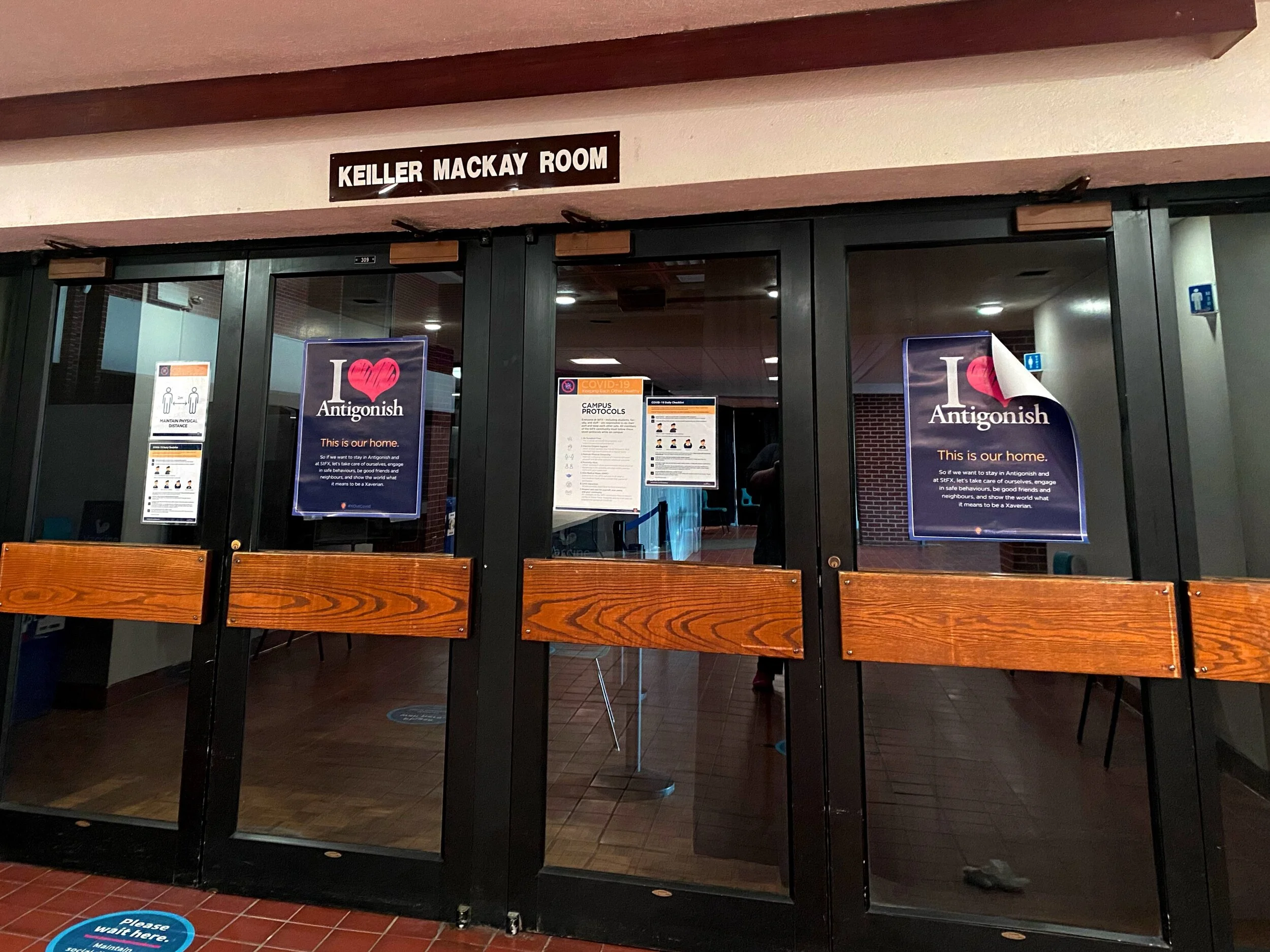
On Wednesday, October 3, a Mawiomi livened up Bloomfield Centre starting 1pm. Traditional dances took place throughout the afternoon in the McKay Room and merchandise tables were setup in the adjacent room along with gratis coffee, tea, water and food.

Astonishing dances unique to dancers in beautiful regalia like Brooklyn Bernard’s performance moved to the rhythm of the drummers and singers’ group. Bernard is from Paq’tnkek First Nation, one of many community members at the event.

Other dances were intertribal, meaning people of all cultures were welcomed to join in the dance. I participated in my second Round Dance, a traditional healing ceremony, that was again uplifting for the spirit and a learning experience.

Kerry Prosper is the Knowledge Keeper on campus and attended the event. Prosper is a Band Council member from Paq’tnkek who is co-author of “Returning to Netukulimk: Mi’kmaq cultural and spiritual connections with resource stewardship and self-governance” and Sustainability Planning and Collaboration in Rural Canada: Taking the Next Steps.

Prosper commented on the significance of having a Mawiomi on campus, “This institution has been here, in Mi’kma’ki, for over a hundred years and it has never really accommodated indigenous cultures. For me it’s a real learning process to have everybody here. The faculty, students and population participating is an important part of Truth and Reconciliation. One of the key things that we have to do is get together, sing, dance, eat and share knowledge. Through that, I think things may change for our kids and future generations. These experiences of living together with a better understanding of each other’s culture on this piece of land that we’re going to be a part of for the rest of our lives are important.

Photo: Phoebe Cseresnyes

Photo: Phoebe Cseresnyes

With all the current issues we are having in Canada, and many other countries that are battling, between the indigenous people and the people who came and took over the land there certainly has to be some kind of reconciliation.

Little things like holding a Mawiomi on campus can go a long way. A piece of bread and soup can go a long way in bringing us together. I can see a benefit for future students who are coming here. Someday, students in education might be teaching in educational institutions about our culture. It can only be beneficial for everybody and this is just a small part of reconciliation.

I felt really comfortable today with everybody and being a part of this institution for my community and our people being here for supporting students. I know the youth from our community felt good about it.

It’s a two-way thing where we don’t really come here either. There could have been more of our people here today. I think once they see a presence in here from their own community and culture, people will be more inclined to take part of events here. Vice-versa, we’ve had powwows and people from here didn’t think they were invited or welcomed to our powwow. Powwows are open for everybody.

At one time, white people weren’t allowed on reservations at certain times of the year and there was a curfew back in the 40s-50s-60s. They would say you better be out of here by dark because we’re not responsible for what happens to you and that type of thing. People grew up saying don’t go near reserves because you can’t trust Indians. That mentality had been passed down from them to their kids. Sure enough, it made its way through schools, high schools and post-secondary institutions. Now we’re a part of a future education. It’s time for us to shed those ideas and learn because we’re becoming a part of the education system and you got to learn what’s real: We’re gonna face future uncertainties together and we’re gonna have to work together. The time of indifference is going, and it’s gone.

All you have to do is look out at the world and see the trouble we’re having. People come here, to this land, to escape what they were going through, and they are welcomed with open arms. The perpetrators who came here in the past and did things like what happened with residential schools have caused a trans-generational trauma that has been passed on. You hurt your own people because that’s all you know.

You got to understand both sides. Our kids are gonna live without that experience and we’re gonna create a better world for everybody moving forward.”


Mawiomi on Campus a Success


People gather in Bloomfield Centre for a celebration of culture

43408784_2234567716617135_4267256450474049536_n.jpg
43460531_555014441587812_5902723543740710912_n.jpg
43411765_276621962963221_6094033816739905536_n.jpg
43412271_1948113238831281_8385133281263222784_n-2.jpg
 

Indigenous Students at StFX


First Nations students’ share their stories

Devann Sylverster

43487540_311304439686442_8554478696373682176_n.jpg

My name is Devann Marie Sylvester and I am a Mi’kmaq student here at StFX. I come from the Membertou First Nation community in Cape Breton, NS. I am 25 years old and a proud student-parent of my 3 year old son Denver Sylvester. I went to school in both Cape Breton and Truro, NS and graduated high school at Cobequid Educational Centre. In 2017 I graduated with a Bachelor of Arts degree at StFX, and now I am currently in the Bachelor of Education program and will be graduating this upcoming May 2019 in the elementary stream. After graduation I plan to return to my hometown to teach our younger generations.

Tasha McKenzie

43669140_178595396381694_8609105380389158912_n.jpg


My name is Tasha McKenzie, I am from Indian Brook, Nova Scotia and lived my whole life on the reservation until August of 2013 when I started here at StFX. I am in my last year of my Bachelor of Arts degree with hopes to get into the Bachelor of Education program after I graduate. I aspire to teach the true Canadian history including my Indigenous ancestors. I have spent three of my years here playing on the X-women rugby team, though I had to take a step back to focus on my education they are still my family. In my grade 12 year at Hants East Rural High School, which is about a 15-minute drive away from my home community, I was recruited by the rugby coach here at StFX, along with other universities. I finally decided on staying in province and moved to this small town of Antigonish, instantly falling in love - I felt right at home here. Not a day goes by that I regret choosing StFX! I am proud to be a Mi’kmaq women on campus. staying in province and moved to this small town of Antigonish, instantly falling in love - I felt right at home here. Not a day goes by that I regret choosing StFX! I am proud to be a Mi’kmaq women on campus.


Nothing but Farce


New twitter account preserves campus stereotypes for humour

Last month, a Twitter account which self-describes as a, “Local account for all things satire,” popped up.

So far this account, named Campus Crow, has posted 36 tweets indulging in StFX stereotypes, poking fun at some faculty, and more humorous content. I can’t blame anyone if they haven’t heard of this; Campus Crow has 307 twitter followers, and typically gets 2 retweets per post. They do tend to get an average amount of likes, usually falling between 30 to 60 likes or more.

Among their most liked content includes, “Finance Major Realizes Return on Bag of Refundables From StFX Hoco Not Enough to Cover Damages of Hole Punched Into Wall...” and, “Student Who Can’t Wake Up For 8:15 Class Attends an 8am Power Hour on a Saturday”, with 92 and 106 likes respectively.

A quick glance at Campus Crow might tip off some readers as being directly influenced by The Onion, a famous satirical news website. Certainly the headlines are inspired by The Onion, having the same sarcastic tone. The Onion’s articles usually come in two different styles: things that ‘everyone is thinking’, or professionally written articles that are hilariously untrue.

Campus Crow is emulating the former, but since it is related to StFX, the types of jokes they can post are stricter. Most of Campus Crow’s posts are related to StFX’s party reputation, residence stereotypes, or jabs at everyday life on campus.

As Campus Crow is restricted to Twitter and its small character limit, I’m not sure if it can really be called satire at all. With The Onion, the joke doesn’t stop at the headlines. The real satirical element is found in the content of their articles.

In the article, “Tour Guide One Stop Behind Clearly Giving More Interesting Tour”, the joke isn’t just that it’s a thought many people have had before.

The joke is in the continuation of this premise, by way of fake interviews and situations to prove that one tour guide was, indeed, boring. I

n addition, Campus Crow’s inspiration is criticizing the sensationalism common in news websites. Basically, satire is a perfect word to use to describe The Onion and other sites of its ilk. But when you don’t have the context for these headlines, the joke is left half-finished. Obviously, Campus Crow is meant to be a Twitter account posting quick jokes, using stereotypes and situations any StFX student could understand.

Do I find them funny? Well, I suppose so. I’ve seen all 36 of their tweets and most of them I found a little funny, but nothing made me really laugh. Honestly, the things Campus Crow chooses to make jokes out of might be a little too predictable to be effective.

Photo: Twitter @CampusCrow

Photo: Twitter @CampusCrow

So is Campus Crow satire as it claims? I don’t think so. To be satirical is to be critiquing something, and I’m not convinced that’s what Campus Crow is trying to do. That then begs the question, what kind of effect does this Twitter have on the StFX student body? Setting aside the fact that Campus Crow’s reach is relatively small, there is something kind of problematic in making fun of stereotypes without any sort of context. Even as a joke, stating negative stereotypes about certain residences without any kind of critique arguably promotes the stereotype rather than call it out. In between this semester and the last, StFX made some tough decisions about many residences. Lane is no more, and University Ave is now co-ed. There has been an obvious attempt to change residence culture at StFX.

Taking that into account, maybe we should all be more mindful about how we stereotype different residences and try to foster a more positive atmosphere. Although I don’t think that Campus Crow is very relevant when it comes to negative stereotypes (like I said before, the account is harmless and doesn’t have a huge audience), it will be interesting to see if this account continues to gain followers and see what part of StFX student culture it jokes about next.


From Pen to Paper


A look into Inktober and the impact it makes

October rolls around and for most people we think of Halloween, but for the creative minds, this is a time to put your art skills to the test. Inktober as it’s affectionately called, is a month of daily artistic challenges focusing primarily on Instagram.

It began in 2009 when Jake Parker decided to create a series of challenges to improve his skill and drawing habits. The challenge for him was to draw something different every day for the month of October and he invited people to join in on his journey.

The large-scale challenge initially came to be by loose construction, where people created their own prompts and posted their creations online.

In 2016, there came the first official prompt list due to the growing interest and high demand for a guide. The rules are simple, as per inktober.com; make a drawing in ink, post it and hashtag it with #inktober and #inktober2018, and repeat for every new prompt.

This is an interesting concept for a myriad of reasons, not only is it an encouraging practice for artists globally, but it reinforces the development of new and strong habits. This movement can also carry the power of messages, user @ tiuladokow on Instagram makes her work known to be indigenous, Palaun specifically, related.

The idea is expression and, in a time where voice is becoming increasingly restricted by governments and media, this presents an opportunity to demonstrate the different ways that voice can be expressed.

The Mi’kmaq people, as an example, are known for their artistry; decorating objects with intricate patterns of different coloured porcupine quills or making beautiful regalia, their authentic expression comes through the art.

Artistry is still prominent in the Mi’kmaq community today. Alan Syliboy and Leonard Paul are two examples of local artists who highlight aspects of indigenous culture.

Paul’s works feature legend drawings, powwow dancers, and nature, and Paul has also published works for other indigenous peoples such as the Cree.

As Inktober gains even more popularity, I think it will present itself as a very powerful means of message. I emphasize indigenous expression and artwork because of its lasting tradition and rich history.

Angela Miracle Gladue from A Tribe Called Red says, very poignantly, “It wasn’t that long ago that dances were outlawed, and our culture was outlawed, being indigenous was illegal and so for me it’s really really important to represent these dances outward and in the world on stages and in spaces where we once weren’t welcome.”

Photo: Instagram @tiuladokow

Photo: Instagram @tiuladokow

Gladue brings forth how times have shifted and what the arts can mean to an individual and to a group.

It is important to recognize how individuals have suffered and had some of the most basic aspects of their lives removed from them, and how only recently has that been reinstated, but the journey towards truth and reconciliation is still on-going.

Inktober as an online platform brings the arts to the center stage offering recognition for all artists. It is the opportunity for artists to bring forth their cultures and express the adversity they have faced and what it means to them through unique art from prompts.

Originally, Inktober was meant to strictly be ink based, but as popularity has built, they have opened the platform to different art styles and have even seen the expansion into writing in the forms of poems and short stories based on prompts. Inktober is for the arts, so however you want to express yourself, take part. It’s an awesome way to gain some recognition for yourself or whatever you choose to represent.


Mike Stern Performs at Schwartz Auditorium


Jazz legend’s stellar performance at StFX wows the audience

Distinguished guitarist Mike Stern performed a full band concert at Schwartz auditorium during the evening of October 1, 2018.

In the Spring of 2014, Stern, Artist-in-Residence, hosted two hands-on jazz clinics with students and a concert in Nicholson Hall.

What do Blood, Sweat & Tears and Billy Cobham have in common? They both signed Stern while he was in his 20s. The jazz maestro then got a break when Miles Davis brings him onboard Davis’ own comeback album The Man with the Horn in 1981.

150 people gathered to listen at Stern’s full jazz band. Music alumna of StFX, Sam Wilson, was in the audience at both StFX shows in 2014 and 2018. Having made the trip down from Halifax, Wilson commented “Mike played with so much joy tonight. I drove from Halifax to get re-inspired to go home and play. Even with an injury, Mike was resilient and sounded as great as he did in 2014.”

Wilson refers to an injury that happened in 2016. In New York City nearby Stern’s apartment, he fell and broke both humerus bones while hailing a cab before leaving for tour two years ago on July 3.

The incident left nerve damage that impaired his ability to hold a pick with the right hand. As a result, Stern glues the pick to his hand in order to hold it in place while he strums.

His injury did not keep Stern from the recording studio for long. The dedicated musician released a comeback solo album Trip in the fall of 2017.

Stern has been on tour since then. The band lineup at his most recent StFX performance features Stern on guitar, Tom Easley on bass, Kenji Omae on saxophone and Tom Roach on drums. Easley, Omae and Roach are professors of Music at StFX.

Speaking with a reporter from The Xaverian Weekly after the show, Stern mentions how this second visit is a special return to campus, “The acoustics in the auditorium are beautiful and the talented musicians I played with tonight were fantastic. Always a great energy on campus. It’s a privilege to be back and I think I’ll enrol if I get invited here again.”

Photo: Andrew Conde

Photo: Andrew Conde

Once in a while, when the band was jamming, Stern would shout “Yeah, man!” or stick his tongue out. The musician from Boston, Massachusetts was unreserved, intimate and funny.

The band brought to life the classic “Red House” from Are You Experienced by The Jimi Hendrix Experience as the encore song. Stern claimed it to be the only song from Hendrix he knows how to play, and he played it masterfully.

“It’s the best performance I’ve seen here. Mike is a gifted guitarist and vocalist who has performed with the likes of Miles Davis. Fusions particularly stood out for me. Mike usually plays in unison with the saxophone, bass and his back and forth with the drummer tonight was mesmerizing.” Said jazz student Jerry Ko post-show.

Stern stuck around to meet Ko and other audience members after the concert and sold out all copies of his latest album Trip.

While the performance was stellar, a part of me questions why the best venue on campus was booked for Stern on Treaty Day?

Our Treaty Day event, including the appointment of Kerry Prosper as Knowledge Keeper, is undermined when hosted in the lower-quality venue with fewer seating.

Stern goes on to play gigs in Paraguay, Norway, Belgium and Germany among other places around the world in the next two months.

The traveling musician leaves a lasting impression on our university. Stern’s infectious passion for jazz inspires just about anyone to pick up and play an instrument.


Discrimination on Campus


Why it’s not all sunshine and rainbows being openly LGBTQIA+

Imagine you decide to go out and have fun with your friends one night. At some point, you go to the bathroom, and when you do, another person in there makes unwelcome comments based solely on the type of people you are attracted to, or because you don’t dress like people of your gender stereotypically should. Would you feel safe, or would you avoid going out to places where the way you’re treated is defined by who you are?

It’s 2018, and the reality described above is sadly based on a real-life situation written about anonymously in the Xaverian Weekly’s last issue. The individual was confronted in the bathroom of the pub for being gay, and homophobic slurs were directed towards him and his friends later that night. Perhaps, in light of this incident, the StFX community should question whether we are truly a Xaverian family that is inclusive of all our members, including those who are LGBTQIA+.

Of course, the obvious solution for experiencing discrimination or feeling unsafe during a night out at the pub would be to simply not go out. After all, alcohol lowers inhibitions, so there’s more risk of an altercation if you’re visibly LGBTQIA+ at a bar. However, telling those in the LGBTQIA+ community to stay home for their safety causes further marginalization, instead of addressing the causes of discrimination like homophobia. Everyone should have a right to be in public spaces, day or night, without being in danger due to their sexual orientation or gender identity.

Photo: Facebook @KentMacDonald

Photo: Facebook @KentMacDonald

How members of the LGBTQIA+ community dress or physically look can put a target on their back on campus as well. Deciding to wear nail polish, earrings, or having short hair can potentially out a member of the LGBTQIA+ community. Those changes in physical appearance are minor compared to the changes that transgender people undergo, like hormone replacement therapy and other surgeries. Especially on a campus with a strong party culture that tends to subscribe to gender norms around physical appearance, not conforming can easily become a safety issue or a trigger for discrimination.

In addition to the incident at the pub, there was a string of discriminatory comments made by Joachim Kane on an announcement of the StFX Ceremonial Flag Plaza posted on Dr. Kent MacDonald’s Facebook page.

Due to the permanent installation of the pride flag, Kane left comments such as “X ‘needing’ to fly that freak flag is cow-towing to socio-sexual fashion.” Members of the community quickly made it clear that the comments were unwelcome, with MacDonald responding that his posts on social media were meant “to help celebrate the Xaverian spirit...to pull the community together...not tear it apart.”

While the rate at which the comments were shut down is a sign of broader community acceptance of LGBTQIA+ members, the comments themselves show that there is still work to be done. The traditions of a Catholic campus linger, evident by Kane readily using “traditional Christian values” to defend why a pride flag shouldn’t be flown. Those tensions with religion are something that LGBTQIA+ members often struggle with, especially when accepting their sexuality. Even though the permanent installation of the pride flag signals a general acceptance of the LGBTQIA+ community, it won’t change the minds or behaviours of all.

In light of recent events, it’s clear that StFX might need to have a discussion about discrimination towards the LGBTQIA+ community on campus and what changes can bring about more acceptance of its members. After all, members of the LGBTQIA+ community aren’t asking to be privileged and protected at a higher standard than everyone else, but for the chance to live a life where they can dress, act, and love who they want in a way that reflects their sexuality and gender identity.

If you would like to learn more about the LGBTQIA+ community, or are experiencing discrimination based on your sexual orientation or gender identity, the following resources are available:

X-Pride Society: xpride@stfx. ca.

Human Rights and Equity Advisor: http://www2.mystfx.ca/equity/.

StFX Gender and Sexual Diversity Advisor: https://www. facebook.com/gsdsastfx/.


May I Have Your Attention Please


The importance of mental health literacy in the teaching environment

Today our attention is in constant demand. Demand from work, demand from family and friends, demand from the endless onslaught of notifications on our phones and computers, and of course demand from ourselves. Everything that we do requires our attention at the cost of something else. With these constant demands stimulating our brains, inevitably things will reach a boiling point. For many that may be fatigue, for some this leads to anxiety, and for others it may come to a tragic and fatal conclusion. These responses are a result of our overly stimulated environments waning on our mental health each day. In particular, when our focus and attention is taken away from the most important demand of all, our personal health, it is then that such negative responses can occur.

While some people do have strong mental health, it is important for all to engage in the conversation of mental health literacy and be aware of resources available for support.

Recognizing the importance of mental health, a team of experienced educators and mental health experts hailing from Teenmentalhealth.org and several universities including Dalhousie, UBC, Western, and StFX joined together to create a resource for future and current educators to learn mental health literacy for the teaching environment.

Dr. Chris Gilham of the Faculty of Education at StFX helped to create the seven module resource to increase educators’ knowledge of mental health and how to support those in need of help.

The module’s two goals are to “enhance mental health literacy of teacher candidates in Canadian Faculties of Education and other educators” and “enhance mental health literacy of teacher candidates in Canadian Faculties of Education and other educators.”

Dr. Gilman and his team hope to achieve these goals in the free online resource. As an aspiring future educator myself, this resource stands as a valuable tool to help support future students’ mental health needs.

To give some perspective on the severity of mental health issues in Canadian society, the Canadian Mental Health Association has several facts about mental health.

For instance “by age 40, about 50% of the population will have or have had a mental illness,” and also “suicide accounts for 24% of all deaths among 15-24 year olds and 16% among 25-44 year olds,” and so on. The latter truly exemplifies the degree to which mental health, especially amongst our high school and university students, is of crucial importance. It seems that at the ages of 15-24 so many factors come into play that have an effect on mental health.

Photo: teach/educ.obc.ca

Photo: teach/educ.obc.ca

Expectations for grades, social relationships, university applications, moving away from home, deciding on your path for the future, and even simply learning more about yourself are but a small list of the changes that occur largely throughout high school and university. In these environments, educators are a large contributor to the academic stresses that some students may take too harshly. The busy schedule of balancing class upon class as well as one’s social life and personal health is a juggling act that many students have difficulty managing. However that is not to say that educators are the cause of such difficulties that students face, after all students are students for a reason, and classwork, assignments, and tests are all a part of the job. Having future and current educators be experienced with the Teach Mental Health resource will lead to them being better able to oversee students as they navigate the turbulent waters of the education environment.

For any future educators, social workers, or whoever may be interested, the free online resource is available at http://teach.educ.ubc.ca/mental- health-literacy/. For mental health resources on campus and in Antigonish visit https://www.stfx.ca/student- life/health-and-wellness.


Note from the Co-Editor-in-Chief


Upcoming investigation into StFX’s handling of alleged sexual assault case

The Xaverian Weekly is aware of an alleged sexual assault that occured last November on StFX’s campus.

We are also aware of a recent news article written by Brett Bundale of the Canadian Press and subsequently published in Global News, Huffington Post, The Globe and Mail and Narcity.

This article makes specific claims centering around StFX’s administration and their handling of said sexual assault case.

We are currently in the process of interviewing requisite individuals, as well as investigating into why these decisions were made on the administrative level.

While we believe in giving everyone the right to due process, we also understand the controversy surrounding this case, and why students may feel betrayed by the administration.

It is important to note that we are independent and autonomous from the University and Students’ Union.

As the primary source of news for students on campus, we understand the responsibility we have in delivering honest, unbiased, well thought out articles. Our goal is to have our report on the matter in our fifth issue published October 25. The Xaverian Weekly stands in solidarity with the StFX community condemning sexual violence and harassment.


Kavanaugh Confirmed to the U.S. Supreme Court


Hearing shrouded in controversy after allegations of sexual assault surface

The contentious confirmation of Judge Brett Kavanaugh was brought to a close on Saturday, after senators voted 50- 48 in favour of his appointment as an Associate Justice of the Supreme Court of the United States. Kavanaugh was nominated in July by President Trump to fill the vacancy left by retired Justice Anthony Kennedy, who retired on July 31. The Senate Judiciary Committee’s confirmation hearing began on September 4, with a vote scheduled for September 20. The vote was postponed after Kavanaugh’s nomination became shrouded in controversy following allegations of sexual assault dating back to his years at Georgetown Preparatory School. Dr. Christine Blasey Ford, professor of Psychology at Palo Alto University, contacted local California congresswoman Anna Eshoo within days of Kavanaugh being shortlisted as a potential Supreme Court nominee. She also contacted reporter Emma Brown from the Washington Post on condition of anonymity. According to Brown, “...[S]he was terrified about going public. She didn’t want to speak on the record.”.

Upon hearing her testimony, congresswoman Eshoo brought the matter to ranking senator Dianne Feinstein; the senator promised Dr. Ford that she would accommodate her wish to remain anonymous, and did not bring the matter up during the beginning of the Kavanaugh hearing.

By September 12, however, The Intercept had reported that Senator Feinstein was withholding information pertinent to Kavanaugh’s investigation. After consultation with Dr. Ford, Feinstein relayed her written testimony to the FBI, who proceeded to redact identifying content from the testimony and forward it to the White House. The White House then proceeded to forward the testimony to the Senate Judiciary Committee for reference during the Kavanaugh hearing.

Despite Dr. Ford’s wishes to remain anonymous, various reporters and media personnel began working to discover the identity of the victim. Dr. Ford struggled with the choice to go public for quite some time, but ultimately chose to appear in front of the Senate Judiciary Committee during an extension of Kavanaugh’s hearing for testimony. In her written testimony, she stated:

“My hope was that providing the information confidentially would be sufficient to allow the Senate to consider Mr. Kavanaugh’s serious misconduct without having to make myself, my family, or anyone’s family vulnerable to the personal attacks and invasions of privacy we have faced since my name became public.”

Upon revelation of Ford’s identity, many Republican senators and supporters were convinced that she had cried wolf, emphatically stating that the allegations played into the Democrats’ agenda of blocking right-wing SCOTUS nominations. Others were more empathetic, lending credit to Ford’s highly credible written testimony.

After Dr. Ford testified in person, there seemed to be little doubt regarding her credibility. Ford delivered an incredibly compelling account of the events which occurred during her high school encounter with Kavanaugh; Senate members on both sides of the aisle were visibly shaken. With tears shed and hearts wrenched, it seemed inevitable that Kavanaugh’s confirmation would be struck down.

During the televised broadcast of Dr. Ford’s testimony, many Republicans outside the Judiciary Committee felt as though the nomination had been lost. Senator Mitch McConnell, however, did not lose faith. “We’re only at halftime.” Senator McConnell said to a group of despondent Republicans, inelegantly using phrasing so often reserved for the world of sports and play.

At the same time, Kavanaugh was receiving instruction from Donald F. McGahn II, President Trump’s White House counsel. According to the New York Times, Mr. Mc- Gahn assured Kavanaugh that the only way to save his nomination was to channel his outrage and indignation at the charges facing him. As the world would soon see, this was no difficult task for a man already brimming with bitterness and fury.

Heeding his counsel’s advice, Kavanaugh’s testimony managed to evoke the same rage and indignation from many republicans, who blamed the Democrats for orchestrating a smear campaign against Kavanaugh. Speaking across the aisle, Republican senator Lindsey Graham of South Carolina said:

“Boy, you all want power. God, I hope you never get it. I hope the American people can see through this sham. That you knew about it and you held it. You had no intention of protecting Dr. Ford; none.”

Now addressing Kavanaugh: “She’s as much of a victim as you are. God, I hate to say it because these have been my friends. But let me tell you, when it comes to this, you’re looking for a fair process? You came to the wrong town at the wrong time, my friend. Do you consider this a job interview?” “... To my Republican colleagues, if you vote no, you’re legitimizing the most despicable thing I have seen in my time in politics. You [democrats] want this seat? I hope you never get it.”

Within a matter of minutes, the anger expressed by Kavanaugh and the Republicans of the committee were enough to turn the tides of rage against the innocent - against Dr. Christine Blasey Ford.

Members of the Senate on both sides of the aisle continued to question Kavanaugh, but the atmosphere had clearly changed. In a surprise gesture of good faith, Republican Senator Jeff Flake reached across party lines and called for an FBI investigation into the claims of Dr. Ford and the two other accusers, Julie Swetnick and Deborah Ramirez.

The investigation did occur, though it appeared to be very limited in scope - the FBI interviewed only a small number of those who volunteered to endure the bureau’s scrutiny. Notably, the FBI failed to interview Dr. Ford, Mr. Kavanaugh, Ms. Swetnick, and a number of individuals from both Dr. Ford’s and Mr. Kavanaugh’s past whom had offered to participate in the FBI’s investigation.

Upon receiving the results of the FBI’s investigation, Republicans and Democrats both indicated that the report contained no additional corroborating information. While Republicans largely took this as an indication of invalidity with regards to Dr. Ford’s testimony, Democrats saw the result of an investigation which had clearly been limited in scope. In a press briefing, Democratic Senator Feinstein said:

“Candidly... [the report] looks to be the product of an incomplete investigation that was limited, perhaps by the White House - I don’t know - but the White House certainly blocked access to millions of documents from Judge Kavanaugh’s record... And ensured that 90% of his emails and memos weren’t available for the Senate or the public in the hearings. It now appears that they also blocked the FBI from doing its job. Democrats agreed that the investigation’s scope should be limited. We did not agree that the White House should tie the FBI’s hands.”

Republican Senator Flake had a much shorter commentary:

“We’ve seen no additional corroborating information”, noting that he needed to finish reviewing the materials. Many Senators added that they had not finished reviewing the materials after commentary, owing to the fact that only one copy of the report was printed. The report was kept within a vault in a Sensitive Compartmented Information Facility, essentially limiting viewing to one Senator at a time; phones and note taking were not permitted inside the vault. A total of one hundred senators had access to the report and were given approximately 24 hours to view and process the information. Some may describe this format of viewing as restrictive.

The FBI report was delivered to Capital Hill at 2:30am Thursday morning, and the Senate Judiciary Committee met again on Friday. A motion to invoke cloture (an end to debate) was held on the first day, resulting in a 51-49 vote in favour. The final senate vote to confirm Kavanaugh’s nomination occurred the following day, with a 50-48 vote in favour (Republican Senator Steve Daines was absent, and Republican Lisa Murkowski voted “Present” rather than “Yes”). Kavanaugh was officially confirmed to the Supreme Court shortly after the final vote.


Shinerama: Raising Money for Cystic Fibrosis

The fight against CF is not over

“In, out, in, out. Breathe. Most of us don’t think like that when we take a breath, but people with Cystic Fibrosis do with each and every breath.” Says fourth year Bailey DeEll in a Facebook post made with regards to Cystic Fibrosis and Shinerama. Cystic Fibrosis (CF) is the most common fatal genetic disease affecting Canadian children and young adults according to the Shinerama website. 

Shinerama, if one doesn’t already know, is Canada’s largest post-secondary fundraiser in support of Cystic Fibrosis Canada. 

There is currently no cure to CF. It has many effects on the body, but primarily on the digestive system and lungs. The degree to which someone with CF will suffer depends on the person. Ultimately, however, CF will progress over time. Eventually ongoing infection, destruction of the lungs and loss of lung function leads to death at an earlier age than someone without CF. 

CF includes a long list of complications with digestive problems being at the top. Someone suffering from CF will have less pancreatic enzymes and consequential vitamin deficiencies. This causes trouble digesting fats and proteins. Over 4 200 Canadians with Cystic Fibrosis attend specialized CF clinics, which are costly to uphold. 

Shinerama currently includes over 35 000 student volunteers from 45 Canadian Universities. StFX is proudly part of this statistic. The funding earned by these hard working students and volunteers is crucial in fighting against Cystic Fibrosis. If you weren’t sure why O-Crew so eagerly dragged you out of bed the morning after the big concert in your frosh week, this is why. 

Shinerama began in 1964, and since then has spread across the country and touched the lives of countless Canadians. Since then, Shinerama has raised about $27 million dollars, which has been used to fund the necessary research, supplies, resources and treatments for prolonging and improving the lives of those suffering from CF. 

It is important to note that, as stated on the Shinerama website, “A child diagnosed in the 1960s was not expected to live long enough to attend kindergarten. The median age of survival of Canadians is among the highest in the world, at 53.3 years of age in 2016.” This is not coincidental, but has a direct correlation with the efforts put forward by Canadians to ameliorate the lives of those suffering from CF. 

On Saturday, September 8, StFX students took to the streets of Antigonish and its surrounding areas to fundraise for none other than Shinerama. With a huge help from O-Crew, a group of primary first-year students have since raised over $11 000 this year. This doesn’t mean that the fundraising is over. 

“While Shinerama focuses its attention on one part of the year, people with CF have a tough time breathing no matter what month it is.” Lucas Middleton, fourth year O-Crew member and Shinerama Volunteer explains. He urges everyone to continue to support the cause no matter what the amount, as it will go a long way for those with CF. “Whatever you can afford to give, even skipping that morning coffee and donating $5, helps more than you know.”

To donate to Shinerama, one can do so by visiting StFX’s online Shinerama page and making whatever contribution they wish. The fight is not over and progress can be made at any time. Every week in Canada, a child is diagnosed with CF. Of the Canadians who died in 2016 of CF, half were under the age of 39 years. As Shinerama itself puts it, any help will help “breathe life into the future of Canadians who are struggling to breathe everyday.”

Hall of Famer at StFX- Tara Sutherland

Long-tenured Athletic Therapist has the Hall of Fame calling after an illustrious career

Tara Sutherland was the head of a private clinic in Edmonton for a brief spell in early 1996. She saw a temporary position at StFX looking for athletic therapists. 23 years later? She is still here. Her reasoning?

“I love the community, and to work with students every day”

With her love of university life, it is no wonder she was a student at three of them. She attended Queen’s University, graduating with a BA in physical education. She then earned her diploma in sports injury management at Sheridan College, a quaint school in the Toronto area. After she obtained her certification in athletic therapy, a spell at the University of Calgary for a masters in kinesiology occurred in 1995. For Sutherland, her imbued enthusiasm for the job galvanizes students and athletes.

Speaking on the differences in technology and the job as a whole from her days in the 90’s till now, she commented:

“There is not too much of a difference, as we only assess the injuries and give recommendations, no diagnoses are involved. However, the technology now is a lot more advanced than before”

Of course, with the recent discovery of CTE and it’s gargantuan impact in the football community, the differences in how the athletes are treated are very striking.

“Back in 1996, the football team would practice sometimes two to three times a day. And they were doing so in worse equipment. There was less education into proper hitting techniques as well. Now, the practice times are much less, and the coaches do a great job of teaching safe hitting practices.”

Sutherland, along with her longtime colleague and friend, Dr. David Cudmore opened the Antigonish Concussion Clinic approximately ten years ago. (She and Cudmore could never pinpoint the exact time it was opened). The Clinic’s main goal is to give help to more than just athletes.

“My job at StFX is to assess athletes and so the Concussion Clinic is a way of giving back to the community, by affording them the opportunity to be treated and properly rehabilitated, whether it be a slip and fall, a car crash or anything in between.”

Sutherland keeps herself busy by being the lead athletic therapist at hockey, football, basketball games, while also teaching three human kinetic classes. To add on, because she does not do enough already, she has been the assistant coach of X-Women Rugby since 1998.

“It gives me a chance to be a coach, a different experience than always being the therapist during games. plus, I love the sport and I played it when I was younger.”

cata.png

The holy grail of athletic therapy accomplishments was recently reached when she was inducted into the CATA (Canadian Athletic Therapists Hall of Fame). Her response to the news?

“Shock, humbled, loss for words. I was thinking it was maybe a wrong number! I have seen so many of my friends and colleagues, people I have looked up to, get into CATA, and for me to become a part of it was an unbelievable honour”.

Her plaque from the hall is still on her desk, as she has been contemplating putting it up in her office. She can be forgiven for not instantly adorning it on her walls, as they are riddled with jerseys, certifications and more plaques pertaining to her excellence of athletic therapy. 

Who knows, maybe in 23 more years, her walls won’t be visible. And at this rate, working 23 more years is not out of the realm of possibility, with her unrelenting work ethic.