This is for you, Tina and Colten


The REDress Project as platform to discuss Canada’s often ignored epidemic

When you walk around campus, whether it being inside the buildings or outside, you can see red dresses on hangers, with a new addition this year of also seeing red ties around campus. So, what are these dresses and red ties for you might ask?

The red dresses are for the REDress Project which is an art installation in remembrance of  the missing and murdered Indigenous women in Canada; a national epidemic.

This year, the Aboriginal society made a change to the project and they added ties for the missing and murdered Indigenous men as well.

This art project hopes to raise awareness for all the missing and murdered Indigenous women and men. This isn’t new. Aboriginal women and men in Canada and America have been disappearing at alarming rates for years, and while Canada did put forward a National Inquiry into Missing and Murdered Indigenous Women and Girls (MMIWG), not a whole lot has changed; nothing for that matter.

1,017 women and girls who identify as indigenous were murdered between the years of 1980 and 2012, according to Stats Canada. Mind you, those are just the cases that we know about through official reporting. These numbers don’t necessarily reflect each individual who has been missing or murdered.

Indigenous women are 4.5 times more likely to be murdered than all other women in Canada. For indigenous women, the highway of tears is their nightmare. It’s Highway 16 from Prince George and Prince Rupert BC, where countless murders of Indigenous peoples have been committed.

This highway connects many towns, which all hold vital resources not found in each community. Often times, due to lack of transportation, women end up going on foot.

For an indigenous woman, to be on this strip of highway often means to be adding their name to the list of missing and murdered.

For indigenous men, many know the truth about ‘starlight tours’, where police in Saskatoon drive indigenous men out of the city limits under the guise of taking them home at night. They are then left to find their way home which, during the below zero temperatures in the winter, often leads to their death. These starlight tours happen far too often for mainly indigenous men, and it's costing them their lives at the hands of Canadian police.

If you’ve been keeping up to date with the news lately, you might have heard the names Tina Fontaine and Colten Boushie being repeated. These are the latest indigenous victims who's murderers were found not guilty in recent trials, leaving the families with no justice and no closure.

Tina Fontaine lived on the Sagkeeng First Nation. Tina was only 15 when she was murdered on August 10, 2014.  Raymond Joseph Cormier was charged with her murder, taken to trial where he plead not guilty and, on February 22, 2018 he was released of all charges.

Colten Boushie is a First Nations man who lived on the Cree Red Pheasant First Nation. Colten was only 22 when he was murdered on August 9, 2016. Gerald Stanley was charged with his murder, it went to trail and, on February 9, 2018, Stanley’s charges were acquitted.

Those two stories sound awfully alike, don’t they? That’s what most trials for murdered indigenous people sound like; their murderers being set free, leaving their cases to go cold. 

I wonder what the outcome would have been if Tina and Colten were white?

Tina and Colten were only children when they were killed, they were failed by society, the justice system, the police system, any system you can think of, and they were CHILDREN.

They had years ahead of them, experiences they’ll never know, hugs they’ll never receive, dreams they’ll never achieve.

So, when you’re walking around campus and see these dresses and ties, take some time to stop and think about Tina and Colten. Think about all the other indigenous peoples that have had this same reality, and for those who might succumb to this horrifying reality someday. For each dress or tie that you see on campus take the time to go home and research an indigenous person who has been killed, learn their story, learn about them, who they were.

I’m sorry, Tina and Colten. I’m sorry that you were given such a sour taste of this world. I’m sorry that your lives were disregarded as not being just as important as anyone else’s. I’m sorry that Canada is STILL having a hard time figuring out what to do with this epidemic. I’m sorry that the justice system didn’t fight harder for you; Creator knows how hard your loved ones wailed and fought for you.

Tina, I’m sorry that your father had the same reality as yours and I can only hope that you are among the stars together.

Mrs. Boushie, I’m sorry that the first thing the officer said to you after telling you about your son’s death was, “ma’am have you been drinking tonight?”.

Tina and Colten, these dresses and ties are for you.
 

So You Want To Be A Feminist?


Some key feminist reads for those interested in learning more

I have spent the past four years of my life talking and learning about feminism. As a student of the Women and Gender Studies department, the concepts of feminism and feminist theory were first introduced to me in my Women and Gender Studies 100 class, taught by Dr. Rachel Hurst. Since this time, my understanding and definition of what feminism means and what it strives to do have expanded and developed immensely. My understanding is that feminism is not solely about advocating for the rights of women and the equality of all genders, although that is a central aspect of it. To me, feminism is about deconstructing the binary of gender in allowing space for gender fluidity while recognizing the disproportionate suffering faced by female-identifying people. It is about understanding the complexities of identity and analyzing marginalized groups and the ways in which these groups exist within the world. It is about learning, organizing and mobilizing to deconstruct patriarchal, colonial and heteronormative narratives in hopes of allowing voices that are continuously silenced to be centralized.

I feel extraordinarily lucky to have engaged with the feminism of many, and through reading, watching, theorizing and discussing, have come out of a four-year degree with a stronger and more nuanced understanding of the phenomenon and a base to contextualize the world around me. Despite having this formal academic background, I still struggle to practice my feminism in a way that is both true to the topics I care about and digestible for those around me (which is not always possible). What I mean by this is that sometimes practicing feminism or labelling oneself as a feminist can be met by a series of eye-rolls, shrugs or backlash. My continually developing ability to navigate these instances can be in part credited to the many women whose literature and theory I have engaged with, that tells a personal story of their own feminism. For anyone interested in grounding their feminism or simply in learning more deeply about the topic and movement, I have comprised a list of some of my favorite feminist reads. These authors have inspired me immensely and I hope that these resources will allow you to understand the importance of feminism to all human beings and the different ways a feminist life can be approached.

Sarah Ahmed- Living a Feminist Life

‘Living a Feminist Life,’ was published in January 2017 and is the latest work of feminist scholar, Sarah Ahmed. Ahmed has seven previous novels discussing how feminist theory is generated from everyday life and writes personal accounts about her own experience being a feminist and learning about the world through a feminist lens. Ahmed introduced the notion of the ‘feminist killjoy’ in her previous work, which she defines as a figure who is willing to disrupt happiness by speaking out; Ahmed ends her novel by proposing a feminist killjoy survival kit and manifesto.

To me, Ahmed’s work speaks to the difficulty associated with pursuing feminism as it often entails speaking out and calling into question elements of people’s lived experiences that are too often trivialized. The idea of a feminist killjoy is something that is easy to relate to as much of the time practicing feminism requires one to reanalyze and criticize jokes, popular culture and language that we see day-to-day that may be working to further marginalize certain groups. All of Ahmed’s work is beneficial to those who are interested in leading more feminist life.

Kimberle Crenshaw

Kimberle Crenshaw is perhaps one of the most important feminist figures of the 20th and 21st centuries. Born in 1959, Crenshaw has spent her life advocating for American civil rights and studying critical race theory. In 1989, Crenshaw coined the term intersectionality which has since been incorporated as an essential element to modern feminist thought. Intersectionality has challenged feminists to understand how the intersecting identities that people hold intrinsically and uniquely affect their lived experience and we must take all marginalizing identities into account when working to combat issues. Crenshaw bases her theory in the experiences of black women who are both black and women, but who’s experiences as both identities often leave them out of the discussion of both black experience (which is often looked at through a masculine frame) and the experiences of women (which predominantly focuses on the experiences of white women).  Crenshaw’s 2016 TedTalk entitled ‘The Urgency of Intersectionality,” and her articles ‘Mapping the Margins: Intersectionality, Identity Politics and Violence Against Women of Colour,’ and ‘Demarginalizing the Intersection of Race and Sex’ are all incredible resources for learning about authentic intersectional feminism. 

Chandra Talpede Mohanty- Under Western Eyes

This critically acclaimed piece written by Professor Chandra Talpade Mohanty discusses and criticizes the homogenous perspectives and presumptions made by Western Feminists about women in non-western countries. She argues that Western feminists often work to subjugate non-western women as the collective “other” by continuously labelling them as poor, uneducated, tradition-bound and victimized. These narratives homogenize both groups and erase the complexities of individual and intricate experiences of women both in the west, and in countries around the world. These narratives disrupt women’s solidarity and continue to perpetuate damaging narratives about white, western-saviour complexes. Mohanty brilliantly criticizes the colonial discourse that is often used by western feminists and helps us to understand that we cannot simply assume the experiences of any women in either context, or hope to push our own feminisms on women in different cultures. Mohanty is a must-read for all who are interested in the nuances of feminism and it’s complex and often contrasting approaches. It is important to not ground your perspective of feminism solely in western contexts, this is what Mohanty offers us to consider.

Roxanne Gay- Bad Feminist

One of my most favourite feminist reads has got to be the New York Times Best-Selling essay collection ‘Bad Feminist’ written by the excellent and hilarious, Roxanne Gay. Gay is unique in her approach to discussing her feminism. She explores imperfection, describing herself and her feminism as a “mess of contradiction.” Gay describes that she is a flawed human being who’s feminism is in turn also flawed. She candidly admits to indulging in music, television and artists that are often seen as problematic to feminism. She grapples with the fact that she despises rape jokes, but can find herself enjoying music that is exploitative to women. She admits to finding herself singing along to ‘Blurred Lines’ while discussing the issues associated with supporting Chris Brown. She talks about her affinity for reality TV show, ‘The Bachelor,’ while also being able to name 5000 reasons why it is problematic. Gay does not strive to be perfect. She understands that as human beings we may at times indulge and enjoy things that are not 100% aligned with the values that we hold. Her essays are inconclusive and personal, they allow the reader to find themselves in her writing but do not propose solutions to these issues. ‘Bad Feminist’ is a great read because it humanizes activism and feminism and allows us to forgive our imperfections while striving to be better. On top of being a fantastic and humorous writer, Gay is also a fabulous person to follow on Twitter for her commentary (@rgay).

I have barely scraped the surface of the numerous thought-provoking, radical and tremendously impressive works that are out there. Of the dozens of feminist theorists, I have read in my classes these are just four of the many scholars who have stood out to me. Learning about feminism, of course, goes beyond literature and theory. There are also many artists on Instagram such as (some of my favourites) @fances_cannon,@ambivalentlyyours, and @pollynor, that express their understandings of feminism through cartoons and illustration. There are TV shows like comedy central’s Broad City, that work to normalize feminist rhetoric and play with feminist knowledge in a hilarious and welcoming way. I could sit here and type all day about people and resources I have come across that allow me to shape my ideas and understandings of feminism. Instead, I encourage all people to seek out some feminist knowledge and thought. The bottom line is that feminism is a movement that works to equalize all people and we should all be feminists if we believe in this equality. Happy Reading!


Dial Youth Activism Conference @ 1-800-SCL-CHNG


The community at large comes together to explore avenues to activism

The 7th youth-led, Social Justice Conference from March 2 to 4 at StFX was a great triumph. The highly anticipated appearance of Desmond Cole on Friday night, packed the Schwartz auditorium with over 100 people. Desmond is a Toronto-based columnist, activist, and radio host born in Red Deer, Alberta to parents who immigrated from Freetown, Sierra Leone.

Desmond was the recipient of highly respected 2017 PEN Canada/Ken Filkow Prize for Freedom of Expression. As well, he is currently in the process of writing his first book. I heard, unofficially, that it might be completely written as early as November of this year!

Two opening acts of activism introduced Desmond’s keynote on Friday. A group of youth drummers, led by Morgan Gero, played a groovy ceremonial rhythm. Then, a powerful spoken word delivered by Kalista Desmond moved the audience to a standing ovation.

The entertaining emcees of the night were our Students’ Union VP of Residence Affairs, Rebecca Mesay and youth leader, Trinity Ashewasegai from Paq’tnkek, Nova Scotia.

Desmond led a seminar unpacking racism and white supremacy. Desmond’s metaphor that, “Our entire country is a museum of white supremacy” quenched the taste buds of my reasoning. Consider the Scalping Proclamation, Indian Act, and Chinese Immigration Act among other racist artifacts that affirm white supremacy in Canada.

Racism and white supremacy are close-minded ideas founded on the illogical principle that racialized people have less power and value than white people.

During the keynote a youth leader from Paqtn’kek, Caleb Peters, spoke up and said that while acknowledgement of settlement on unceded Indigenous territory is good, “We need more than acknowledgement.” For the young activist with a bright mind, acknowledgement is only the first of many steps in a long walk towards truth and reconciliation.

Desmond’s keynote was the hot topic of discussion among youth leaders into the first Saturday workshop. Workshops offered included, but were not limited to poetry, podcasting and painting Mi’kmaq Komqwejwi’kasikl (Hieroglyphic) on rocks. Each Komqwejwi’kasikl signifies a message of hope. Keep an eye out for these rocks scattered on campus!

Kalista and Anas Atakora co-hosted a workshop on Activism through Spoken Word. Participants learned techniques, wrote, created and shared spoken word, deepening their skills and refining their understanding of this medium.

Desmond hosted a Saturday workshop on media literacy and how to recognize racism and white supremacy in media texts. His workshop engaged the audience to explore recent case studies of racial profiling in Canada and how big media players like CBC, Global News and The Toronto Star normalize white supremacy and racism by protecting the identities of racist white people like Nikki Samuel.

Nikki’s belligerently racist loudmouth was caught on video at the Rapid Access to Medical Specialists in Mississauga, Ontario last year. All the big media players who covered the story protected her identity by withholding her name and superimposing a blur over her face on the original video.

I met with Desmond after his Saturday workshop and presented him with the question, “How do you feel about your keynote and workshop with youth leaders at the Youth Activism Conference?”

Desmond responded, “I feel very welcomed by the youth who are here. All of these young people are leaders just by being interested in coming here and participating. They are demonstrating a lot of leadership. We’re talking about racism and white supremacy, and these young people have their own stories and experiences. So, I hear them listening to the stories that I’m telling and the experiences that I’m talking about, but they understand it already because they have experienced things like this in their own communities. I think it’s very powerful when we can get together, listen, and validate each other’s stories. Sometimes you feel alone when something bad happens and you experience racism, you feel like maybe there isn’t a venue for you to talk about it. This is one of those venues where we can talk and it’s really nice to be doing it together.”

The Youth Activism Conference continued Sunday morning with a creative representation workshop; youth leaders chose a creative way to represent their learnings over the weekend and presented their artwork. The Conference ended with a motivating speech and traditional group dance hosted by Aaron Prosper, a Mi’kmaq from the Eskasoni First Nation.


Canadian Greatness


Canada leaves its most successful Olympics to date with 29 medals

After years of mediocrity in Olympic sport, Team Canada has slowly risen to become one of the most dominant countries in the Winter Olympics. Since the 2010 Olympics in Vancouver where the team won 14 gold medals, the most in Canadian history, our nation has consistently delivered high quality performances. No Olympic Games have been more successful for Canada than this year. Reaching a record of 29 medals, Canada placed third in the overall medal standings. Eleven gold, eight silver and ten bronze, behind only the surprising Norway with 39 medals and Germany with 31.

The non-profit organization Own the Podium was created in 2010 to help prepare Canadian athletes for medal finishes. The goal was for Canada to be a world leader in high performance sport at the Olympic and Paralympic Games. The organization enabled more funding for winter sports throughout the country, helping athletes train and perform at their best, whilst being coached by top notch instructors. 

The 2018 games, held in PyeongChang, South Korea, was a rousing success for the country. 

On the second day of the games, 4 medals were awarded to team Canada, with a bronze going to Regina native Mark McMorris, who competed in Men’s Slopestyle Snowboarding nearly eleven months after a horrific crash that landed him in the Intensive Care Unit. Maxence Parrot came away with a silver medal in the same event while later during the games, a gold for Sebastien Toutant in the Big Air event was rightly won. 

Kim Boutin, a 23-year-old short track speed skater from Quebec amassed three medals in the games with two bronze and a silver. She was also chosen to be the flag bearer for Canada in the closing ceremonies. 

Dutch born Ted-Jan Bloemen was able to win two medals in long track speed skating. He did so representing his adopted home of Canada, having moved here in 2014 to compete with the national team. His father was born in Bathurst, New Brunswick, allowing Bloemen the opportunity to have dual citizenship and the option of which country to compete for. 

The always exciting Ski Cross event did not disappoint this year, as there were Gold medals awarded to both the men and women’s teams. Brady Leman from Calgary, along with Kelsey Serwa from Kelowna took home the golds, with Kelsey’s teammate Brittany Phelan capturing silver. 

Some scintillating, sensual performances from Tessa Virtue and Scott Moir (are they dating??) set the internet on fire, as they captured the gold medal in Ice Dancing. They also claimed a gold in the figure skating team event. This was the final Olympics for the duo, and the two were honored with flag bearing duties at the opening ceremonies. 

Mixed Doubles Curling made its maiden appearance at the Olympics this year, where the team of John Morris and Kaitlyn Lawes won the gold medal. It was unfortunately the only gold medal for Canada in curling, as the women’s team was eliminated in round robin play, while the men fell into fourth after a tough bronze medal match. This was the first Olympics that Canada failed to medal in men’s and women’s curling. 

While individual athletes flourished, teams had tougher times. The vaunted Women’s Hockey team took their first loss at the Olympics since February 17, 1998 in heartbreaking fashion, having to settle for silver, with a shootout loss to the Americans. The men’s team was unexpectedly upset by Germany in the semi-finals, but was able to bounce back, defeating the Czech Republic in the bronze medal game. This was the first Olympics since 1994 that prohibited NHL players participation, which greatly impacted the level of play during the tournament. 

However, several electric performances and all-around dominance helped captivate many, even if the time difference was 13 hours for viewers back home. The great success of this year’s games potentially opens the door for Canada to host another Olympics, with the bidding of the 2026 games being potentially pursued by the city of Calgary.


Opinion: International Students and Health Insurance


Why the current system needs to change

International students studying at Nova Scotian universities are currently ineligible from receiving provincial health coverage. In a way, that makes perfect sense; often times they are not full time residents nor do they pay all the requisite taxes that permanent Nova Scotia residents would pay.
However, once one realizes all the additional costs international students pay to attend university as well as the economic opportunities they give their respective areas, health insurance seems like a fair commodity to offer them. 

Eight provinces currently offer healthcare to their international students; one of which is New Brunswick. In 2017, New Brunswick Post-Secondary Education Minister, Roger Melanson stated “International students make our campuses richer and more diverse, and we are proud today to extend health coverage to international students who are enrolled and pursuing studies in New Brunswick universities and colleges. This will help address additional out-of-pocket expenses international students face when studying in New Brunswick, make post-secondary education more accessible and affordable for them, and help us recruit more international students to our campuses.” 

In Nova Scotia, international students are required to purchase private insurance that covers their stay in province but only on a year-to-year basis requiring renewals each year. In a StFX-specific context that means purchasing the Students’ Union Health and Dental plan coverage through “Student Benefits.” This coverage is extremely costly, $1,085.00 to be exact. Keep in mind that this is on top of all other fees including Students' Union dues and the $16,168.00 international students pay for tuition. Ridiculous.

Most health care providers in Antigonish accept this insurance, however, the after hours clinic on Church Street does not, meaning international students must pay out of pocket every visit. Having provincial insurance would, of course, alleviate this problem. 

Clearly, as international students in Nova Scotia are financially burdened more than their domestic colleagues, being able to save $1,085.00 a year would make obtaining a Canadian education much more accessible as well as alleviate some of the financial pressure that international students contend with throughout the academic year. 

New Brunswick Health Minister Benoit Bourque stated “our government knows that the availability and delivery of health services have a significant impact on the quality of life of the people of our province, we are proud to be able to extend health-care coverage to international students and provide them with the same level of health care that their peers enjoy in Canada.” 

International students bring a lot to Nova Scotia, many have a desire to stay after graduation and economically as well as culturally contribute to the province. Yet, they are deterred from opportunities in Nova Scotia because of the lack of government health care. Provinces such as New Brunswick are a much more attractive option in that regard. 

Post secondary institutions in Nova Scotia and the province as a whole are losing out on lots of great talent, so something must be done. The lobbying organization, Students NS is advocating for MSI (Nova Scotia Health Card)  insurance for all full time international students immediately upon arrival; something that the StFX Students’ Union supports and a pillar of President Sirois’ campaign. 

This initiative still has a long way to go as the government may be reluctant to shell out the $452,440 a year to make it happen but that is chump change in comparison to the positive economic impact these students bring with them. 

All in all, I think it is completely fair to make the argument that Nova Scotia is behind the times. The province is not as competitive in attracting and retaining foreign students as others due to the lack of MSI coverage. The positive economic impact international students make far outweigh the debit that will be incurred. The current healthcare system is inequitable and inefficient, and it's time for a change.       


X-Women headed to National Final 


U Sports Nationals give X-Women Hockey a chance for Redemption

The X-Women hockey team gave us nothing short of a sensational season of excellent hockey. Garnering an overall season record of 20 wins and only 4 losses, the women consistently made it onto the U Sports Top 10, and ended the season at the top of the AUS standings. Saint Mary’s University team shared the same amount of wins, with goals for and against deciding the seating for playoffs.
3 of the AUS’ top scorers of the season came from StFX. Fifth year Daley Oddy had the most goals in the league with 16 points and 15 assists, with fourth year Sarah Bujold and first year Emerson Elliott following with 13 goals, 14 assists and 11 goals, 15 assists respectively. Carley Molnar in net also had a huge hand in this year’s success, with 292 saves over the span of the season. 
Bujold can be thanked for scoring the game winning goal in the suspenseful AUS semi-final against the Université de Moncton Aigles Bleues. The second game of the best-of-3 semi-final, held in Moncton, saw an early goal by Moncton on a power play. This was quickly answered back by a goal by fourth year Nicole Halladay a few minutes later. The score was still tied 1-1 at the conclusion of the third period, and went into overtime. 44 seconds into overtime, Bujold scored, clinching a spot in the AUS final against the St. Mary’s Huskies, and also in the U Sports National Championship. 
The AUS finals began at home in the Keating Memorial Centre on Friday, March 2. The X-Women fell short 4-2 with both goals scored by second year Kate Gotaas. While at St. Mary’s for Game 2, the X-Women won with a 2-1 victory (goals by second year Santana Gravelle and Bujold). Despite valiant efforts, hard work and excellent skill, our X-Women lost the series-deciding game for the AUS final in a 1-0 loss on March 6 at StFX.  
Thankfully, hockey isn’t over just yet for these women. The AUS will be able to send both Saint Mary’s and StFX’s Women’s hockey teams to represent the conference at the U SPORTS National Championship. There, the teams will be competing among eight of the best in the country. Nationals are scheduled to take place March 15 to 18 and are being hosted by Western University in London, ON. The games can be accessed online and will be live streamed on U SPORTS TV. 


How we got here


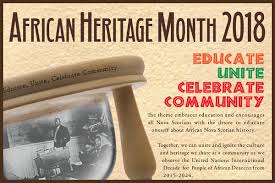
The importance of knowing your heritage

Heritage is defined as the cultures, traditions, and attributes handed down or inherited from previous generations, which are maintained in the present and bestowed for future generations. Heritage contributes to our history as individuals and establishes a sense of who we really are as a people. It is sad, therefore, that in our generation, heritage is something which is denied, rejected, and exchanged instead for acceptance of external cultures which are not our own. We laugh when jokes are made about the people who adopt British accents in transit fifteen minutes upon their arrival at the London Heathrow airport, and about the people who suddenly cannot speak their mother-tongue when they leave their home country for two weeks. But these are realities which frequently occur, and which ultimately need to be addressed.

In essence, heritage is something much like education: it is more valuable than money or property, and it is something which cannot be taken away from you! However, it can certainly be lost or forgotten through the conscious efforts and choices we make. So why do certain groups find power in abandoning their cultural heritage and assimilating into popular, more ‘acceptable’ ones? Historically, in reference particularly to the African continent, most (if not all) African traditions were shunned and demonised by the European colonialist settlers, while simultaneously, their own European forms of culture and ‘civilisation’ were praised and forced upon the natives of the land. An example of this is the Totem system practiced in Zimbabwe and other African countries. A totem - “mutupo” - refers to an assigned identity given to a family group, distinguishing them from other groups. Hence, a person is often addressed by their totem when they have achieved or done something commendable for the family or community, and generally, out of respect for the person. The assignments were predominantly based on a sacred animal, which the family was never to kill or eat. Alongside the unity which this system fostered, other functions were achieved such as environmental stewardship and preservation of animals, and fewer cases of incest, since clan members could identify one another by their totem backgrounds.

Today, there are messages preached (by fellow Africans) which claim that following the mutupo system is ‘out-dated’, ‘unnecessary’, and ‘evil.' No reasonable explanation surrounding these statements has ever been given me, and hence my family does not identify with any totem. It is easy to see, therefore, that even cultures developed by our African forefathers to encourage preservation and unity, have been ostracized and frowned upon, and many Africans have blindly accepted the spurning of their own historical cultures without questioning the reasoning behind it. So perhaps this provides an answer to my aforementioned question. It does not, however, stand concrete as a logical rationale for abandonment of one’s traditional backgrounds.

What we need to understand is that heritage is power. It is what identifies, distinguishes, and elevates us. Knowing your heritage is what will empower you to refuse to answer to the label “minority." The term in itself does not contain any positive or affirming qualities, and simply serves to ‘other’, and encourage sympathy from those in the ‘majority.' That is not what you were created to be, and your identity is far more magnificent than that! Assimilation into

something that is not your own is optimized when we permanently internalise that our traditions and practices are inadequate, and only Western cultures can be pure and good. Nothing could be further from the truth. It is thus our own responsibility to research more, question more, and challenge what we have become comfortable accepting in the past. Learning and discovering our own cultural heritage is paramount to being able to dictate our own identities and futures, and not have them dictated for us any longer.