Selective Summit
/
Opportunities like these "should be available to anyone who wants the chance to learn and grow as a leader".
Read MoreStFX's official source for student news since 1895
Opportunities like these "should be available to anyone who wants the chance to learn and grow as a leader".
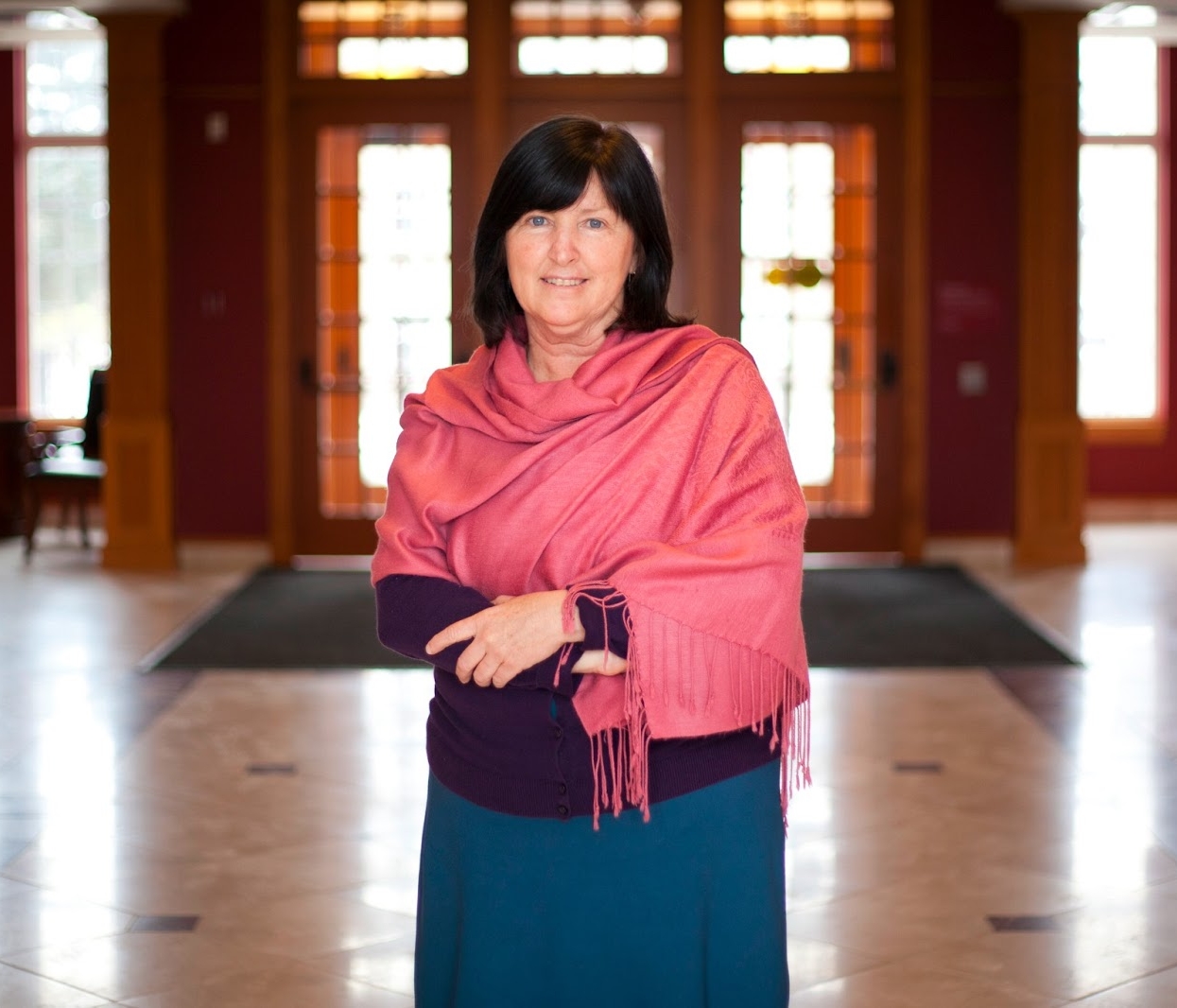
Read MoreAn Interview with Mary Coyle, Nova Scotia’s newest Senator
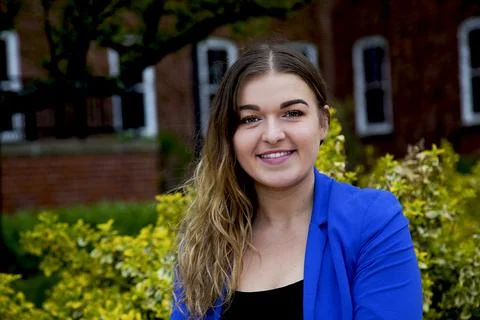
Read MoreChatting with Hannah Chisholm about her big win and future business plans.
Read MoreTalking about the value of keeping students connected to their hometowns through their stomachs.
Read MoreThe complete uncensored and fully Acadian interview with comedian Xavier B Gould.
Read MoreThe Olympic Games demonstrate the peak of human strength, bravery, and dedication. Every four years, the greatest athletes in the world gather to break records and compete for the title of Olympic champion. However, the upcoming Winter Olympics in Pyeongcheng, South Korea are breaking a new kind of record. Three men, expected to be announced to the Canadian and American Olympic teams in the coming days, are to be the first openly gay Olympic athletes competing at a Winter Olympics.
On January 7, 2018 Adam Rippon was announced as a member of the American Olympic team as a figure skater. After first emerging on the figure skating scene in 2009, Rippon has competed in countless national and international competitions, frequently placing in the top 5. Rippon is best known for his quadruple lutz, an extremely difficult jump, as well as his “Rippon lutz”, the same jump with only three rotations while maintaining one arm in the air. This will be the first Olympics for the 28-year-old, who came out in 2015.
Expected to be announced before the end of the month as an addition to the American Olympic team is Gus Kenworthy. The freestyle skier competed at the 2014 Sochi Winter Olympics while closeted, taking home the silver medal. He has also won AFP World Championships overall titles, as well as placing first at the World Cup Men’s Halfpipe two years in a row. Kenworthy gained popularity after he became the face of the stray dog crisis in Sochi during the 2014 Olympics, which resulted in Kenworthy staying in Russia an extra month after competing to try and house many of the dogs, including adopting five himself.
Another addition was announced on January 15th, 2018, this time to the Canadian team, with seasoned pairs figure skaters, Eric Radford and Meagan Duhamel. Radford and his partner are seven-time Canadian national champions, two-time world champions, and Olympic silver medalists in the team event at Sochi in 2014. In December of that year, Radford came out as gay, making this 2018 Olympics his first as a publically gay athlete.
Openly gay, lesbian and bisexual athletes are a rarity when it comes to the Olympic Games. The summer Olympics are known to have a larger percentage of LGBTQ+ athletes, with 23 out of 10,768 athletes at the 2012 Summer Olympics in London, and 64 LGBTQ+ athletes out of 10,444 athletes at the Summer Olympics in Rio. However, the majority of these openly LGBTQ+ athletes are female, and the numbers severely decrease when looking at the Winter Olympics. In 2010 at the Vancouver Olympic Games, only six out of 2,566 athletes were openly bisexual or lesbian, and no openly gay men competed. In Sochi in 2014, only seven openly lesbian athletes competed, who were again, all women.
There are a number of reasons given for the lack of openly gay male athletes in the past 2000 years of Olympic games. First and foremost, extreme masculinity is fostered through competitive sports, and many fear rejection by teammates or fellow athletes if they come out as gay due to the implication their sexual orientation makes them weaker or effeminate. Many athletes also rely on sponsorship funding in order to achieve their Olympic dreams, and there is a fear that coming out would result in a loss of much needed sponsor funds. For countries where being gay is illegal, such as Jamaica, it goes without saying that a publically out athlete would become a social pariah, and never be nominated to the Olympic team. At the Sochi Olympics, gay rights took centre stage as the Russian government refused to build a Pride House for LGBTQ+ athletes, spectators, and coaches. The 2013 law banning “gay propaganda” was cited as the reason for the refusal. This led many LGBTQ+ athletes to fear for their safety and treatment by Russian officials.
However, Rippon, Kenworthy, and Radford strive to change the Olympic environment to be welcoming for all sexual orientations. By being the first openly gay men to compete in a Winter Olympics, these men hope to dismiss fears of social rejection and lack of funding by demonstrating their positive experience of coming out in sport. Kenworthy even received increased sponsorship after coming out from companies such as Visa and Under Armor. Their message to young closeted athletes is not one of strife and struggle, but of equal if not surpassing success to straight athletes. Come February 9th, these men will not only be blazing a trail for LGBTQ+ athletes behind them, but they will be thriving on this trail. As figure skater Adam Rippon put it when asked about competing as an openly gay athlete, “it’s exactly like being a straight athlete except with better eyebrows.”
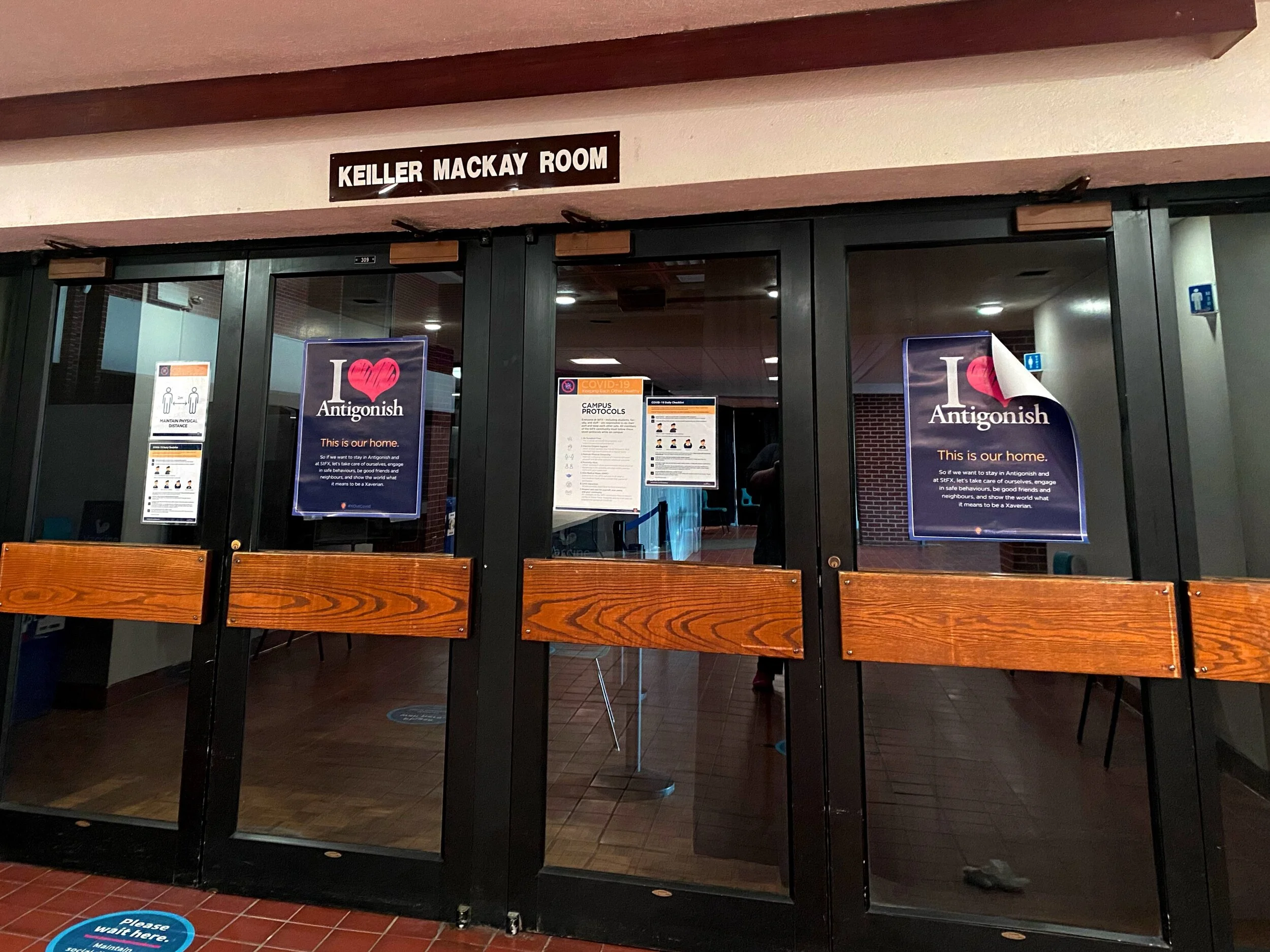
March 9, 2021, Queer students entering Bloomfield Centre were met with a common but unexpected sight. Canadian Blood Services (CBS), who due to the Health Canada restrictions on donations from men who have sex with men (MSM) enforce what many describe as a discriminatory ban on blood donations from Queer men, had set up a donation clinic in the MacKay room.
As 2018 begins, LGBTQ+ rights have never been so prominent. The clear majority of individuals are supportive and push for pro LGBTQ+ rights, with more and more individuals coming out without fear of being discriminated against. The same can not be said for professional male athletes.
However, there was a wave of athletes that publicly came out between 2013 and 2014. This was the hopeful beginning of an avalanche of individuals to come out.
Football Player Michael Sam, who was a star Defensive End for the Missouri Tigers in university, as well as the 2013 recipient for Southeastern Conference’s Defensive Player of the Year. Sam came out publicly prior to his senior season, in 2013. He was drafted in the seventh round of the 2014 National Football League Draft, yet has never played a snap in the NFL.
National Basketball Association veteran big man Jason Collins was the first openly gay player to play in one of the four major professional leagues. He came out publicly at the end of the 2013-14 NBA season. Collins was drafted 18th overall in 2001, and played a total of 14 NBA seasons, retiring in 2014. As he stated in his first-person piece for Sports Illustrated “if I had my way, someone else would have already done this. Nobody has, which is why I am raising my hand.”
Robbie Rogers, whom is a former Major League Soccer player, came out as publicly gay in 2013. He also played professionally in England.
After Jason Collins public announcement, Rogers believed that “a movement was coming.”
However, since these athletes’ bravery, there have been no more athletes to come out publicly while playing. Three different sports, all with a cornerstone individual, yet unfortunately for Rogers, no movement has come.
It has been approximated that one in ten people are gay. It is a seemingly mythological sentiment, because of a lack of proper research methods. Yet it is certain that there are athletes now who live in the closet whilst playing. It isn’t the case that LGBTQ+ identities are rising in prevalence, but rather a stymied culture within sports that inhibit one.
With regards to homophobia, Wade Davis, a gay former NFL player, believes it isn’t unique within sports
“I’m not saying it doesn’t exist in the sports world, but I think it is reinforced in the sports world, but you learn you can’t be out much sooner. When I realized I was gay in the 10th grade, I knew immediately what I was feeling was not OK, and that didn’t come from me playing little league football. It came from television. It came from everywhere.” It is not the homophobia that impacts people so much, but rather the blatant hyper heterosexism within locker rooms. Rampant dialogue concerning women and sex is paramount, and for gay athletes, it is something that they can not relate to.
It seems that in female professional sport, there are more individuals whom are publicly out. Most notably the Women’s National Basketball Association. One can say that being heterosexual in the WNBA leads one to be made fun of, a complete role reversal of male athletics. The culture emanating from the WNBA is a parallel to the NBA, with women mirroring the men, whether that be through on court playing, or off court attitudes. However, it is certain that female athletic teams are more open to LGBTQ+ athletes. Brittney Griner and Megan Rapinoe are just some examples of these decorated gay athletes.
Crucially, one’s sexual orientation should by no means play any role in an individual’s skill to play a sport. What is done in one’s private life is exactly that, private. Yet it is disheartening to hear that there has not been more movement within locker rooms to change the culture. These locker rooms are stuck in a 1960’s dialogue while the rest of society has grossly advanced LGBTQ+ rights.
March 9, 2021, Queer students entering Bloomfield Centre were met with a common but unexpected sight. Canadian Blood Services (CBS), who due to the Health Canada restrictions on donations from men who have sex with men (MSM) enforce what many describe as a discriminatory ban on blood donations from Queer men, had set up a donation clinic in the MacKay room.
As the AUS regular season winds down in ice hockey, there is a familiar site at the top of the standings. StFX is off to another rollicking season as they have garnered a 19-1-4 record on the year, good for second in the AUS, behind University of New Brunswick.
Jagger Dirk is the key cog on the Defense, with 22 points on the year for the senior from Penticton, BC. Dirk was a former player for the Kootenay Ice of the Western Hockey League. He had a very successful five-year career with them, contributing 48 points in his final year with the junior club. In his fourth year with StFX, Dirk has solidified himself as the number one Defenseman in the AUS, as he has already surpassed last year’s point total by nine.
The three-headed monster of Holden Cook, Matt Needham and Michael Clarke have provided timely scoring, contributing eight game winning goals on the year.
Oshawa born Cook is the leading the team in points, with 29. Prior to StFX, Cook was a shut-down forward for the Owen Sound Attack of the Ontario Hockey League. His point scoring was modest at best in the OHL, but StFX has provided a unique opportunity for him to flourish.
Ontario-born Clarke, along with Needham, are tied for second on the team with 27 points.
Leading the way in goal has been second year Halifax native Chase Marchand. He is leading the league in both save percentage (.931) and goals against average (2.10).
The X-Men is led by head coach Brad Peddle. He is in his 13th year at the helm of StFX. He previously played for StFX as a student from 1995-1999. Through his guidance, the team has rattled off 12 consecutive AUS playoff appearances, including five University Cup championship appearances. He is still looking for an elusive national championship, which would be the first since 2004, coached under Danny Flynn.
Peddle stressed the importance of garnering character players for the team. “We really try to recruit guys who will buy in to what StFX is about and will fit into the culture that we have created. Great People, great students and great hockey players.”
StFX is locked in a two-horse battle for first in AUS this year with UNB. The squads have split the season series so far at two-a-piece. StFX has bested UNB in the past two AUS finals, however it was UNB who defeated StFX in the 2016 National Championship, which took place in Halifax. They are also victors from the year after, defeating the University of Saskatchewan. StFX is hungry for another crack at the defending champions, should they play in the playoffs. Luckily, the team is laden with good, experienced character players, with many of them having played in that heartbreaking final in 2016.
“X and UNB seemed to have played against each other for as long as I remember in the playoffs. And at the end of the day, it is just two good hockey programs bringing out the best in one another.”
Coach Peddle had the opportunity to coach the U Sports All Star team in December, as they played two games against the Canadian World Junior team. The team defeated Team Canada in back to back matches. Holden Cook, Jagger Dirk and Michael Clarke were all selected for the team.
On the experience, Peddle commented: “Players didn’t know each other very well so we had to try to bring them together quickly. This year we did some team building activities in hope that it paid off, and it did!” He was an assistant coach with the team the previous year.
With six games left on the year, the team looks to garner a number one spot in the AUS Playoffs. The final two home games are against Dalhousie and Moncton on the 2nd and 3rd of February.
March 9, 2021, Queer students entering Bloomfield Centre were met with a common but unexpected sight. Canadian Blood Services (CBS), who due to the Health Canada restrictions on donations from men who have sex with men (MSM) enforce what many describe as a discriminatory ban on blood donations from Queer men, had set up a donation clinic in the MacKay room.
Life in a small town is great for so many reasons, except when faced with 'pre-Kinsey, closeminded views'.
Read MoreExcerpt: “... we all now get the moral high ground required to feel good about torrenting “House of Cards” because the last thing Spacey deserves is royalties.”
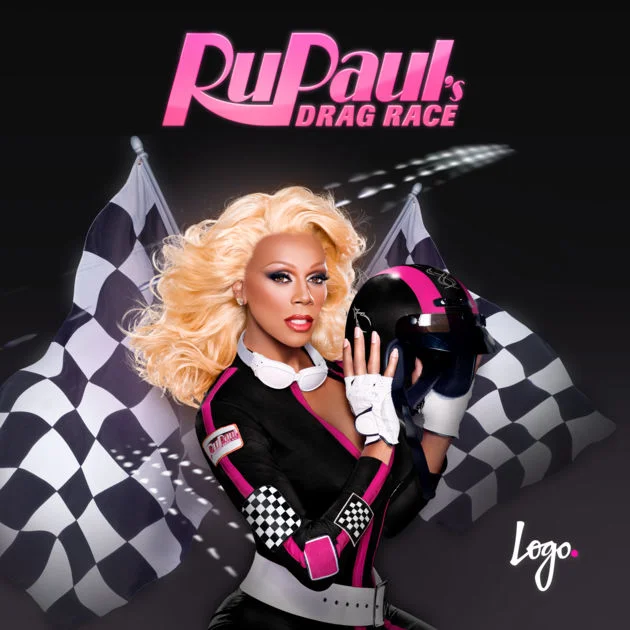
Read MoreRupaul's Drag Race expands society's understanding of drag performers and the challenges faced within the drag community.
Read MoreHow volunteering with a local LGBTQ+ club changed the meaning behind "being yourself".
Read MoreGender & Sexual Diversity Advisor speaks on the improvements StFX has made for the queer community.
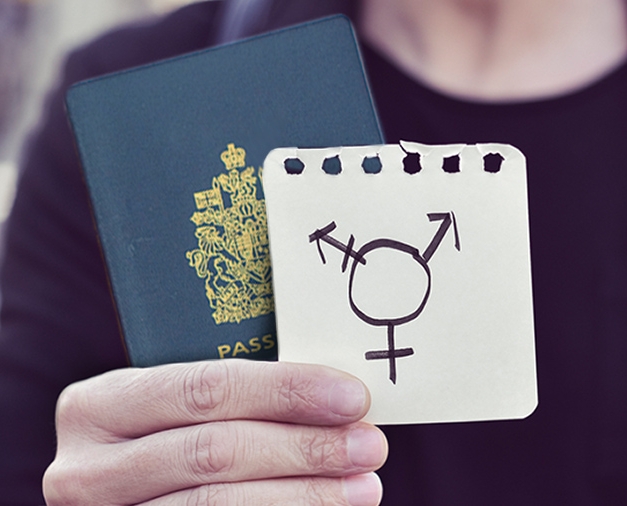
Read MoreA new option for Canadian passports.
Read MoreExcerpt: Bre O’Handley speaks of her experience at StFX, both as a student and as the new Gender & Sexual Diversity Advisor.
Read MoreExcerpt: Prime Minister Justin Trudeau apologizes to the LGBTQ+ community and pledges $145 million to ‘reconciliation, education, and memorialization.’
Read MoreExcerpt: NDP passes Bill 24, ensuring that school officials are not allowed to disclose to parents whether their child is participating in a Gay-Straight Alliance.
Read MoreXavier B. Gould, artist from Shédiac, New-Brunswick, was interviewed over the phone by Yanik Gallie on Wednesday 17, 2018.
Graduate from Mount Allison University in Drama, Xavier was noted as one of the 30 under 30 artists by Acadie Nouvelle last year.
The humorist hosts Le Bilingual Show: Hosté par Jass-Sainte featuring comics from New-Brunswick and Québec at Centre des Arts et de la Culture de Dieppe on February 17, 2018.
*****
The interview was recorded over telephone around 2pm on Wednesday 17, 2018. English interview translated by Yanik Gallie. For the full interview in the Acadian dialect, visit our Xaverian Weekly website @ http://www.xaverian.ca
YG: What does pride mean to you?
XG: Historically, pride meant nothing to me. It showed I didn’t fit in with the LGBTQ+ community. Pride is a big statement.
Growing up, and even in university, I distanced myself a lot from pride. Whether it be going to events or having gay friends, I didn’t participate that much. I didn’t feel like I fit in one of the boxes that was pride.
I learned within the last two years that I can create my own frigging box and make whatever I want out of pride. I can meet people who feel the same way I do and create my box with them. I take part of what pride represents, be yourself.
For me, pride’s accepting my own box that I recreate as I grow, and I’m happy.
YG: How was Jass-Sainte Bourque received by the LGBTQ+ community?
XG: I was host of an event at pride this summer when a group of kids between 10-12 years old saw me getting lunch on a break. They freaked out, “Jass-Sainte! Jass-Sainte!”
One said, “It’s my first pride. If my parents knew I was here, they’d disown me.” I shared my story with them, “When I was your age, my parents did interventions. In a failed attempt to protect me, they told me to tone it down and be less open about my sexuality. Last week, I sent a picture of myself wearing heels and makeup at rehearsal to my dad. He replied, ‘Holy shit, you look fabulous. The world is not worthy.’ If my dad made it this far up the road, it will work out for you. Give your parents a chance, and continue to be yourselves.”
They looked to me with an inspired expression, knowing that I’ve been through some shit and can still make people laugh.
YG: What moment inspired your comical character Jass-Sainte Bourque?
XG: I read the poem “Fuck you, Évangeline” by Céleste Godin. That was one of the pillar moments when I realized that, in Acadie, you have the right to turn things upside down.
You don’t need to listen to music by 1755 for the rest of your life. You can if you want, that’s valid. As an artist and creator, you have the right and are encouraged to make it your own.
What is culture if it cannot change? At that moment, I thought about Jass-Sainte seriously. This is a way for me to assume myself within my culture.
YG: Strong fictional female characters Marichette, Sagouine and Delphine B. B. Bosse are symbolic of the archetypal strong Acadian woman in literature. How do you distinguish your character from those of your predecessors?
XG: Jass-Sainte is contemporary. She is all about social media with her Facebook, Instagram, Twitter, whatever accounts right. Versus La Sagouine, it’s a written literary work, a play. Jass-Sainte is different because the personage is adapted for today with the technology.
But, it’s not that different because what previous characters did was indicative of the time too. When Sagouine was published, it was a driving force that inspired the creation of many literary works. Hopefully, Jass-Sainte is the start of a similar movement.
Another difference, Jass-Sainte is ambiguous in whether she is a woman or man. I keep it vague on purpose. She is also ambiguous in who she likes. Technology and ambiguity set Jass-Sainte apart.
YG: How did studying Drama at Mount Allison University influence your strategy in producing a dramatic and comedic character?
XG: In many ways, the production, movement and acting classes influenced my strategy. The main way my studies influenced me is that I learned to think critically.
The way education is set up at Mount A is that while you read, you ask critical questions. Don’t take for granted that just because you are given a reading it’s true. Meaning, they can give you a super racist and sexist reading from the 1920s so that you think, holy shit, that’s racist and sexist.
Pose questions. Why was it written like that? What would it be like if it were written today? Critically analyze the reading and make creative conclusions. Keep it critical moving forward. It’s how I go about with my creations.
YG: What advice would you give to someone interested in writing monologue?
XG: If you have a character or an idea, if it’s authentic to you or your experiences and you want to share that, fucking share it. Run with it. Being yourself will lead you to success.
It’s impossible to know all strategies, contracts and connections. The only thing you can know 100% is let your box continuously develop. Make it your own.
March 9, 2021, Queer students entering Bloomfield Centre were met with a common but unexpected sight. Canadian Blood Services (CBS), who due to the Health Canada restrictions on donations from men who have sex with men (MSM) enforce what many describe as a discriminatory ban on blood donations from Queer men, had set up a donation clinic in the MacKay room.
You may have noticed that the LGBTQ+ acronym has extended recently to LGBTQ2+. You may not think much of this change as the acronym has transformed and evolved over time to truly incorporate and represent the intricate identities of many. However, I had always been curious about what the 2, short for Two-Spirit, truly meant and how it was an important identity to highlight within the community. It turns out that Two-Spirit is a very powerful and useful tool, especially in a North American context, for Indigenous folks who are queer-identifying and to a country that is working to recognize the true histories of Indigenous peoples and work towards decolonization.
The term Two-Spirit was first coined in the late 1980s in Minneapolis, where, at the time, there were many LGBTQ+ communities mobilizing in response to the AIDS crisis. Many Indigenous folks that were gay or trans did not identify strongly with the larger LGBTQ+ communities and instead, identified more closely with their indigenous community or tribe. In response, activists worked to create the umbrella term ‘Two-Spirit,’ with would be an identity based upon sexuality and gender and would be exclusive to Indigenous people around the world. The development of the Two-Spirit identity relates to indigenous histories. ‘Two-Spirit’ has given a meaning to an identity concept that was previously not defined although was originally understood in certain tribes to be the quality of very powerful and prominent individuals within their communities.
Two-Spirit is thought to encapsulate the masculine and the feminine; the ability to connect with both identities was thought to be special and a source of both power and strength. Historically, many tribes throughout North America have pointed to the existence and place of Two-Spirit people in their communities. Yet, it is extremely difficult to research due to years of cultural destruction at the hands of colonizing Europeans. As author and activist Jessica Yee points out, indigenous tribes in general, were very egalitarian and valued women and mothers highly while appreciating the contributions of many gender identities and skills. With European contact, however, came the harsh and violent assimilation of gendered roles onto Indigenous peoples. Europeans believed strongly in the binary between men and women and religious beliefs also left the topic of different sexual expression out of the question.
The identity of Two-Spirit for Indigenous peoples is a way of reclaiming culture, understanding the values of different identities and the contributions different individuals can bring to a community. The term gives a sense of identity and unity among Indigenous individuals and groups because it connects socio-cultural, historical and spiritual contexts with gender, sexuality and identity in general.
John R. Sylliboy, who joined us as a part of the Pride Month Lecture Series here at StFX on January 23, is the co-founder of the Wabanaki Two-Spirit Alliance and is working to understand how we can look at the identity of Two-Spirit in a context of decolonization. Sylliboy points out that learning about the Two-Spirit identity is difficult due to cultural erosion but conceptualizing it is possible through the analyzation of gender, sexuality and identity in Indigenous epistemology and contemporary settings. Sylliboy’s discussion on Tuesday outlined ways that we can contextualize Two-Spirit identity as a source of empowerment and cultural continuity as we work to decolonize our institutions and our country. Two-Spirit is mainstream in Nova Scotia and Mi’kmaq communities and the Wabanaki Two-Spirit Alliance works to build supports in areas of health, culture, education, awareness and research on matters related to Two-Spirit people in Nova Scotia. We are very lucky here at StFX to have had Sylliboy come to speak with us about matters related to Two-Spirit people. The term and identity works to not only unify Indigenous individuals but sets a platform by which Indigenous histories and values can be explored and reincorporated into a modern context where they can work to benefit individual sexual/gender expression and promote important and beautiful beliefs of Indigenous communities to work to aid in the process of decolonization.
March 9, 2021, Queer students entering Bloomfield Centre were met with a common but unexpected sight. Canadian Blood Services (CBS), who due to the Health Canada restrictions on donations from men who have sex with men (MSM) enforce what many describe as a discriminatory ban on blood donations from Queer men, had set up a donation clinic in the MacKay room.
Pride month is underway at StFX and it has been a very successful and exciting time. During Pride month at StFX there are many high-profile names of LGBTQ+ advocates that come up.
Along with the advocates that you may see in the media all the time, there are underground activists that are helping pave the way for new generations in the LGBTQ+ community; advocates that sometimes go unmentioned.
A man named Xulhaz Mannan is certainly an LGBTQ+ activist that has changed the lives of many. Mannan is the force behind “Roopbaan,” Bangladesh’s first and only LGBTQ+ themed magazine.
Mannan was openly gay and a big supporter of the LGBTQ+ community while he worked in the human rights sector in Bangladeshi. Mannan used to organize the annual ‘Rainbow Rally’ which started in 2014.
For the first time ever, Bangladesh displayed a human rainbow during the Bengali New Years celebrations. And since it wasn’t perceived as having any connection to LGBTQ+ the organizers were given the green light.
Participants were asked to dress in a different colour of the rainbow and they paraded throughout the city. It gave members of the LGBTQ+ community the ability to be able to flaunt who they are without being harmed or feeling threatened in any way. In doing so, Mannan gave hope to those that feared about being their true self.
Since homosexual relationships are illegal in Bangladesh, many people who are within the LGBTQ+ community are forced into exile. Mannan gave people in the LGBTQ+ community hope, and the power of being able to be open with their own sexuality.
Tragically, Mannan was murdered in his apartment along with another LGBTQ+ activist, Mahbub Rabbi. The death of Mannan was heartbreaking and sent a clear message to the LGBTQ+ community in Bangladeshi: that their sexuality is not tolerated among certain people, causing them to live in fear. Yet, Mannan showed courage and hope, and he died being his true self.
Mannan’s strength and force of hope should be an inspiration for all.
Two other individuals that are big supporters and activists within the LGBTQ+ community are Ivan Coyote and Rae Spoon.
I was introduced to these two individuals in my Sex and Gender class last semester by the amazing prof, Dr. Lisa Pasolli.
Ivan Coyote is a Canadian spoken word performer writer and LGBTQ+ advocate. Coyote has written countless novels, short stories, and spoken at TED Talks about their experience in the LGBTQ+ community.
Coyote in non-binary and prefers to go by the pronouns of ‘they’. Most of Coyote’s work is focused on issues with gender, identity and social justice.
Coyote also co-wrote a novel with Canadian singer/song writer, Rae Spoon. Their novel is entitled, “Gender Failure”. As a side note, Rae is an amazing musician and I highly recommend checking out their music.
For a decade, Rae Spoon identified as a transgender man, but in 2012 during an interview Rae came out saying that they now preferred to be called by the pronoun, ‘they’.
Both Ivan and Rae have acknowledged that they have struggled with fitting into the gender binaries that are put in place within society.
The two of them together are an inspiration for all; they talk about issues of what it was like growing up outside of the normal gender boundaries and the criticisms that they both faced. They have also challenged the transgender community when they both decided to not take hormones for treatment, offering discussion on the many layers of their experience.
Their work has challenged the ideas of what makes a ‘man’, and what happens when you find yourself not falling into the particular gender binaries; thus, sparking the discussion of what constitutes of being a ‘man’.
Their advocacy of the LGBTQ+ community has sparked many discussions, and has given hope to those that feel the same way.
Another one of my favourite female LGBTQ+ advocates is Sara Ahmed. I was also introduced to her by StFX professor, Dr. Nancy Forestell. Ahmed is a British-Australian scholar who has worked in the fields of feminist theory, queer theory, critical race theory and postcolonialism.
The work and research that Ahmed has done has provided countless new information for the LGBTQ+ community and she was awareded the 2017 Kessler Award for the impact her research has left on the queer community.
Women like Sara Ahmed are doing some of the most important research in the 21st century. Her work is giving courage and hope to others to follow in her footsteps to continue the research in this field of study.
One of Ahmed’s works, “Unhappy Queers”, explores queer politics of unhappiness. She addresses issues that often lack the appropriate attention such as the overuse of heterosexual happiness in the way relationships are portrayed.
The piece is well worth the read and sheds light on how society perceives happiness, or unhappiness in association to non-heterosexual relationships.
An LGBTQ+ advocate that is closer to home here in Antigonish is Andrew Murray whom I had the pleasure of meeting Pride Month vigil.
Murray is the first openly gay councillor in Nova Scotia who’s engagement in the community has extended to Theatre Antigonish, the Neptune Theatre and various other companies around the world as a set designer.
At the vigil, it was very inspiring to hear Andrew talk about his life growing up in the 70s and 80s as a gay man. What I found to be the most inspiring part about Andrew was his enthusiasm and his beautiful positive attitude.
Andrew certainly faced more than his fair share of struggles growing up yet he always stayed positive, and kept going on in life, continuously trying to be the best version of himself.
To me, Andrew is a ray of light. What I learned from him the most was, no matter what happens in life, always be proud of who you are, if that’s gay, bisexual, transgender, two-spirit, lesbian, or however you identify, be your true self.
In my opinion, Andrew is probably one of the most influential people in Antigonish; his advocacy for the LGBTQ+ community is so important in a small town like this. If you ever see him setting up the window displays on Main Street, I’d highly recommend stopping to say hello.
March 9, 2021, Queer students entering Bloomfield Centre were met with a common but unexpected sight. Canadian Blood Services (CBS), who due to the Health Canada restrictions on donations from men who have sex with men (MSM) enforce what many describe as a discriminatory ban on blood donations from Queer men, had set up a donation clinic in the MacKay room.